
Gen Z’s Romance Slump: 37% of Young Singles Aren’t Having Sex



Key Takeaways
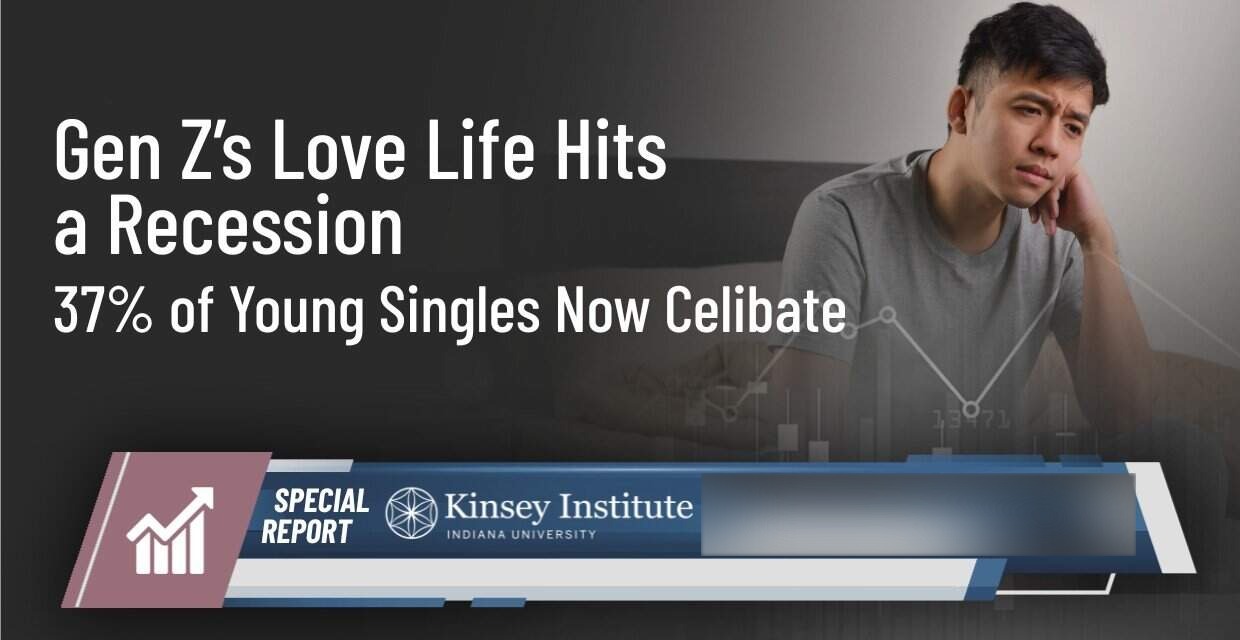
More than 1 in 3 Gen Z adult singles (37%) identify as being celibate, revealing a rise in celibacy among the younger generation.
64% of Gen Z women who are voluntarily celibate say politics have influenced their decision to remain celibate.
Among Gen Z adults, more than 1 in 3 now describe themselves as celibate. That’s one finding from “The State of Us: National Study on Modern Love & Dating in 2025,” a survey run with the Kinsey Institute.
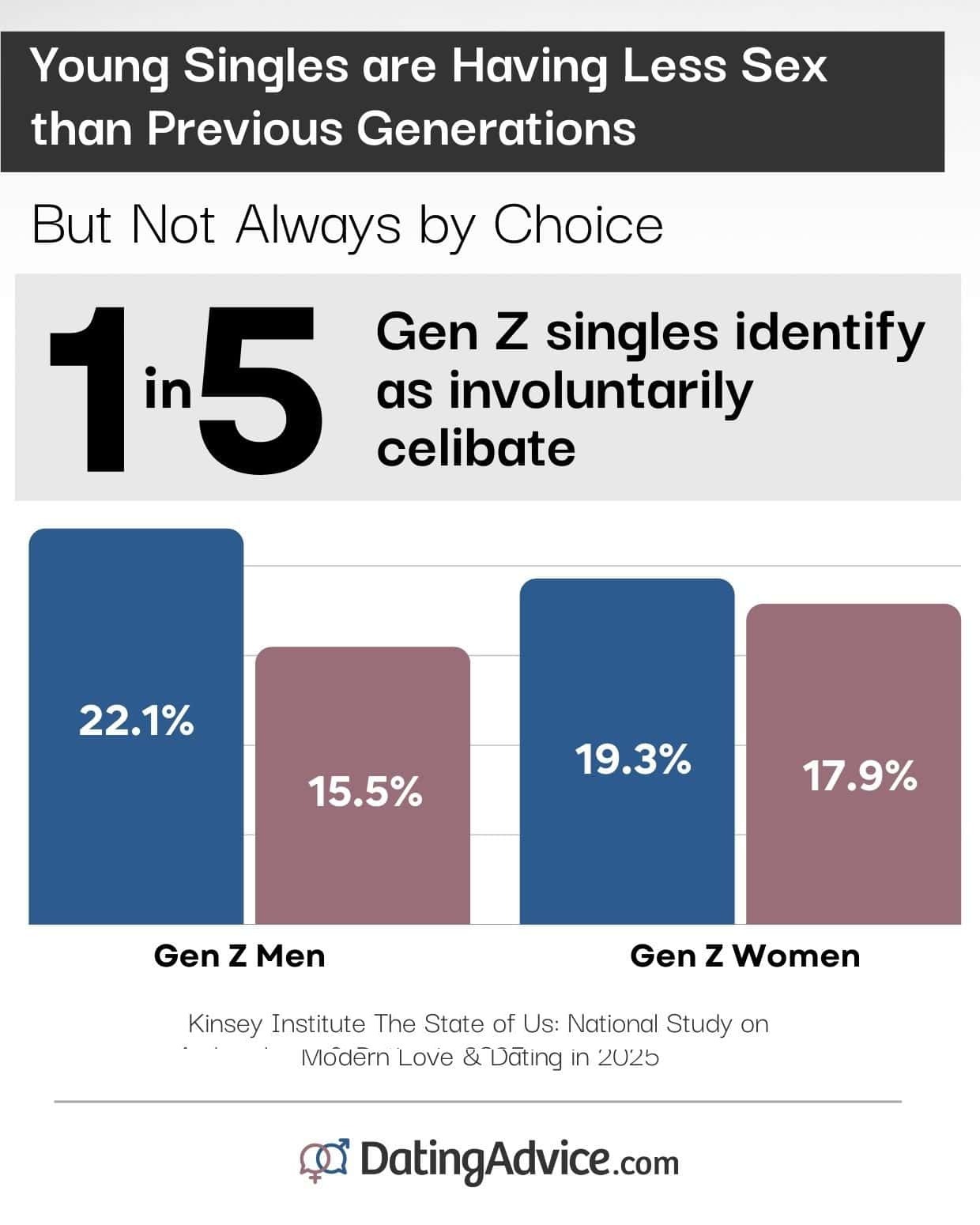
The finding points to a growing cultural trend, and also to a budding paradigm shift in how young people date. Gen Z adults, who are currently 18 to 25, are having less sex than earlier generations did, and abstaining isn’t always entirely their own choice.
Among Gen Z men, 22.1% see themselves as involuntarily celibate, as do 19.3% of women in Gen Z. Other Gen Z singles, though, have chosen of their own free will to abstain from sex.
For a lot of young adults, opting out of sex is closely tied to socioeconomic issues such as threats to reproductive rights, inflation, and political instability. Gen Z isn’t necessarily steering clear of sex for lack of desire; it’s more that they feel they need to protect themselves.
Kinsey Institute researchers wanted to find out what’s driving more Gen Z adults toward celibacy, and how it’s affecting the dating world.
Among Celibate Gen Z Women, Nearly Half Blame Politics
Younger generations are turning to celibacy more and more, and their reasons have less to do with traditional values like religious beliefs and more to do with the world around them.
Our study points to a striking pattern: Young Americans are abstaining from sex in response to socioeconomic pressure. Of the 33% of Gen Z singles surveyed who call themselves voluntarily celibate, most pointed to inflation and political insecurity, calling them the main reasons for the decision.
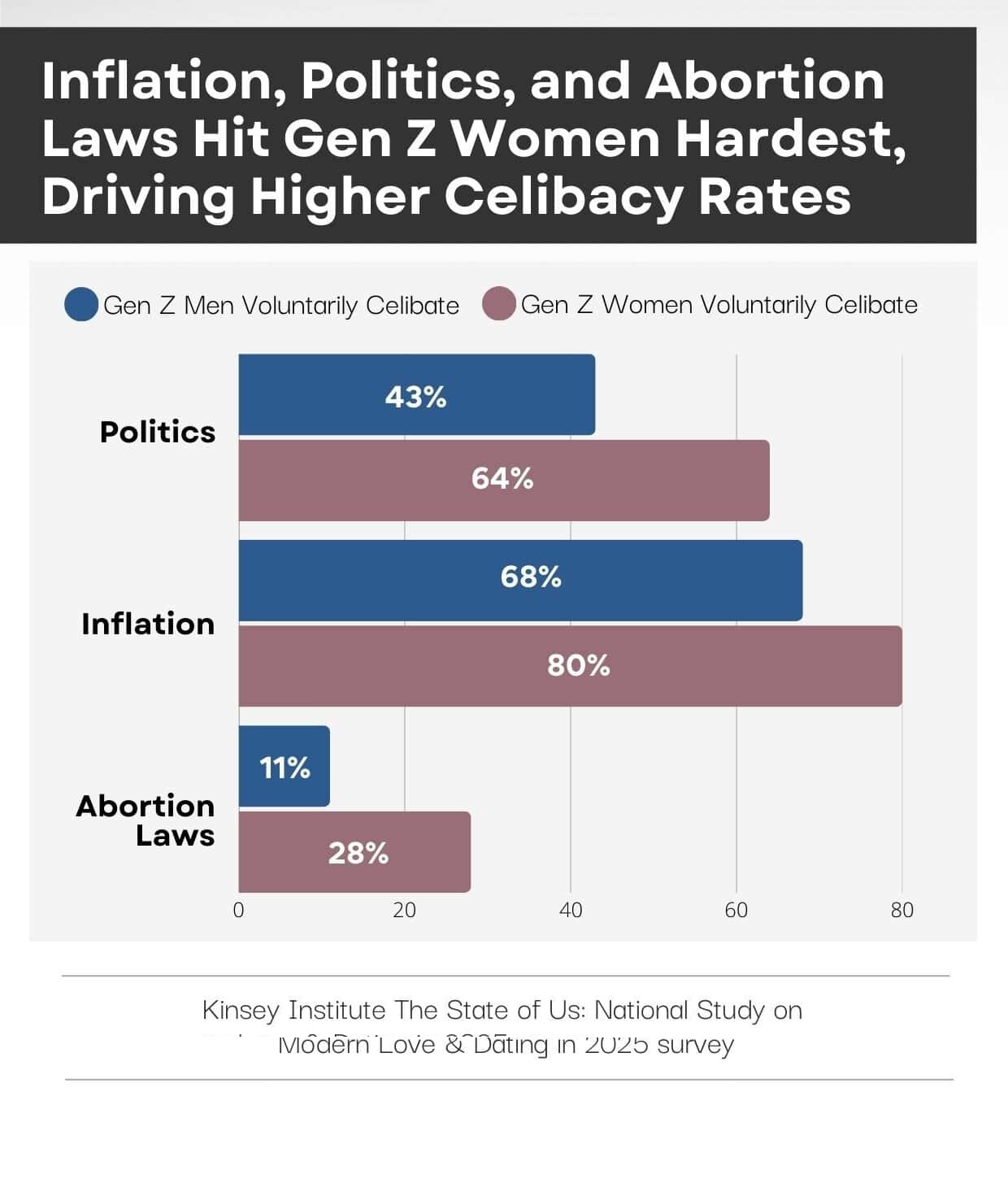
Let’s look at the results by gender. Men and women are affected by the same factors, but the rates at which those factors hit them differ considerably.
Among Gen Z men, 15% are voluntarily celibate, and 68% of that group say inflation has hurt their dating lives. Another 43% say today’s political climate has damaged their love life over the past year.
Celibate Gen Z women voiced more concern on every front. Inflation, politics, and anti-abortion laws were all frequently named by this group:
- Inflation: 80%
- Politics: 64%
- Laws against abortion: 28%
These results suggest the socioeconomic factors weigh especially heavily on women, which may in turn explain why more women than men are choosing celibacy.
Compared With Boomers, Gen Z Is Twice as Likely to Blame Politics for Dating Woes
Clearly, politics is shaping how people date, particularly younger Americans. More than older generations, Gen Z tends to connect big-picture social and political worries to their personal relationship decisions, which helps explain the generation’s rise in celibacy.
We asked respondents to describe their sex life as it stands now, and 16.5% of the Gen Z respondents told us they had put sex on hold for a while, describing themselves as voluntarily celibate.
Gen Z singles are also much likelier than older people to name politics as the reason they’re celibate. Where 43% of men in Gen Z say politics has hurt their dating lives, just 17% of boomer men say so.
For women, the gap is even bigger. Among Gen Z women, roughly 64% say politics has taken a toll on their dating lives; among boomer women, just 24% say the same. That’s a 40% difference!
Gen Z is living through a sexual recession. The growing celibacy rate simply mirrors a generation under enormous pressure.
With divisive politics and soaring inflation, many young Americans feel they have no option but to put romance and sex on hold to limit how much those forces affect their lives. Voluntary celibacy isn’t only about not wanting sex; it’s a defensive posture against a world that seems more and more hostile to connection.
If the political and economic climate doesn’t get better, many Gen Z singles will keep sacrificing their love lives just to stay afloat in this country.
Methodology
Researchers at the Kinsey Institute led “The State of Us: National Study on Modern Love & Dating in 2025.”
Prodege.com ran the online survey between April 29 and May 8, 2025, gathering data from 2,000 single adults in the U.S., ages 18 to 91, who form a nationally representative sample. Responses were balanced by gender, age, race/ethnicity, household income, and geographic region. The results carry a ±3-point margin of error, with 95% confidence.
About the Author
By: Matthew King
Staff Writer
Matthew King is a research analyst and writer using data-driven insights to guide modern daters on thecandiddate.com.
Share the Knowledge!
Our dating experts work hard to show you the best dating sites. Want to show your appreciation? Share this page!