

Cheap Date Night Ideas: A Plan You Can Actually Finish


Key Takeaways
Choose one idea by stage, energy, logistics, and the stay-in or go-out fork.
Set a budget cap before supplies, tickets, drinks, or transport enter the plan.
Use a 48-hour checklist with hours, weather, transit, supplies, and a named backup.
Debrief for ten minutes so the next cheap date becomes easier, not repetitive.
The problem with cheap date night ideas is rarely the idea list. It is follow-through: the plan stays vague, the budget creeps, weather changes the venue, and one small snag makes the evening feel improvised instead of thoughtful. This guide is for consenting adults who want one inexpensive date they can actually complete.
You will choose one option using four filters, set a real cap, prepare in two timed windows, run the night with a backup branch, and review it afterward. The goal is not to prove that spending less is morally better. The goal is to protect attention, reduce friction, and make the evening feel chosen.
Start with one finished plan, not a longer list
Begin with a hypothetical finished example: two adults pick a pantry cooking competition at home, cap the added spend, agree to start after work, and set a backup. The idea is chosen because both are tired, the kitchen is available, and neither wants transit risk. The budget covers only missing ingredients and one dessert.
Supplies are checked the day before: pans, a timer, plates, and a shared playlist. If energy crashes, the backup is simple soup plus a board game. Notice the order.
The idea comes first, then the constraint, then logistics, then the pivot. That sequence is the whole method, and it works before you debate whether the night is creative enough.
- Name the idea in one sentence both people can repeat.
- Set the cap before choosing extras, drinks, or dessert.
- Pick a start time that respects work, sleep, and commute realities.
- Choose one backup that protects mood rather than impressing anyone.
- Decide who confirms details so preparation does not float.
14 Low-Key, Low-Cost Date Ideas
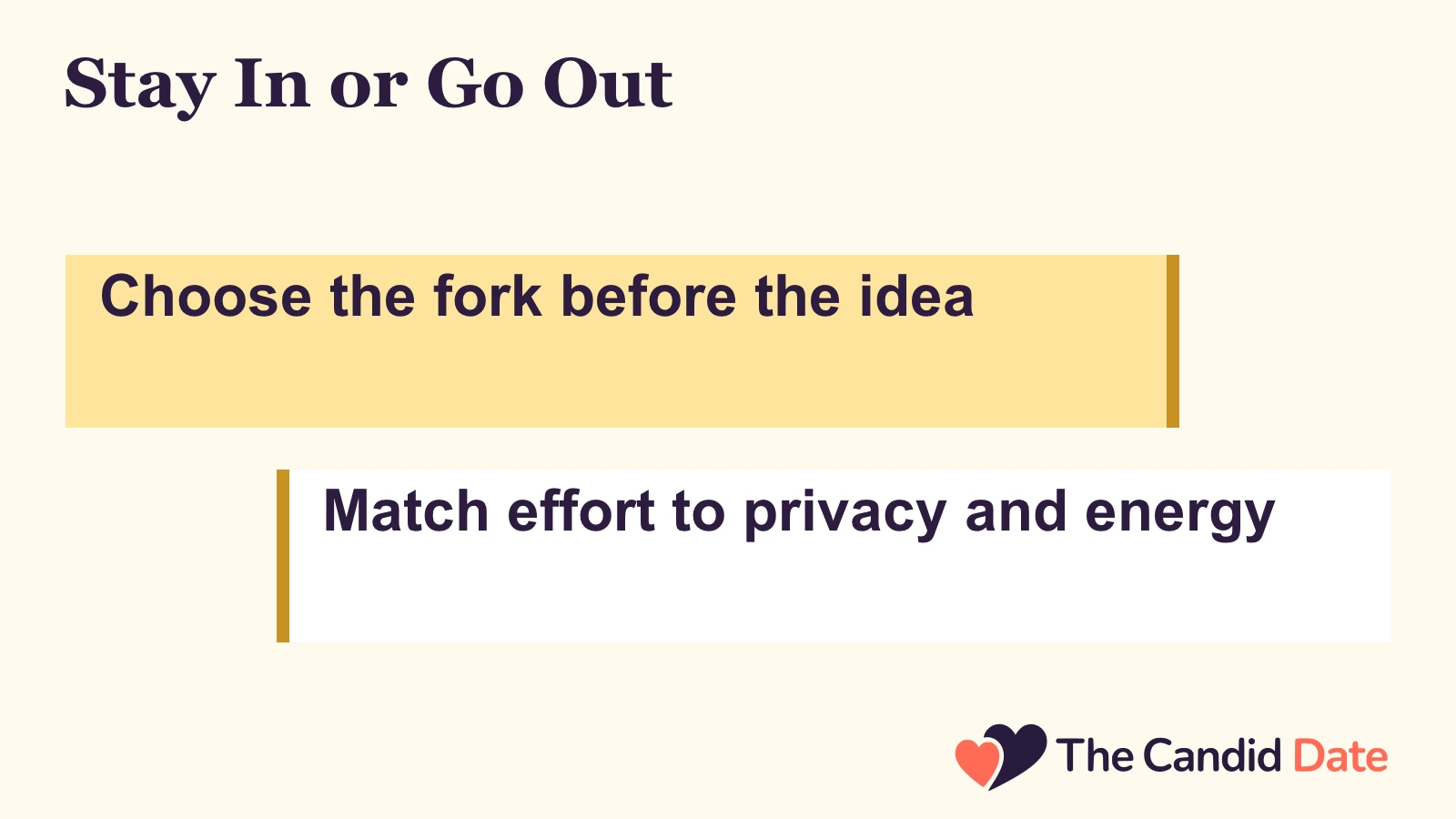
Stay in or go out: decide the fork first
The biggest cheap-date tradeoff is not money. It is control versus stimulation. Staying in gives privacy, easier conversation, flexible timing, and lower pressure to perform, but it can blur into an ordinary evening if nobody marks the start.
Going out adds novelty, movement, and a shared scene, yet it introduces hours, weather, parking, crowds, and the quiet temptation to solve discomfort by spending. Decide the fork before choosing an idea. If the week was loud, stay in and make the room feel intentional with light, music, and a clear beginning.
If the relationship needs fresh input, go out to a free or low-cost public space with an easy exit. Do not choose based on which option looks more romantic in theory. Choose based on which failure mode you can handle tonight.
A useful rule is to match the plan to the dominant risk. If the risk is awkward silence, pick an activity with a shared task. If the risk is exhaustion, pick proximity and a short duration.
If the risk is feeling unseen, put effort into preparation rather than upgrades. Cheap can feel lavish when the room, route, playlist, or basket shows anticipation. It feels stingy when the message is that the other person was not worth planning for.
The line is effort, not cost. A free walk with a named meeting point, a blanket, water, and a flexible end time often lands better than an expensive dinner where one person checks messages all night.
Pick the idea for your stage, energy, and logistics
Narrow with four filters. First, relationship stage: early dates need public, simple, independently escapable plans; established couples can choose cozier or more logistical plans; couples in a rut need one novel element, not a complete production. Second, energy: match stimulation to the week you actually had, not the week you wish you had.
Third, logistics: check distance, accessibility, closing time, reservations, parking, transit, pets, kids if relevant, and whether the plan depends on perfect weather. Fourth, the in-versus-out fork from the prior section. Score each candidate against those filters and discard anything that fails two.
The winner should be boring on paper and reliable in motion, because reliability is what lets personality show up.
- Early stage: public place, separate arrival, easy goodbye, low commitment.
- Established: shared project, seasonal ritual, or a familiar place with one twist.
- Rut breaker: change one variable such as time, route, food, or activity order.
- Low energy: home plan with a marked start and a firm, kind end.
- High logistics: only choose it if details are confirmed 48 hours ahead.
Set a real cap and keep frugal from turning stingy
A budget cap works when it is a boundary, not a mood. Set the total before you browse menus, buy ingredients, or promise tickets. Include the easy-to-forget items: transport, tips, parking, dessert, delivery fees, replacement supplies, and the second drink that appears because the first conversation is going well.
Then split the cap into must-haves and nice-to-haves. Must-haves make the plan safe and comfortable. Nice-to-haves are upgrades you can cut without embarrassment.
If costs start creeping, the decision rule is to protect time together first, comfort second, polish last. That order keeps you from looking stingy while still holding the line. If alcohol is part of the plan, remember that skipping it can simplify the budget and the next morning; if it is not, choose a drink or activity that does not make the evening feel like a compromise.
The frugal-versus-stingy line is visible in choices. Frugal says, I planned around a cap and still made space for us. Stingy says, you get what is left after I protected myself from inconvenience.
Do not outsource the discomfort by making the other person guess whether the night matters. Say the boundary plainly: I want a low-cost plan that still feels cared for. Then spend effort where it is noticed: a clean table, charged speaker, reserved time, accurate directions, water, a backup, and a clear invitation.
Those details communicate value without pretending money is infinite.
Dry Dating Explained: How the Sober Trend Is Changing Date Night
The 48-hour preparation checklist
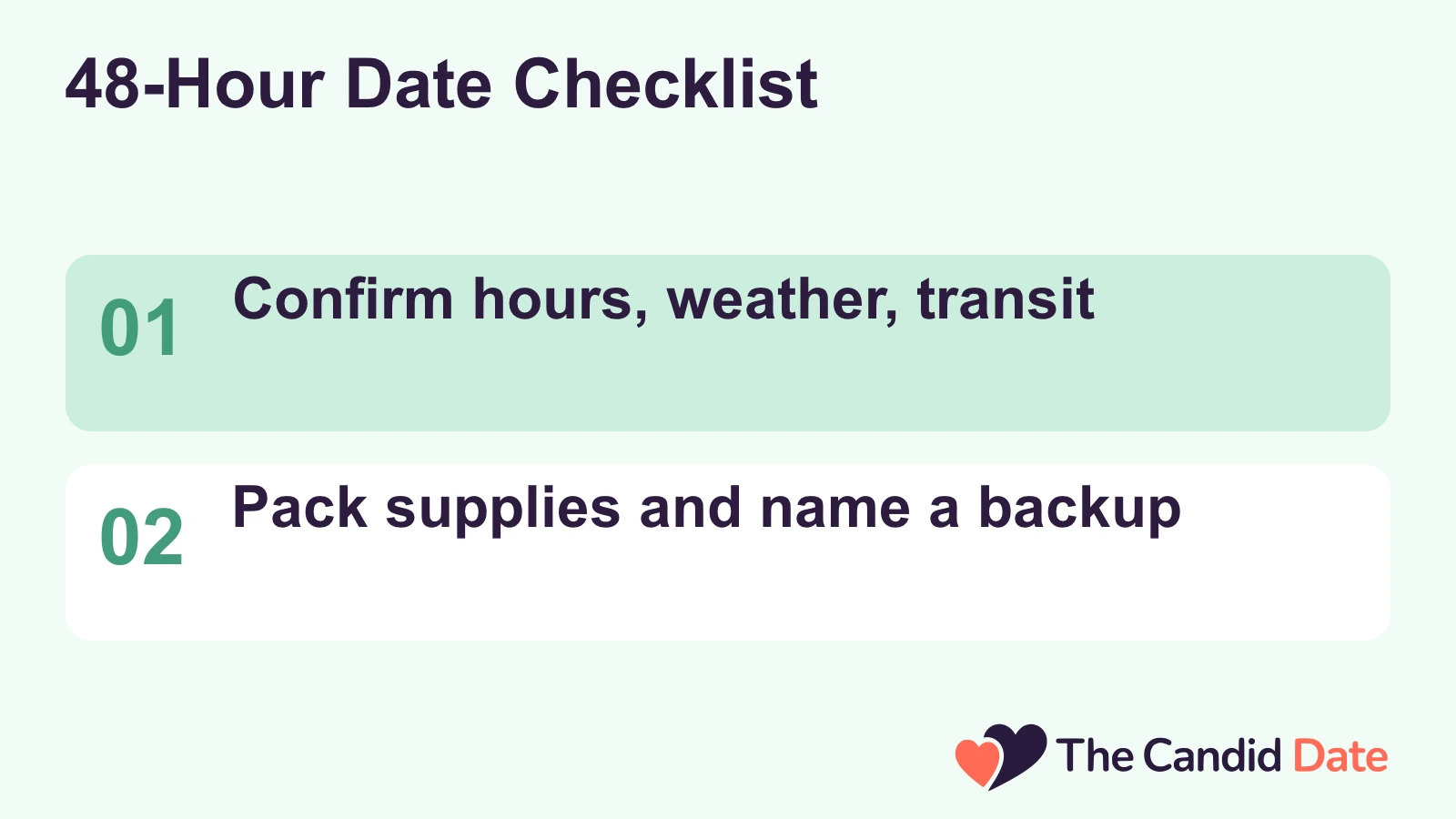
Forty-eight hours out, confirm the skeleton. Check venue hours, holiday schedules, ticket needs, weather, sunset if outdoors, transit frequency, parking, accessibility, and whether the plan still fits energy. Send one clear message that states the idea, time, meeting place, cost boundary, and what to bring.
If either person hesitates, simplify now rather than negotiating in the moment. Twenty-four hours out, assemble supplies: layers, umbrella, water, snacks, blanket, charger, game, reservation note, gift card if one already exists, and any ingredient that cannot be bought day-of. Do the boring check that saves the night: shoes, keys, battery, cash card, medication if relevant, and a route home.
- Confirm hours, weather, route, accessibility, and closing time.
- Send idea, time, place, cap, and bring-list in one message.
- Pack supplies by category: comfort, food, tools, backup.
- Charge devices and keep transport money separate from fun money.
- Choose the exact pivot trigger before leaving home.
- Do a five-minute reset so the space or bag feels ready.
Day of, run a ten-minute final pass. Look outside, check traffic or transit, re-read the venue note, and put the backup item where you will see it. If staying in, clear one surface, set light and music, start anything slow, and hide the visual clutter that makes the evening feel accidental.
If going out, leave early enough to avoid sprinting. The checklist is not perfection. It is a way to remove avoidable decisions so attention can go to the person.
A cheap date usually fails in the unconfirmed detail, not the concept.
Outdoor Date Ideas: 12 Easy Plans for a First or Second Date
Assign roles and handle costs without an awkward talk
Ambiguity is expensive. Decide who owns which part before the date: one person confirms logistics, the other handles supplies, or each owns one shared task. For newer connections, keep money simple and separate: arrive independently, pay your own transport, and choose activities that do not create a debt feeling.
For established couples, rotate planning so effort is shared, and review the split occasionally rather than keeping a silent ledger. If income differs, say so early and choose a cap both can repeat without strain. A good script is direct: I want us to keep this low-cost and easy.
I can handle the reservation and you bring the dessert, or we can split the one expense. Clarity is considerate; vagueness makes generosity feel like a test.
Run the date with a named pivot plan
During the date, protect the plan without worshiping it. Name the backup before you need it: rain moves the walk to a covered market; the closed venue becomes coffee and a short loop; low energy downgrades cooking to takeout plus a playlist; creeping costs trigger the no-upgrade rule and water instead of another round. The important move is to announce the pivot as care, not failure.
Say, the patio is packed, so I am glad we saved the quiet bench route. Then keep the next action small: order, walk, sit, taste, ask a question. If conversation stalls, return to the shared task instead of interviewing each other.
If it flows, let the optional second stop remain optional. A good cheap date has momentum, but it does not need escalation.
- Rain: switch to covered public space or home setup already packed.
- Closed venue: use the nearest familiar option, not the most impressive one.
- Low energy: shorten the plan and keep the ritual marker, such as dessert.
- Cost creep: cut nice-to-haves first and keep comfort items.
- Awkward pause: name the observation lightly and offer one simple choice.
How to Plan a Date Night That Goes Well
Debrief, adjust, and turn one win into a ritual
Afterward, do a short review while memory is fresh. Keep it kind and practical: What felt easy? What created friction?
Did the cap hold? Did either person feel rushed, exposed, bored, or over-served? Which detail should be repeated, and which should be deleted?
Then decide the next step: repeat the same idea with one improvement, adjust the budget, change the time, swap stay-in for go-out, or escalate only the part that truly added connection. If the night went well, make it a ritual by naming the trigger: first Friday, payday, seasonal change, or after a hard week. Rituals survive because they are repeatable, not because they are spectacular.
Save the notes in a shared note or fridge card so the next attempt starts ahead.
Optional adult sponsor note for meeting someone new
Separate from couple rituals, consenting adults who are meeting someone new and want a casual adult platform may consider AdultFriendFinder as an optional tool. Public product descriptions say basic browsing and profile creation can be free, while many messaging and visibility features require paid upgrades. Auto-renewal is enabled by default on paid subscriptions, current checkout terms should be reviewed, and no verified price or meeting guarantee is claimed here.
It is not therapy and not a fix for a committed relationship. If money enters an online connection, remember the basic safety rule: never send money or gifts to a sweetheart you have not met in person.
Sponsored placement


Looking for adults who share your casual intent?
AdultFriendFinder is an optional adult-focused service for casual connections. Check the available profiles and paid communication limits before deciding whether to subscribe; local availability has not been verified.
- Adult-focused casual connections
- Basic free access; paid communication tools
- Check the current subscription conditions
| User Base | Today’s Deal |
|---|---|
| Adults with explicit casual or sexual dating intent | Free basic access; communication upgrades cost extraCheck the current total charge, auto-renewal and any add-ons before subscribing. A membership does not guarantee a meeting. |
Frequently Asked Questions
We keep saying we should do a cheap date night but it never happens. What is the smallest plan that will actually get done?
Use a two-message plan. First: propose one sentence with idea, time, and cap. Example: Saturday, home tasting with ingredients we already have, no added spending except dessert, 7 to 9.
Second: ask for one yes or a simple counter. Put it on the calendar immediately, assign who confirms supplies, and choose a backup that requires no money. If it still stalls, shrink the plan until refusal feels harder than showing up: twenty minutes, one snack, one song exchange, done.
How do I make a low-cost date feel thoughtful instead of cheap?
Spend attention where it is visible: a clean meeting spot, an accurate time, a playlist, water, layers, a charged phone, and a backup. Tell the person the boundary without apology: I wanted a relaxed plan that still felt planned. Then add one personalized detail based on something they mentioned, such as a favorite snack, a game they liked, or a view they wanted to see.
Thoughtfulness is specificity. Cost only becomes the headline when effort is missing.
What if this cheap date is with someone I met online and I am not sure about safety or costs?
Keep the first meeting public, short, and independently escapable: coffee, a market loop, a museum lobby, or a park with benches and people nearby. Share your plan with a friend, arrange your own transport, and avoid lending money or buying costly tickets for someone you barely know. The consumer safety rule is simple: never send money or gifts to a sweetheart you have not met in person.
If pressure appears, end the date politely and leave.
What to Do Next
A cheap date night works when it stops being a category and becomes a completed plan. Pick one idea with stage, energy, logistics, and the stay-in or go-out fork. Set the cap early, prepare in the 48-hour and day-of windows, assign ownership, and run the night with a named backup.
Afterward, review friction without turning it into a performance review. Repeat what created ease, cut what created noise, and keep the ritual small enough to survive busy weeks. The point is not to spend the least.
It is to make room for attention, humor, and choice while staying inside a boundary you can keep.
About the Author
By: Layla Rivera
Dating Coach
Layla Rivera is a relationship expert and dating coach for thecandiddate.com.
Share the Knowledge!
Our dating experts work hard to show you the best dating sites. Want to show your appreciation? Share this page!