
How to bring up an open relationship without starting a fight


Key Takeaways
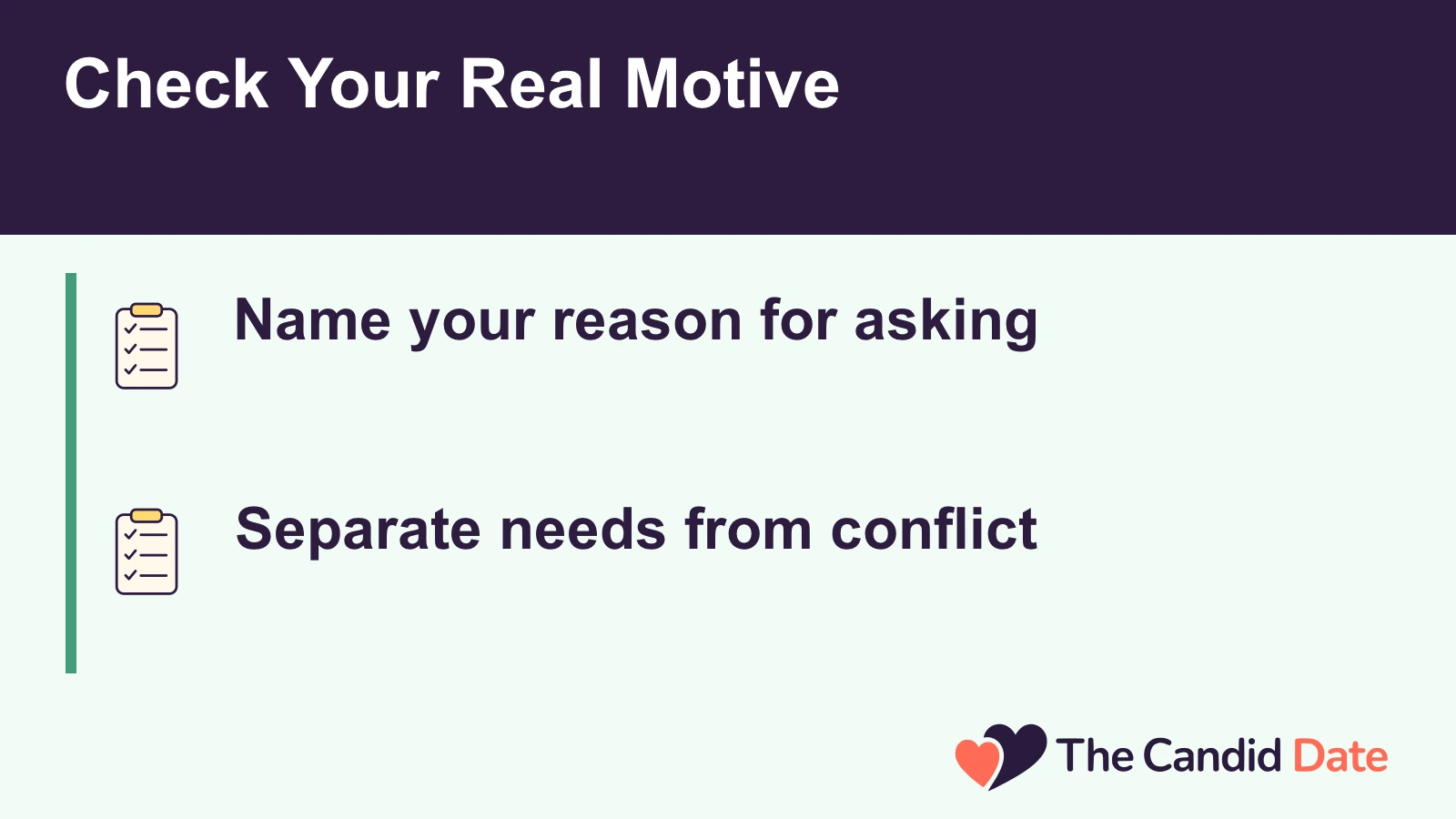
Identify whether curiosity, unmet needs, or relationship trouble is driving the request before you speak.
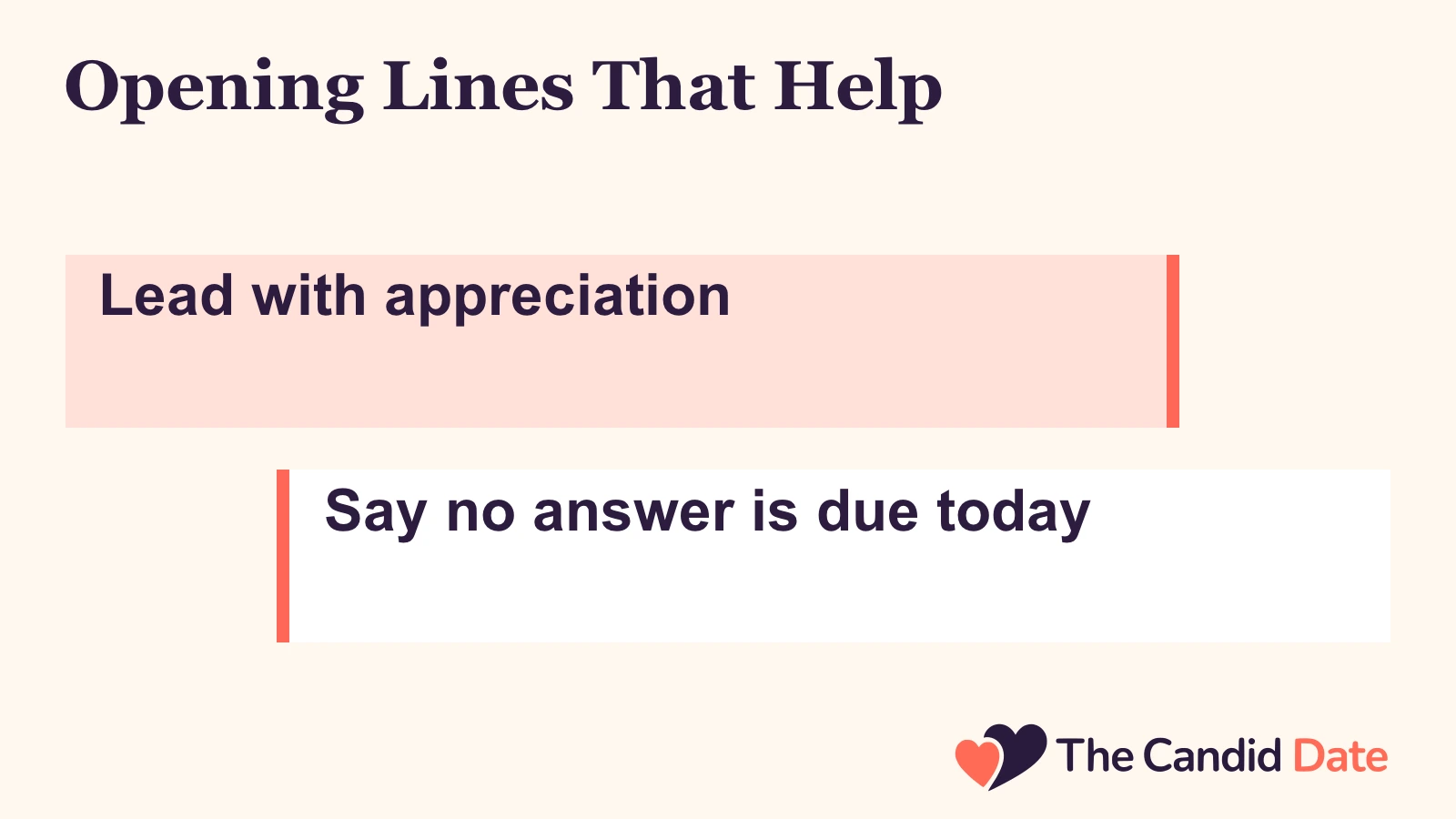
Choose a private, calm time and make clear that no immediate decision is required.
Use first-person language that describes your needs without accusing or ranking your partner.
Respond to hurt, anger, or refusal with a pause and respect for the current boundary.
Bringing up an open relationship works best when it begins as an honest conversation about needs, not a verdict on your partner or a demand for an immediate yes. The safest approach is to understand your motive, choose a calm setting, and open with words that make room for questions, hesitation, and even disagreement.
This guide offers a way to consider why you want the change, opening lines you can adapt, responses to different reactions, and a follow-up plan if the answer is no.
The guidance is for consenting adults who want candor without pressure. It cannot predict your partner's feelings or guarantee agreement, but it can help you raise a sensitive subject with care and respect.
Know Why You Want to Ask
Before you talk, get specific about what you are actually requesting. An open relationship can mean occasional outside dating, ongoing relationships with other adults, or something else entirely. If you cannot explain the change you have in mind, your partner may fill the gap with the most frightening possibility.
The original article names three common starting points: curiosity, mismatched needs, and relationship trouble. They can overlap, but one usually carries the most weight. A short private audit can help you find it before your partner has to guess.
- Finish this sentence honestly: “I want this because...” Avoid using your partner's behavior as the entire answer.
- Name the need underneath the idea, such as novelty, autonomy, sexual variety, or room for another emotional bond.
- Ask whether you would still want non-monogamy if your current relationship felt consistently close and secure.
- Decide what you are not asking for, including secrecy, permission to cheat, or an answer during the first conversation.
If the honest answer is that the relationship feels badly damaged, do not present opening it as a repair plan. That motive calls for a direct conversation about the damage itself, possibly with professional support, before either of you considers a new structure.
5 Clues Your Date Isn't Ready to Open Up Emotionally
Let Your Reason Shape the Frame
The same request can sound very different depending on why you are making it. Curiosity should be framed as exploration, not evidence that something is missing. An unmet need should be described plainly without turning your partner into the cause of every discomfort.
Relationship trouble should be named before any new arrangement is discussed.
- For curiosity, emphasize that the idea is something you want to examine together. Do not imply that a refusal proves your partner is narrow-minded.
- For unmet needs, describe the need and its history before mentioning the possible solution. This keeps the request from arriving without context.
- For relationship trouble, separate the two subjects. Say that opening the relationship is not a substitute for addressing conflict, distance, or broken trust.
This preparation also helps you choose a realistic goal. The goal is not to win permission in one sitting. It is to introduce the subject honestly, learn how your partner receives it, and decide together whether another conversation is welcome.
Choose Timing That Lowers the Stakes
Pick a private time when neither of you is rushing, depleted, or already defensive. A quiet evening at home or an unhurried weekend morning usually gives you more room than a car ride, a party, or the minutes before sleep. Ask whether it is a workable time rather than ambushing your partner with a prepared speech.
- Do not raise it during an argument or immediately after a disagreement about jealousy.
- Do not send the first request by text, where tone and pauses are easy to misread.
- Do not introduce it while either of you has been drinking or is under unusual stress.
- Do not bring it up right before work, travel, a family event, or another commitment.
- Do not use a sexual moment as leverage, because consent given under pressure is not the goal.
A simple scheduling line can prevent the topic from feeling like a trap: “There is something personal I would like to discuss when we both have time. Would tonight after dinner work?” That gives your partner a chance to be emotionally present instead of cornered, and it signals that you trust them with advance notice.
Use an Opening Line That Invites Conversation
The first sentences should communicate three things: you value the relationship, you are raising a question rather than announcing a decision, and your partner does not owe you an answer today. The following hypothetical scripts are original examples you can adapt to your own voice and motive. Say them in your own words, because a line that sounds borrowed will feel rehearsed.
- Curiosity: “I value what we have, and I've been curious about consensual non-monogamy. I'm not asking you to decide today. Could we talk about what the idea brings up for each of us?”
- Unmet needs: “I care about you, and I've realized I have needs I haven't explained well. I'd like to discuss whether an open relationship could ever fit us, while being honest about what feels risky.”
- Relationship trouble: “I'm concerned about the distance between us, and I don't want to use an open relationship to avoid it. Before discussing that idea, I want us to talk honestly about what isn't working.”
After the opener, stop talking long enough for your partner to respond. Do not rush into statistics, stories about other couples, or a list of rules. A pause may feel uncomfortable, but it gives your partner room to locate an honest reaction instead of defending against a presentation.
Keep the Wording About Your Needs
Defensiveness grows when a request sounds like a ranking, accusation, or threat. First-person language can help you describe what you want without presenting it as something your partner caused. It also leaves room for your partner's feelings without requiring immediate agreement.
- Say “I've been wondering whether this could fit us,” not “I need you to agree to this.”
- Say “I want more honesty about desire,” not “You have never satisfied me.”
- Say “I'm not asking for a decision today,” not “You're controlling if you refuse.”
- Say “I want to understand your concerns,” not “Your jealousy is the real problem.”
- Say “We can pause and return to this,” not “We are finishing this conversation right now.”
Avoid comparisons with a particular person, claims that everyone is doing this, and warnings that you will eventually act with or without consent. Those statements change the subject from a mutual decision to pressure. If boundaries eventually become relevant, discuss emotional, physical, and digital comfort as separate topics rather than one vague promise to be careful.
Sponsored placement

A separate choice for married or attached adults
Victoria Milan markets dating for married or attached adults. Consider its relationship category and payment conditions carefully; advertised privacy tools do not guarantee anonymity or establish a partner’s consent.
- Built for married or attached adults
- Free registration advertised
- Review privacy and paid access before subscribing
| User Base | Today’s Deal |
|---|---|
| Adults considering an affair-oriented service | Free registration; check current paid optionsFree registration does not establish free messaging. Read current checkout, renewal and cancellation terms. Privacy features cannot guarantee anonymity. |
Answer Curiosity, Hurt, Anger, or a Firm No
Your partner's first reaction may not be their final position, but it still deserves respect. Respond to what is in front of you rather than correcting it. The following branches offer a next sentence and a next step without assuming that one reaction proves what your partner privately feels.
- If your partner is curious, ask, “What interests you, and what concerns you most?” Explore both answers before discussing rules, apps, or outside partners.
- If your partner is hurt, try, “I can see why this could sound as if you are not enough. That is not the message I want to send.” Then listen without arguing about the feeling.
- If your partner becomes angry, lower the stakes: “I don't want this to become a fight. I'm willing to pause and come back when we can both speak calmly.”
- If your partner says no, answer, “Thank you for being direct. I hear that this is not something you want, and I won't pressure you to reconsider.”
If voices rise or the conversation becomes circular, use a clear exit line: “I care about this subject, but I care more about how we treat each other. Let's stop for now and decide later whether we both want to revisit it.” Then actually pause. Do not keep making one final point, follow your partner from room to room, or turn agreement to pause into a new argument.
Follow Up Without Turning It Into a Campaign
In the following days, return to ordinary care and reliability. Do not punish a hesitant answer with distance, and do not reward agreement with sudden affection. Either pattern teaches your partner that the topic controls the relationship.
A short thank-you can acknowledge that the conversation took courage on both sides.
- Ask whether your partner wants another conversation instead of announcing when it will happen.
- If you both agree to revisit it, consider allowing a week or two for reflection before the next talk.
- Begin the second conversation with what each of you has thought about since the first, not with a stronger sales pitch.
- If the answer remains no, treat it as the current boundary and decide separately whether you can respect it without resentment.
If both adults eventually want to continue, discuss expectations before anyone seeks another connection. Talk about what may be shared, what stays private, sexual-health practices, time commitments, and how either person can revisit or end the arrangement if feelings change.
Setting Boundaries Early in Polyamorous or Open Dating
When Counseling Beats Another One-on-One Talk
Some situations call for a counselor's office instead of another kitchen-table talk. If the request grows out of broken trust, repeated betrayal, or years of unresolved conflict, one-on-one negotiation can turn into a cycle where each new conversation reopens the same wound. If both of you want it, a qualified couples counselor may help you discuss the conflict.
No process guarantees agreement. If there are threats, coercion or safety concerns, seek confidential individual support rather than treating a joint discussion as a safety plan.
- Suggest counseling when the motive is unresolved damage rather than curiosity or desire.
- Suggest it when either of you feels unable to raise the subject without the talk collapsing.
- Suggest it when previous conversations have stalled in the same painful place more than once.
Seeking counseling is not an admission that the relationship is failing. It is a way to protect it while you decide what you both actually want. If your partner agrees to talk but every attempt ends in tears, shouting, or days of silence, proposing a neutral setting is a caring next step, not an escalation.
A Therapist on Making Big Relationship Decisions Without Fear
Frequently Asked Questions
What if my partner asks whether I already have someone in mind?
Answer honestly and calmly. If there is a specific adult, say so without presenting that person as the reason the relationship must change. If there is no one, say that directly rather than sounding evasive.
Either way, return to the immediate issue: whether your partner is willing to discuss the idea at all. Do not ask for permission involving a third person who has not consented to being discussed as an option, and do not treat honesty about an attraction as a reason to rush the decision.
Should I say what I will do if my partner refuses?
Not during the first conversation unless your partner directly asks. A premature statement can sound like an ultimatum, even if you mean it as honesty. First, make sure you understand the refusal and what they have actually declined.
A no remains a no; do not reinterpret it as fear to justify more persuasion. Later, if the answer remains firm, decide privately whether you can honor that boundary. Do not threaten cheating or use departure as leverage to reopen a closed question.
Can we create rules during the first conversation?
Usually it is better to wait. A first talk should establish motives, feelings, and whether both adults want to continue exploring the idea. Detailed rules created under shock or pressure may not reflect informed consent.
If you both remain interested after time to reflect, discuss expectations in a separate conversation and write down anything that needs to be revisited. Consent should remain specific, current, and reversible for everyone involved.
What to Do Next
You cannot script away every difficult feeling, but you can avoid making the request sound like rejection, deception, or a deadline. Know your motive, choose a calm moment, open with appreciation, and state clearly that no decision is due today. Then respond to the reaction you actually receive rather than defending the answer you hoped for.
A respectful conversation may lead to more questions, a firm boundary, or a mutual decision to explore further. Whatever the outcome, keep consent, honesty, and your partner's stated limits ahead of persuasion.
About the Author
By: Alexander Martinez
Author
Alexander Martinez coaches couples on relationship dynamics, lifestyle topics, and open relationship advice for thecandiddate.com.
Share the Knowledge!
Our dating experts work hard to show you the best dating sites. Want to show your appreciation? Share this page!