

Date Night Activities: A Clear Decision Guide


Key Takeaways
Name the real friction before browsing ideas.
Use purpose, budget, energy, location, and labor filters.
Match the activity to the relationship moment and review it kindly.
Date night activities fail for predictable reasons: the plan is vague, the budget is fuzzy, one person carries the mental load, or the activity does not fit the moment. This decision guide is for adults aged 18 and older who want a calmer way to choose. It is not a ranked list, and it does not claim one option is best for everyone.
Instead, it helps you name the exact problem, set fair criteria, work through a short worksheet, and pick something that matches energy, privacy, comfort, and the stage of connection. You can apply it to a new match, a steady partner, a long relationship, or a solo reset that later includes someone else. Bring paper, honesty, and ten quiet minutes.
No expertise is required; only the willingness to treat preferences as information rather than verdicts.
Define the Real Date Night Problem
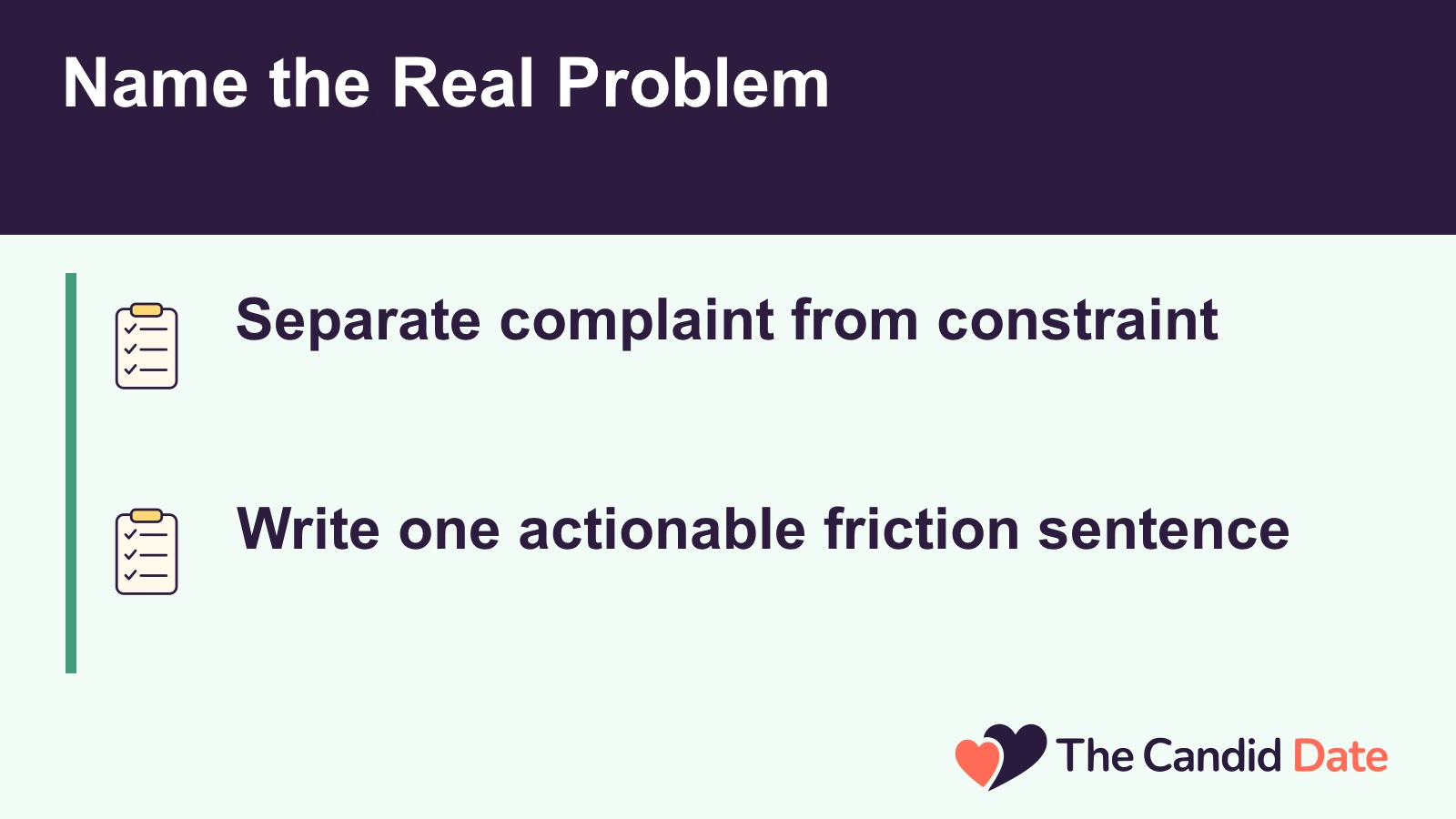
Start by separating the complaint from the constraint. Saying that you never do anything may mean the calendar is crowded, not that ideas are missing. Saying that dinner is boring may mean you need movement, novelty, or a shared task.
Saying that one person always plans points to uneven labor. Saying that someone is tired points to energy, not romance. Write one sentence that begins with the real friction: we need conversation without screens, we need to leave the house, we need a low-cost reset, or we need an adventure that feels brave but safe.
A precise problem keeps taste debates from pretending to be logistics and stops a fun idea from becoming a scorekeeping project. It also tells you what not to fix: if the constraint is money, do not shop for inspiration first. If the constraint is exhaustion, do not build the plan around adrenaline.
If the problem is conflict, distance, or broken trust, an activity can still create shared time, but it is not treatment and it should not be sold as a fix. For adults carrying deeper concerns, a licensed professional is the appropriate route.
Set Selection Criteria Before You Browse
Before opening a list of ideas, agree on five filters: purpose, budget range, energy level, location, and comfort with novelty. Purpose might be talk, play, movement, learning, rest, or mild risk. Budget range should include transport, food, tickets, tips, and the cost of saying no to something else.
Energy is a shared constraint, so plan around the lower battery rather than the higher ambition. Location matters because a brilliant plan across town can fail if parking, weather, or timing makes arrival stressful. Novelty needs consent: one person's spontaneous road trip can be another person's anxiety.
Decide whether the evening should be public or private, active or seated, planned or improvisational. Add a sixth filter, labor: who researches, books, pays, navigates, and cleans up. A fair criterion is not identical tastes; it is visible effort.
If preferences differ, rotate the deciding power or split the evening into two small choices, one from each person. Write the filters on paper so excitement cannot erase them later. A short criterion list protects affection from turning into negotiation theater and keeps the final pick explainable.
Failures usually trace back to a skipped filter.
A Quick Decision Worksheet
Use this worksheet in ten minutes. First, write the problem in one sentence. Second, circle the purpose: talk, play, movement, learning, rest, or adventure.
Third, mark budget as low, moderate, or flexible, and define what that means before browsing. Fourth, rate energy from one to five for each person. Fifth, choose the setting: home, nearby, day trip, or destination.
Sixth, set novelty as familiar, lightly new, or bold. Seventh, name the labor split. Eighth, pick a rain plan and an exit plan that protects dignity.
Ninth, choose the date, start time, and end time. Tenth, schedule a five minute review afterward. Review without turning it into a performance report.
If a line stays blank, that blank is the real problem; fill it before browsing.
- Problem: one sentence.
- Purpose: talk, play, rest, adventure.
- Money: low, moderate, flexible.
- Energy: score both partners.
- Setting: home, nearby, day trip.
- Ownership: who plans, pays, resets.
- Backup: weather, exit, check-in.
Optional adult-platform note: AdultFriendFinder is adults-only and casual; basic browsing and profile creation can be free, while many messaging features require paid upgrades, and paid subscriptions auto-renew by default. It fits adults seeking casual connection, not couples repairing a relationship.
Sponsored placement


Looking for adults who share your casual intent?
AdultFriendFinder is an optional adult-focused service for casual connections. Check the available profiles and paid communication limits before deciding whether to subscribe; local availability has not been verified.
- Adult-focused casual connections
- Basic free access; paid communication tools
- Check the current subscription conditions
| User Base | Today’s Deal |
|---|---|
| Adults with explicit casual or sexual dating intent | Free basic access; communication upgrades cost extraCheck the current total charge, auto-renewal and any add-ons before subscribing. A membership does not guarantee a meeting. |
Match the Activity to the Relationship Moment
Newer adult connections usually need low-pressure structure: coffee, a walk, a museum with a defined ending, mini golf, or a casual class where conversation can pause naturally. The goal is information and comfort, not intensity. A steadier relationship may need variety inside commitment: cook a meal with one assigned course each, recreate a first date with a twist, take a beginner lesson, visit a market with a small challenge, or plan a photo walk with prompts.
Long-distance reunions benefit from anticipation and shared decisions, such as choosing one restaurant, one activity, and one unhurried block with phones away. Established couples often need novelty or a repair of routine, and the safer first move is usually small: change the time, add a theme, invite another couple once, or trade who leads. High-conflict moments should not be masked by spectacle.
If either person is flooded, choose calm, public, short, and kind. Let the moment set the dosage: connection first, adventure second. Hypothetically, a first date at a loud festival offers too little space to talk, while a third date there might feel electric.
When in doubt, choose the option that leaves room for talking.
Budget, Energy, Logistics, Safety
A strong choice survives contact with real life. Budget is not only the ticket price; include transport, childcare if relevant, food, gear, tips, parking, and the energy cost of getting there. Check how much time and energy each person has on the actual day, rather than planning for an ideal weekend.
Logistics deserve respect: confirmation, accessibility, weather, reservations, travel time, and a clear meeting point if you are arriving separately. Safety is adult common sense, not paranoia. Meet in public when the connection is new, tell a trusted person where you will be, keep your own way home, and never send money or gifts to someone you have not met in person.
The Federal Trade Commission warns about romance contacts requesting money. Protect identifying details until trust is earned, and keep consent explicit around alcohol, intimacy, photos, and location sharing. If a plan makes either person feel cornered, downgrade it.
A backup plan is respect, not pessimism. The best evening is repeatable: affordable enough to try again, safe enough to relax, and simple enough that logistics do not become the main memory.
Dry Dating Explained: How the Sober Trend Is Changing Date Night
At-Home and Low-Prep Options
Staying in is not a failure; it is a design choice. Build a home evening around one anchor and one ritual. Anchors can be cooking the same recipe from different stations, a tasting board with three small themes, a puzzle with a timed snack break, a backyard blanket with a star map, a paint-and-playlist night, or a movie chosen by strict genre rules.
Rituals give shape: phones in a bowl, a fifteen minute check-in, a walk around the block before dessert, or a shared note where each person writes one highlight. Keep prep honest: a beautiful plan that requires six stores and three hours of cleaning is not low prep. For adults who want romance without alcohol, make the absence deliberate rather than apologetic: sparkling water, tea flights, dessert first, or a homemade mocktail contest.
Hypothetically, a couple could turn an ordinary Tuesday into a theme night with a single dish, one playlist, and a ten minute question card. If energy is very low, choose parallel rest: read near each other, stretch, or share silence without turning it into a project. Comfort is a feature, not a failure.
11 Lesbian Romance Films to Watch on Date Night
Out-of-the-House and New-Experience Options
Going out works when the venue supports the purpose. For conversation, choose places with movement and natural endings: a bookstore with a purchase limit, a gallery, a botanical garden, a board game cafe, or a dessert-and-walk loop. For play, try trivia, bowling, a beginner dance lesson, an arcade, a climbing taster, or a photo scavenger hunt using phones only for prompts.
For learning, pick a workshop where both people are beginners, which keeps ego quieter. For mild adventure, choose novelty with guardrails: a new neighborhood, a sunset walk within clear limits, a ferry ride, a small road trip with a turn-back rule, or a live show where talking is optional. The point is not to collect impressive plans; it is to create shared reference points you can revisit in jokes and stories.
If alcohol usually does the social lubricating, a dry format can still work when the activity gives hands and eyes something to do. Ask friends what they have borrowed from other couples, then adapt rather than copy. The best outing ends before exhaustion, leaves one story to retell, and makes the next plan easier to imagine.
Make the Choice, Schedule It, Review It
A good decision still needs follow-through. Once the worksheet points to one option, book it or place it on the calendar with a reminder, a backup, and a labor assignment. Keep the commitment proportionate: a first experiment should be easy to repeat, not a production that raises the stakes.
Before the date, share only necessary logistics; save surprises for low-risk elements such as dessert or a playlist. During the date, protect the purpose. If the goal was conversation, do not let a performance swallow the talking.
If the goal was rest, do not turn relaxation into a checklist. Afterward, review with curiosity: what gave energy, what drained it, what did we learn about each other, and what should we repeat, change, or retire? Put the next date on the calendar before the glow fades.
If the evening flops, treat it as data, not identity. A failed format can still reveal preferences, and a modest success is worth repeating. The durable skill is making shared decisions cleanly and kindly, often enough that attention becomes a habit.
Small consistency beats occasional grandeur, and a calendar is kinder than memory.
How to Plan a Date Night That Goes Well
Frequently Asked Questions
How do we choose when one person likes going out and the other likes staying in?
Use a split format rather than a compromise that satisfies neither. Alternate leadership by date, or divide one evening: an outing anchor followed by a home ritual, or a home dinner before a short nearby walk. Judge the plan by the agreed criteria, not by whose preference won.
If staying in repeatedly wins because energy is low, treat that as useful information and design better home anchors instead of arguing about venue.
What if our real problem is that we keep arguing?
Lower the stakes and shorten the plan. Choose calm, public, familiar, and brief over impressive. Do not use an elaborate date to prove the relationship is fine.
If conflict is recurring, consider support from a licensed professional; activities can create shared time, but they are not treatment. For the worksheet, mark the purpose as repair of routine, not repair of the bond, and let kindness set the budget before anything else.
How far ahead should we plan date night activities?
Plan far enough ahead to protect the time, close enough to adjust for energy. A weekly rhythm can work when each person knows the labor split; a monthly rhythm may need firmer reservations. Put a placeholder on the calendar, then confirm details a few days before.
If babysitting, work shifts, travel, or budget are tight, treat scheduling as part of the activity rather than an afterthought, and build one cancellation-friendly option into the plan.
What to Do Next
Date night activities are easiest to choose when the decision is honest about the problem, the budget, the energy, and the moment. Use the worksheet to make preferences visible before enthusiasm takes over. Let one anchor and one ritual carry the evening, keep safety and consent practical, and review afterward without turning it into a courtroom.
The aim is not a perfect night; it is a repeatable way for adults to give each other attention, novelty, and care. Start small this week and protect the next slot on the calendar. Kindness is the cheapest upgrade available.
About the Author
By: Penelope Torres
Advice Editor
Penelope Torres edits the advice desk at thecandiddate.com and answers reader questions about first dates and texting.
Share the Knowledge!
Our dating experts work hard to show you the best dating sites. Want to show your appreciation? Share this page!