

Date Nite Ideas at Home: A Follow-Through Checklist


Key Takeaways
Name one promise for the night before choosing activities.
Prepare only the space the date will actually touch.
Use a checklist, then review one variable after the first attempt.
Date nite ideas at home sound easy until the evening arrives and the couch, phones, and unfinished chores win. This guide is for adults who want follow-through, not another list of cute themes. It treats an at-home date like a small event with a promise, a plan, and a cleanup.
You will decide the tone, prepare the room, choose one activity, handle food simply, protect conversation, and debrief after the first attempt. The goal is not perfection or constant romance. It is a repeatable rhythm that helps two consenting adults feel chosen on an ordinary night.
Keep the scope realistic: one date, one evening, one clear finish. If a step feels heavy, shrink it instead of skipping the whole idea. A modest plan completed beats an elaborate plan postponed.
Pick the Promise Before You Plan
Start by naming what this particular date is for, because “fun” is too vague to protect from laundry, notifications, and fatigue. Say one sentence out loud: tonight is for laughing, reconnecting, apologizing, being silly, or simply resting side by side. That promise becomes the filter for every choice later.
If the goal is warmth, do not pick a competitive game that rewards gloating. If the goal is ease, do not build a five-course menu. Put the date on both calendars three to seven days ahead, with a start time and an end time, even if you live together.
An ending matters because it gives the night a boundary and keeps resentment from leaking into tomorrow. Decide who is leading this round, then agree that leadership is service, not control. The lead handles logistics; the other adult gives honest input without vetoing every idea.
Finally, set a tiny ritual for arrival: change clothes, pour water, light one candle, or put phones in another room before anything else begins. Keep the sentence visible on a note until the plan is finished.
Staying In for Valentine’s Day: Experts Expect More At-Home Dates
Prepare the Space Without Overdecorating
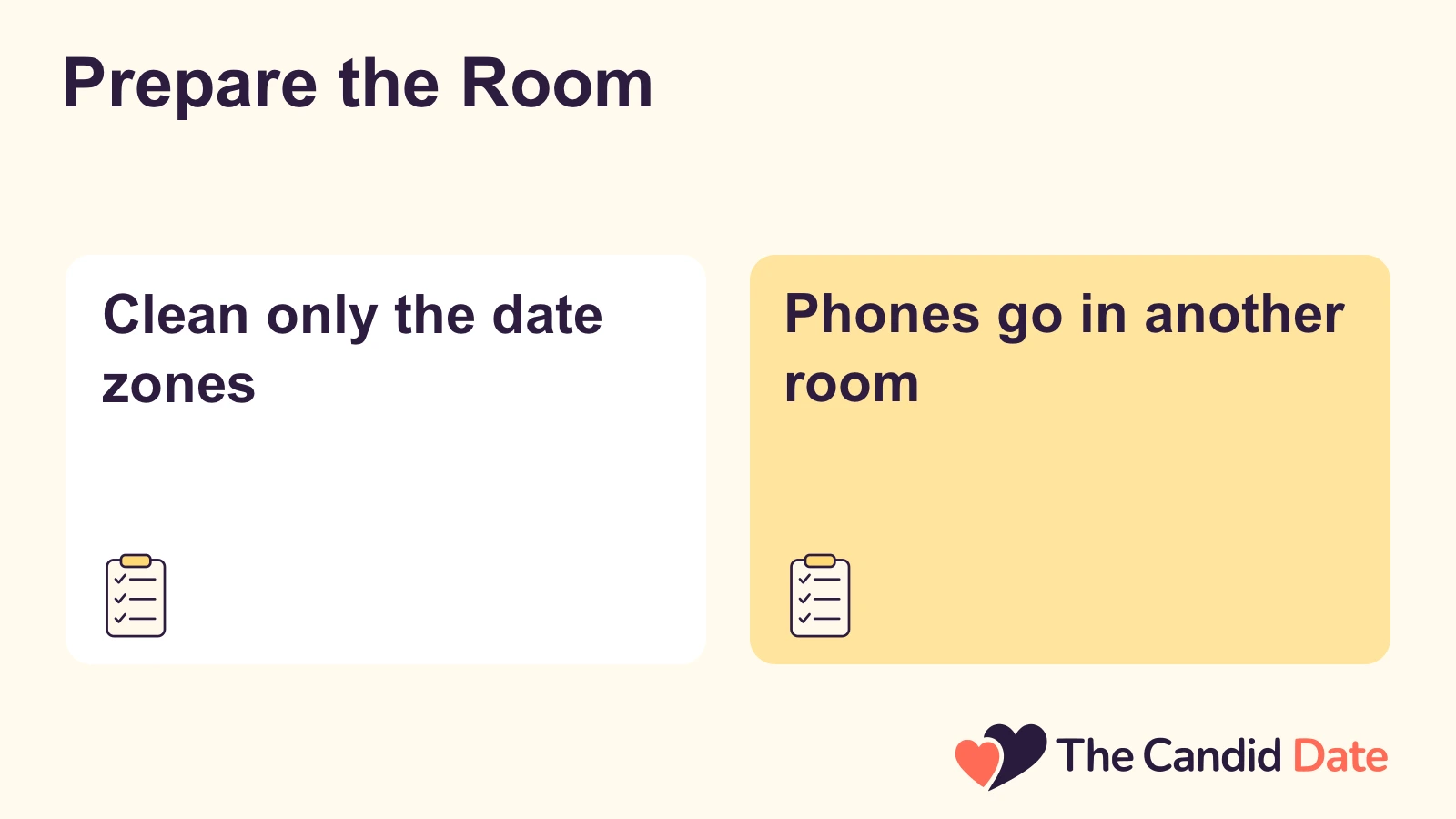
Clean only the zones the date will touch, because a whole-house scrub can turn anticipation into punishment. Thirty focused minutes is usually enough: clear the table, stash mail, wipe counters, fluff pillows, and take out trash. Then change the light, not the identity of your home.
Dim overhead bulbs, add a lamp in a corner, open curtains for evening air, or move two chairs so you face each other instead of a screen. Put phones in another room rather than face down; face down still whispers. If music helps, queue one playlist under an hour so nobody keeps negotiating songs.
Prepare small comforts within reach: water, napkins, a blanket, chargers away from the seating area, and any supplies for the chosen activity. Avoid buying décor you will resent storing. Use what feels slightly special already, and hide nothing that creates stress later.
The room should say, we cleared space for us, not look at what we purchased. A few clear surfaces beat crowded shelves when the night begins. Leave one empty spot for dessert, cards, or bare feet.
Choose One Shared Activity and Own the Tradeoffs
Pick one shared activity before the day, then defend it from option creep. The core tradeoff is novelty versus stamina: a new recipe can be bonding, but it adds dishes and timing pressure; a familiar movie is low risk, yet it can become parallel zoning unless you pair it with tasting notes or a blanket fort. Conversation games are inexpensive and intimate, but they can feel forced if either adult is depleted.
A spa night is soothing, though it requires towels, privacy, and consent around touch. A project, such as repotting plants or assembling a photo album, creates teamwork, yet it can slide into errands. Choose based on energy, not aspiration.
If work ran late, pick something with a soft entry and no scorekeeping. If the week was flat, add one novel ingredient: a playlist from the year you met, a cuisine neither of you knows, or questions you have never asked. Write the activity on the calendar beside the time so the choice survives the afternoon slump.
If weather and trust allow, save remote outdoors for later, not first.
Food and Drink: Simple Beats Impressive
Let food support the date instead of auditioning for it. The reliable formula is one signature element, one easy side, and one sweet finish, with everything else store-bought or assembled. If cooking together is the activity, choose a recipe with forgiving timing, like soup, tacos, pasta, or a build-your-own board, and prep ingredients before your guest or partner arrives.
If cooking is not the activity, do not let it consume the evening; order food you both like, transfer it to real plates, and add one homemade detail such as herbs, sauce, or sliced fruit. For a tasting feel, serve tiny courses slowly: a nibble, something warm, something fresh, then dessert. Keep drinks simple: water first, then one option with or without alcohol, poured before conversation begins.
Ask about preferences and allergies without turning dinner into an interview. The tradeoff is control versus presence; the more you micromanage the kitchen, the less eye contact you protect. Decide the cleanup rule in advance: cook together, clean together, or leave dishes soaking while you finish the playlist.
A shared meal should end with both adults still awake and kind.
Cook More, Date Better? Survey Links Home Cooking to Stronger Relationships
The Hour-by-Hour Run of Show
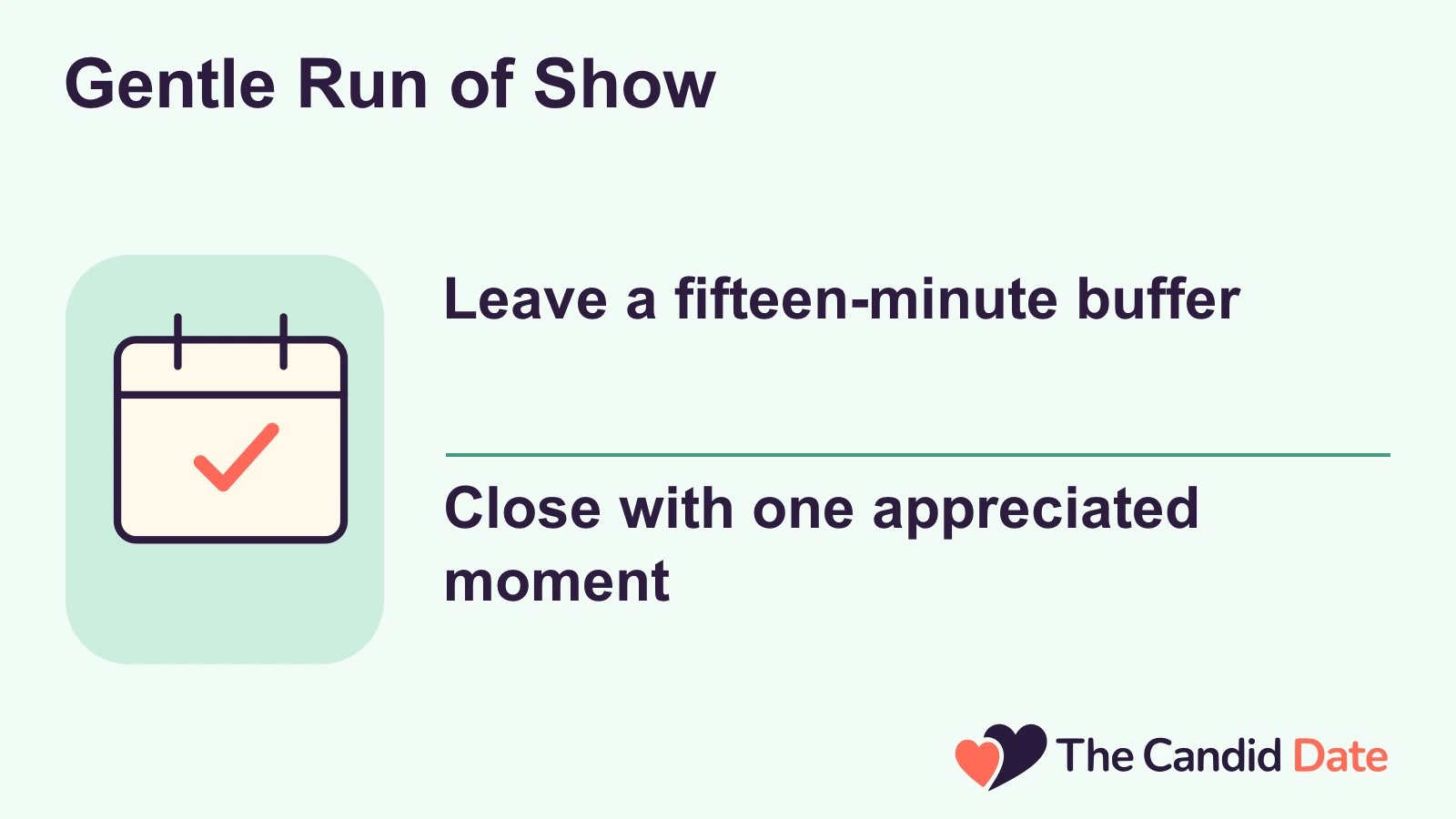
Give the evening a gentle skeleton so nobody has to improvise logistics while trying to connect. Leave a fifteen-minute buffer before start time to change, breathe, and put devices away. Open with the arrival ritual and one easy question that is not about logistics.
Move into the main activity without announcing it like a host on a schedule; let transitions feel natural. Halfway through, pause for water, stretch, or a short walk to another room. Near the end, begin closing deliberately: lower music, clear one surface, offer dessert or tea, and say what you appreciated.
If delivery is late, begin with dessert rather than letting hunger set the mood. Keep the checklist physical or handwritten, then put it away before the doorbell, delivery, or first laugh.
- Start: phones away, water poured, clothes changed
- First ten minutes: greet, thank, and set the tone
- Main activity: one focus, no side quests
- Middle: stretch, sip, and trade one honest sentence
- Close: lower lights, name a favorite moment
- After: dishes soak, tomorrow stays tomorrow
- Backup: board, deck, or playlist ready
Outdoor Date Ideas: 12 Easy Plans for a First or Second Date
Conversation Rules That Protect the Mood
Protect attention like it is part of the menu, because it is. Agree that this time belongs to each other, not to children, work threads, household management, or the group chat. That does not mean every minute must be profound; playful nonsense is often how adults relax.
It means when one person speaks, the other puts down the spoon, remote, or phone and answers the person. Use open prompts that invite story: what made you proud this week, what are you craving more of, what felt annoying, what would you do with a free Saturday? Take turns choosing the activity across future dates so enthusiasm does not become one adult’s job.
If sensitive topics arise, ask whether tonight is a solving night or a listening night. A listening night needs validation, not instant fixes. Set a soft rule for interruptions: pause, write the urgent thought down, and return unless there is a true emergency.
When conversation stalls, do not panic; change the stimulus with a card, a song, a snack, or five minutes outside, then come back. The point is repeated attention, not perfect dialogue.
If It Goes Sideways: Repair, Don’t Restart
Allow room for changes when you are tired or working in a small kitchen. If the food burns, laugh, order backup, and keep the promise of the night rather than the recipe. If one person becomes quiet, do not interrogate the silence; offer a low-pressure exit ramp such as tea, a short walk, music, or sitting together without talking.
If an argument starts, name it early: we are drifting into logistics or old history. Pause the activity, lower voices, and choose either a five-minute reset or a clean stop with a plan to revisit tomorrow. Consent matters even in familiar relationships; massage, spa touch, photographs, or spicy plans need an easy yes that can become an easy no.
Do not chase the fantasy version once the real version has arrived. Let the actual evening be enough, apologize quickly when you interrupt or sulk, and repair with specific warmth: I liked how you plated that, I felt cared for when you changed the playlist, I am sorry I checked the door. Repair is not ruining the mood; it is proving the mood can survive imperfection.
End together even if the activity ends early.
After the First Attempt: Review and Rotate
The morning after, do a three-minute debrief while memory is warm, not a performance review. Ask what felt easy, what felt strained, and what one detail should be repeated. Keep notes on a shared list: the playlist that worked, the snack nobody touched, the chair that hurt, the start time that was too late, the cleanup rule that helped.
Then rotate leadership so the same adult is not always producing the night. Choose the next date before life reclaims the calendar, even if it is two weeks out and modest. If at-home dates are becoming a rut, borrow one outside idea from a park walk, patio coffee, or market stroll and bring the lesson back indoors: clearer meeting point, optional second stop, easy exit.
If cooking was fun but heavy, simplify ingredients or switch to assembly. If conversation cards felt intense, use lighter prompts. If the night flopped, extract one usable fact and try again smaller.
Momentum matters more than brilliance. A home date is a practice, not a verdict on romance. Treat the checklist as a draft you are allowed to edit.
14 Low-Key, Low-Cost Date Ideas
Optional adult advertisement: Victoria Milan is for married or attached people. It is separate from the advice above and is not a recommendation for repairing a partnership. Check the actual checkout conditions and respect existing relationship agreements.
Sponsored placement

A separate choice for married or attached adults
Victoria Milan markets dating for married or attached adults. Consider its relationship category and payment conditions carefully; advertised privacy tools do not guarantee anonymity or establish a partner’s consent.
- Built for married or attached adults
- Free registration advertised
- Review privacy and paid access before subscribing
| User Base | Today’s Deal |
|---|---|
| Adults considering an affair-oriented service | Free registration; check current paid optionsFree registration does not establish free messaging. Read current checkout, renewal and cancellation terms. Privacy features cannot guarantee anonymity. |
Frequently Asked Questions
How long should an at-home date night last?
Pick a finish line before you begin: dessert, one episode, a walk around the block, or tea at a set time. A boundary keeps a cozy night from dissolving into scrolling. Tell each other, we can absolutely continue if we both want, but the planned part ends here.
That makes staying feel chosen instead of default. It also protects sleep and tomorrow's patience. Endings are part of care, not rejection.
What should we clean up before bed?
Turn the room back into a shared home within fifteen minutes: plates stacked, food stored, candles out, blankets folded, phones charging away from the bed. Do not deep clean tonight. Decide one tiny reset for morning, like starting coffee or clearing the table, then stop.
The date ends when the space feels safe for sleep, not spotless for guests. A short reset beats waking to a sticky counter. Close the loop together.
What if the first at-home date feels flat?
Do not diagnose the relationship from one quiet night. Ask whether the problem was energy, timing, activity fit, interruptions, or unspoken expectations. Change one variable next time: earlier start, simpler food, different lead, gentler prompts, or a clearer promise.
If disconnection persists beyond ordinary stress, consider speaking with a qualified professional; a home date is a pleasant structure, not treatment. Keep the review kind, specific, and short. Curiosity helps more than blame.
What to Do Next
An at-home date night succeeds through follow-through: a clear promise, prepared space, one chosen activity, food that supports presence, protected conversation, calm repair, and a short review afterward. You do not need a bigger home, a perfect recipe, or constant novelty. You need a repeatable way to signal, tonight you matter.
Start small this week, keep what worked, discard what did not, and let the next version be simpler. If the first attempt feels awkward, that is normal evidence that you tried something intentional. The win is not a flawless evening; it is two adults choosing attention again.
About the Author
By: Layla Rivera
Dating Coach
Layla Rivera is a relationship expert and dating coach for thecandiddate.com.
Share the Knowledge!
Our dating experts work hard to show you the best dating sites. Want to show your appreciation? Share this page!