

Fun Date Night Ideas: A Follow-Through Checklist


Key Takeaways
Choose one idea by constraints first: budget cap, energy, weather, travel time, comfort, privacy, and how well you know each other.
Prepare 48 to 24 hours ahead with refundable purchases, supplies, a playlist or question stack, transport, a phone boundary, one backup, and a comfort check.
Use day-of branches for silence, cost creep, closures, weather, mismatched energy, overstimulation, early exit, and transportation friction.
Debrief after attempt one with keep, change, stop prompts so the next date is easier, not fancier.
This is follow-through, not another list of fun date night ideas. You already know dinner, a movie, a walk, trivia, cooking, a gallery, or a drive-in can work. The gap is usually execution: picking one plan that fits real life, preparing without overspending, keeping the mood easy when the first ten minutes feel stiff, and learning afterward.
Below are three starter plans matched to common constraints, then a decision filter, a preparation checklist, a day-of sequence, troubleshooting branches, and a debrief loop. Use it for adults aged 18 or older, whether this is a new connection, a steady relationship, a low-budget week, a sober date, or a special occasion. The goal is not perfection.
The goal is a repeatable system that makes the next attempt calmer and more personal.
Three Starter Plans You Can Actually Finish
Rainy low-prep at home: build a blanket nest, stream one film you both postponed, add favorite candy, and keep phones in another room during the opening scene. Budget band: low. Prep time: under an hour.
Conversation level: light, with one pause to share a song or scene you love. Comfort and privacy: high at home, assuming you both already feel safe there. Easy exit: end after the credits rather than forcing a second activity.
Low-cost outside: meet at a named landmark for a short loop, farmers market browse, or coffee on a busy patio, then decide together whether to add a second stop. Budget band: low to moderate. Prep time: thirty minutes plus weather check.
Conversation level: medium, because moving side by side can ease eye contact. Comfort: choose paved paths, benches, shade, and public exits. Easy exit: no prepaid tickets, no shared car dependency, and a natural loop back to the start.
Higher-effort special occasion: reserve a small event, tasting, class, concert, or drive-in slot, then keep the rest simple with one drink or dessert after. Budget band: moderate to high. Prep time: several days.
Conversation level: lower during the event, higher during transit and dessert. Comfort: confirm seating, noise, standing time, dietary needs, and whether either of you wants public affection kept private. Easy exit: book refundable items, park near the exit, and name a graceful ending before you arrive.
Outdoor Date Ideas: 12 Easy Plans for a First or Second Date
Set Constraints Before You Choose the Idea
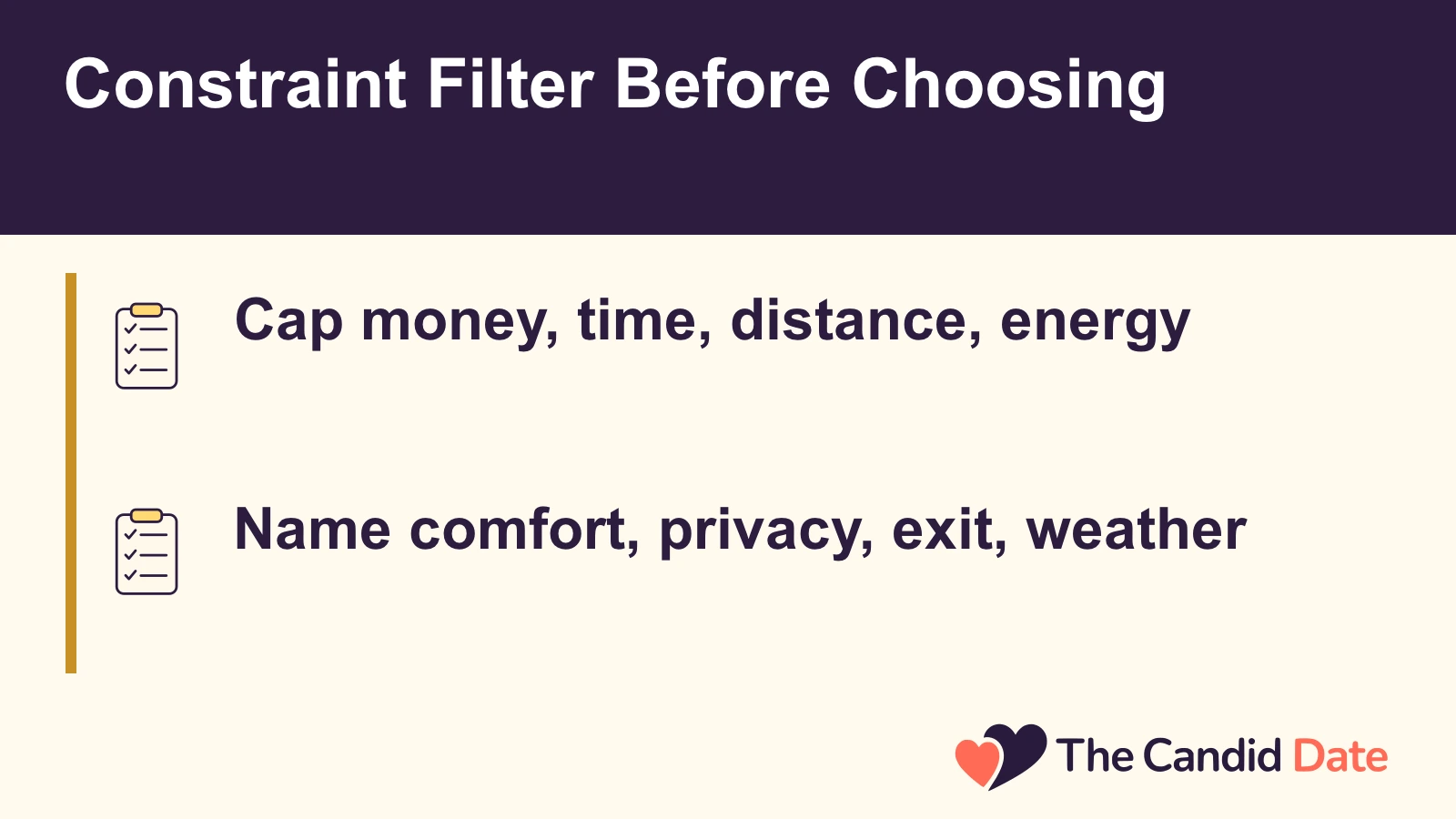
Start with limits, not inspiration. Write five lines: maximum spend, available energy, start and end time, distance you are willing to travel, and weather exposure. Add alcohol preference, mobility and comfort needs, privacy level, and how well you know each other.
A first meeting usually needs public space, independent arrival, and an exit that does not require negotiation. A long-term couple can choose home, but still needs interruption rules so laundry, notifications, or chores do not quietly join the date.
- Budget cap: include tax, tip, tickets, transport, and one likely impulse purchase.
- Energy: tired plans should be shorter, closer, seated, and easier to leave.
- Location: prefer places where arriving separately and leaving independently are simple.
- Weather: name an indoor pivot before the day, not during the first raindrop.
- Comfort: ask directly about noise, crowds, standing, food needs, scent, touch, and pace.
- Privacy: decide what is shared online, what stays between you, and what requires explicit consent.
Choose the Format by Tradeoffs
Every format is a tradeoff. At home is cheaper, private, and flexible, but it can blur into an ordinary evening unless you mark a start time and clear chores. Going out gives novelty and fewer dishes, yet adds travel, cost, noise, and logistics.
Free plans reduce pressure but can feel vague unless you give them one clear activity. Paid plans feel special, but nonrefundable tickets can trap you in a mismatch. Activity-first gives shy pairs something to do with their hands and eyes; conversation-first builds intimacy faster but needs prompts and tolerance for pauses.
Planned versus spontaneous is another fork. A plan respects busy calendars and anxious brains; spontaneity works best when you preselect two acceptable options and let the moment choose. Short dates are kind for first meetings and low-energy weeks.
Long dates can be wonderful once trust exists. Public settings are safer for early connection and easier exits. Private settings are warmer only after both people have shown they can handle pace, boundaries, and a clean goodbye.
Dry Dating Explained: How the Sober Trend Is Changing Date Night
The 48-to-24-Hour Preparation Checklist
- Confirm venue, event, kitchen, parking, and return hours; check weather and local alerts.
- Reserve or buy only refundable items when possible; screenshot confirmations only for your own access.
- Gather supplies early: charged phone, small cash or card, water, layer, medication, gum, mints, and a compact backup layer.
- Build a short playlist or question stack: five songs, five prompts, zero interview tone.
- Plan transport: meeting point, transit choice, ride timing, and a sober ride if drinking is involved.
- Set a phone boundary: photos require consent, and work messages get one planned check or none.
- Prepare one backup within the same budget band, such as a café if the market closes.
- Do a comfort check: budget, pace, touch, alcohol, food, ending time, and the right to change course without punishment.
Keep the consent and comfort conversation simple: I want tonight to feel easy, we can slow down, switch plans, or end early, and neither of us owes extra time because a ticket was bought. That is not contractual; it is adult clarity. It protects the mood more than any grand gesture.
14 Low-Key, Low-Cost Date Ideas
Day-of Run-of-Show From Reset to Close
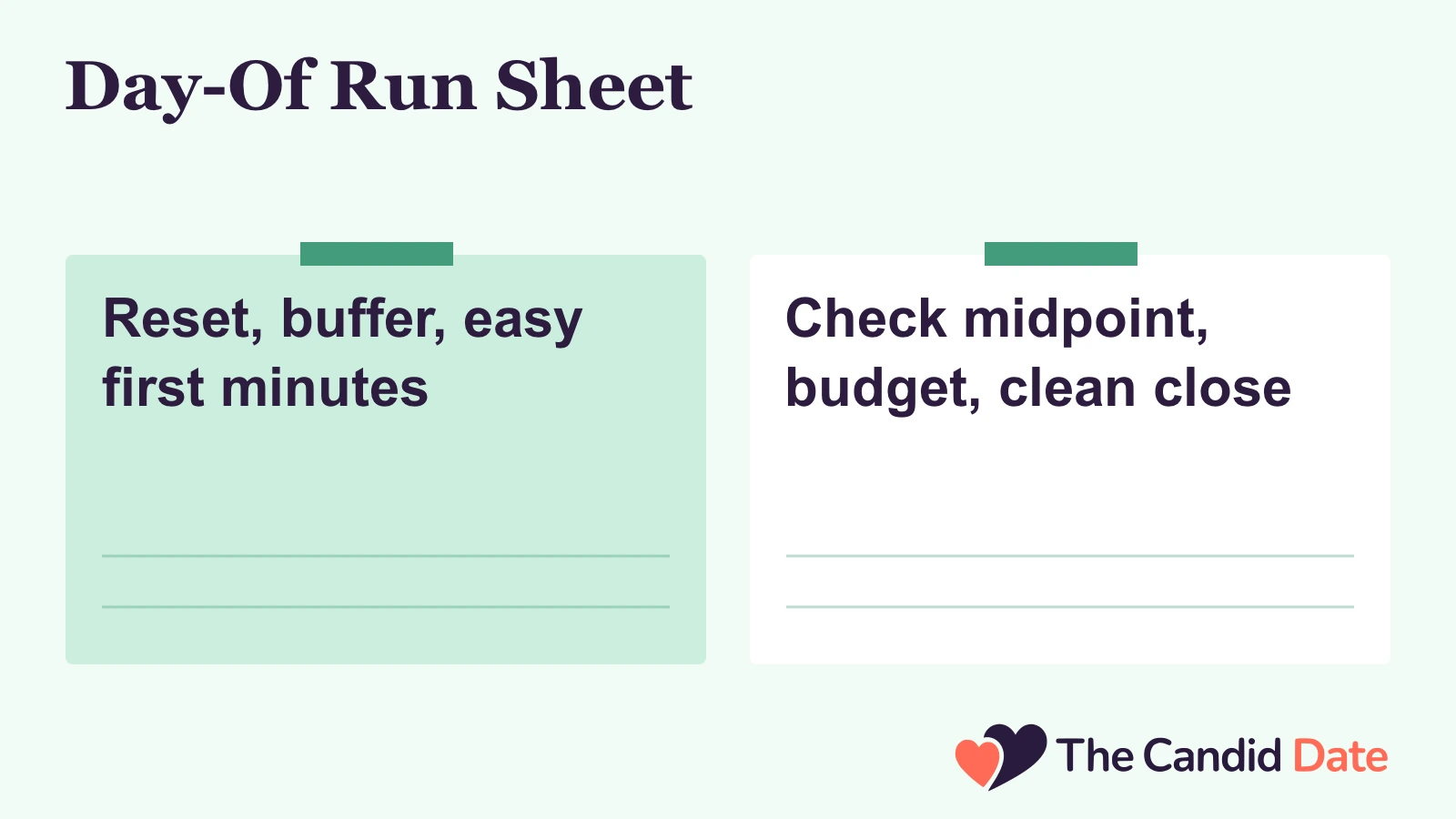
- Fifteen-minute reset: clear one surface, start water or tea, silence nonessential alerts, and put the ending plan in your head.
- Timing: leave a buffer for traffic, lines, weather, and parking; arrive calm rather than impressive.
- First ten minutes: greet warmly, choose one small decision together, and comment on the present moment before asking big questions.
- Midpoint pivot: check in once with a light choice, such as stay for dessert or walk back now.
- Budget check: before the second round, ticket, or add-on, ask whether this still matches the cap.
- Clean close: thank them, name one specific moment you enjoyed, confirm safe transit, and let the ending be clear.
A good date does not need to fill every minute. It needs a beginning that lowers pressure, a middle with one real choice, and an ending that leaves both people feeling respected. If the chemistry is quiet, you still gather useful information: how they handle decisions, money, waiting, changes, and goodbye.
Troubleshooting Branches When the Plan Bends
- Awkward silence: point at the activity, share a small preference, or use one prompt, then return to the moment.
- Cost creep: propose the preselected downgrade, such as dessert out and coffee at home or a walk instead of another round.
- Weather changes: move to the backup without narrating blame; the pivot can become the story.
- Venue closure: take one photo of the closed sign if you like, then choose the nearest acceptable option from your two preselected plans.
- Overstimulation: lower noise, find seating, step outside, shorten eye contact, and ask for a quieter pace.
- Different energy: let the lower-energy person set tempo once, then trade leadership on the next date.
- Wanting to end early: say the plan is complete, confirm safe transport, and keep the door kind for another try if interest exists.
- Transport friction: avoid rides that strand either person; end where both can leave independently.
Keep Conversation Natural Without Interrogating
Treat prompts as seasoning, not the meal. A question should open a door, then you both walk through it with observations, humor, and specific follow-ups. If they mention a stressful week, do not immediately ask for a full history.
Reflect, offer an easy out, and let depth arrive only when both people lean in. Silence while cooking, walking, browsing, or watching credits can be connection when it feels chosen. The failure mode is rapid-fire questions that turn affection into an audit.
Better: share a short story, ask one open question, listen for the detail inside the answer, and build the next line from that detail. If flirting is welcome, make it warm and specific, then watch whether it is returned. If it is not, return to friendly ease without sulking.
Debrief, Adjust, and Decide the Next Date
The same night or next day, use a low-pressure debrief. Ask what felt easy, what felt expensive in money or effort, what you would repeat, and what should stop. Keep it kind: aim at the plan, not the person.
Make a keep, change, stop list: keep the playlist and transit buffer; change the start time and venue noise; stop buying two activities before the first one works.
Review budget and effort honestly. If a special occasion was worth it, define the next special trigger so ordinary weeks do not inflate. If the cheap plan beat the expensive one, bank the difference.
Use a decision rule for scheduling: if both want to see each other again, offer two concrete windows within the next two weeks. If one is unsure, do not chase; return to your own life with dignity. If the date revealed poor fit, count clarity as a success.
How to Plan a Date Night That Goes Well
Sponsored placement


Looking for adults who share your casual intent?
AdultFriendFinder is an optional adult-focused service for casual connections. Check the available profiles and paid communication limits before deciding whether to subscribe; local availability has not been verified.
- Adult-focused casual connections
- Basic free access; paid communication tools
- Check the current subscription conditions
| User Base | Today’s Deal |
|---|---|
| Adults with explicit casual or sexual dating intent | Free basic access; communication upgrades cost extraCheck the current total charge, auto-renewal and any add-ons before subscribing. A membership does not guarantee a meeting. |
Adapt the System Without Changing the Core
For a new couple, keep exits easy and questions lighter. For a long-term relationship, rotate who leads and protect the time from logistics talk for the first hour. For a low-budget week, choose free structure plus one paid flourish, such as homemade dinner and a rented film.
For a sober date, replace bar momentum with a class, walk, arcade, market, museum, or dessert counter, and let the point be presence rather than proving anything. For an adults-only connection context, keep the same checklist: public first if strangers, clear boundaries, independent transport, no pressure, and no sharing of private images without explicit agreement. The core stays constant: constraints, tradeoffs, preparation, branches, debrief.
Change the scenery, not the respect.
Frequently Asked Questions
How specific should the plan be before I invite someone?
Specific enough to lower friction, loose enough to permit choice. Offer the spine: place, rough time, budget band, and one optional add-on. Example: I was thinking a short market loop around six, then optional coffee if we feel like it.
That gives them a real decision instead of a vague vibe. If they cannot make the time, propose one alternative rather than five. Specificity signals care; rigidity signals anxiety.
What if I prepare well and the date still feels flat?
A flat date is data, not a verdict. Run the debrief: was it timing, venue noise, hunger, weather, mismatched curiosity, too much phone, too little exit, or simply low chemistry? Keep the parts that created ease, change the constraint that created drag, and stop investing in proving chemistry through effort.
Sometimes two considerate adults are not a fit. That is useful information before more money, time, and hope are spent.
How do I stay safe without making the evening feel suspicious?
Build safety into normal planning. Meet in public when you do not know the person well, tell a trusted friend your general plan, arrange independent transport, keep your drink attended, and never send money or gifts to someone you have not met in person, a caution also emphasized by the Federal Trade Commission. You do not need to announce distrust.
You simply keep exits open, boundaries clear, and private information private until consistency earns more access.
What to Do Next
The best fun date night idea is the one you can prepare, adjust, and finish without resentment. Pick a constraint-matched plan, prepare the refundable pieces a day or two ahead, run the day with one pivot option, and protect exits for both people. Afterward, convert the evening into three notes: keep, change, stop.
That loop turns novelty into confidence and confidence into a calmer next invitation. Romance is not produced by spending more or performing harder. It grows when two adults make room for attention, honesty, humor, and an ending that leaves respect intact.
About the Author
By: Layla Rivera
Dating Coach
Layla Rivera is a relationship expert and dating coach for thecandiddate.com.
Share the Knowledge!
Our dating experts work hard to show you the best dating sites. Want to show your appreciation? Share this page!