How Active Listening Can Repair Your Relationship



Let me open with a story, and it’s a spicy one. My ex and I were on our way to get tacos when we started arguing about a run-in we’d had with some of his friends a few weeks earlier. Over drinks, those friends had started talking about a person who’d hooked up with “a lot of fat women.” It wasn’t a neutral remark, either — they were mocking this person’s dating choices, and it came off as very fatphobic (because it was).
I raised it with my partner because the comments had struck me as hurtful and surprising; otherwise, those two friends had always seemed kind and compassionate to me. He got angry right away and said I was insulting the very friends who’d made the out-of-line comments.
Active listening, a key relationship skill, is built on paying close attention and trying to understand the other person’s perspective.
My partner did end up apologizing for how he first reacted, and he told me he understood my point. Still, the opening half of this story shows what a conversation looks like when nobody is actively listening.
Rather than hearing what I was trying to say, he got defensive. He took my criticism of harmful behavior to mean I saw his friends as bad people, and that he must be one too for spending time with them. That wasn’t what I meant at all! Every one of us carries biases we need to work through.

Dr. Susan Heitler earned her doctorate at NYU after graduating from Harvard.
If we’d been practicing active listening, we could have skipped the fight (and dug into our tacos much sooner). According to Dr. Susan Heitler, a clinical psychologist who writes for Psychology Today, it’s one of several skills two people need for effective communication.
“One of the fundamentals in a relationship is collaborative dialogue, which is dependent on listening with your good ear, listening for what makes sense or what you can utilize, and then adding your perspective instead of listening with the bad ear, that is, listening for what’s wrong in what you are hearing,” Dr. Susan tells us.
Below, I’ll dig into what active listening actually means, why it’s so important between partners, and how you can use it to work through disagreements with someone you love. Let’s jump in.
What Active Listening Means
For anyone skimming, here’s the quick version: active listening is listening in order to understand.
Want to go a bit deeper? Here’s an explanation from psychologist Sabrina Romanoff:
Active listening “requires de-centering from one’s fixed position to be fully present with another.”
“It helps people feel more understood and strengthens relationships as it signals a willingness to sit with the other’s perspective and empathy for their situation instead of singular focus on oneself.” — Sabrina Romanoff, PsyD
Compared with other kinds of listening, like passive or selective listening, it’s a much stronger tool for strengthening bonds. In passive listening, the conversation runs one way, and the listener often isn’t fully tuned in or offering any feedback; selective listening means reacting to one bit of information and ignoring everything else.
6 Core Elements and Best Practices
Active listening has one simple goal: making sure the person talking feels seen and understood. Still, a lot of pieces have to come together for it to work well during discussions or conflicts. These are the biggest ones:
1. Being Present
Yoga instructors sometimes open class by saying they “invite you to arrive on your mat” — a fancier way to say “Be present so you can get the most out of this experience.” That same principle holds when you’re talking with someone you care about.

Setting aside time for serious conversations can help keep a relationship healthy.
The more fully present you are, mentally and emotionally, for what’s happening right before you, the more you’ll each gain from it.
2. Non-Verbal Cues
There’s a reason people say “A picture’s worth 1,000 words”! Facial expressions and body language often reveal a lot about someone’s feelings — occasionally more than their words do.
Oh, and one more thing: keep up the eye contact. Lots and lots of eye contact!
3. Paraphrasing
When I was in school, my English classes had me paraphrase (put into my own words) the chapters we were reading. I dreaded it, but it did the trick: by the time I finished, I understood far better what had really gone on in each chapter, and the lesson stayed with me through the end.
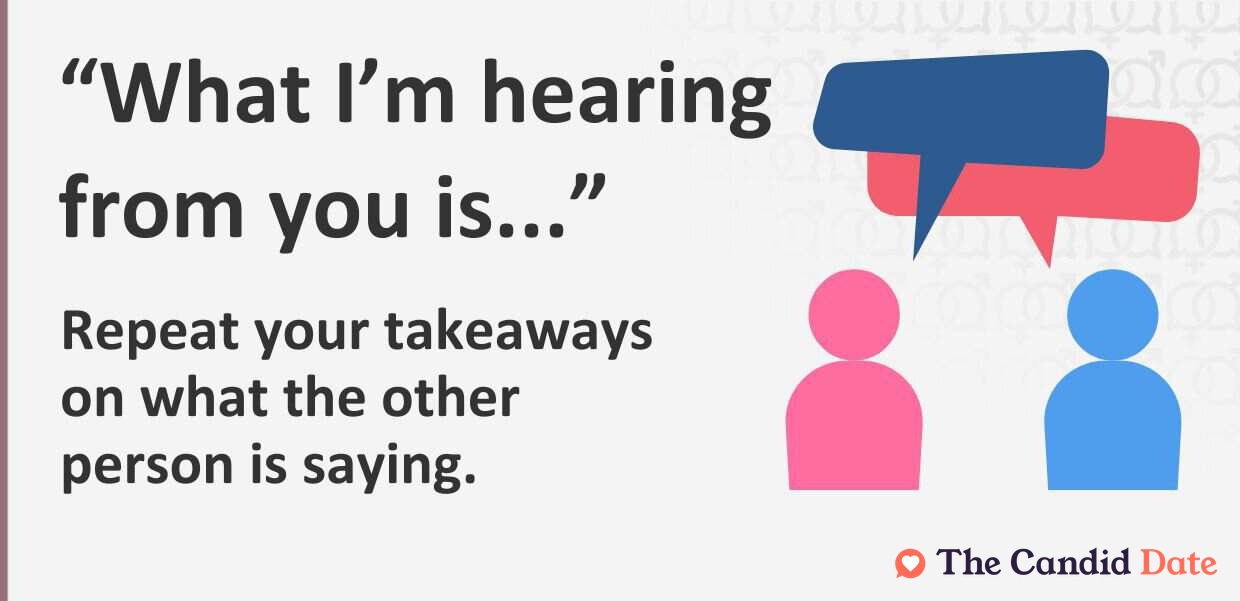
Use the same skill with your loved one. Repeating back what you took from what they told you lets them know you’re not only listening but also grasping what they’re trying to get across.
4. Clarification
On the subject of paraphrasing: sometimes what you’ve understood won’t line up with what your loved one means to say. When that happens, ask them to clarify further.
5. Empathy
Anger, frustration, defensiveness, and other negative emotions can make it hard to listen and respond actively. Don’t let those feelings steer you wrong. Healthy relationships depend on empathetic responses.

An active listener has to look beyond their own triggers and recognize the speaker’s feelings and point of view. Otherwise, getting the conversation to move forward can seem impossible.
6. Feedback
Beyond repeating their words back, it also helps to respond thoughtfully to what they’re telling you. Doing so goes a long way toward showing that you understand and that you validate what they’ve been through.
Why Active Listening Matters
You likely have a decent grasp of this already, but let’s dig into the specific “whys” of this way of communicating.
- Heads Off Misunderstandings: Plenty of people struggle both to express their intentions and to read other people’s, and that creates even more misunderstandings. With active listening, you and your loved one both come away feeling heard and understood.
- Builds Trust: Opening up and being vulnerable is hard enough already. Listening closely helps your loved one relax and, above all, creates a safe space where they feel free to express themselves.
- Reduces Defensiveness: As my story about my ex showed, fights can start when your gut reaction is to get defensive. Active listening helps you pause, breathe, and concentrate on what your loved one wants you to understand.
- Promotes Respect: When you listen with a genuine wish to understand your loved one, you show them that respecting their feelings and point of view matters more to you than being “right” in that moment.
The Bigger-Picture Payoffs
In relationships, small efforts are what grow into big wins. Sharpening your active listening skills comes with four broad benefits:
Resolving Conflicts Effectively
Couples and friends often discover that the thing they’re fighting about isn’t always what it looks like on the surface.
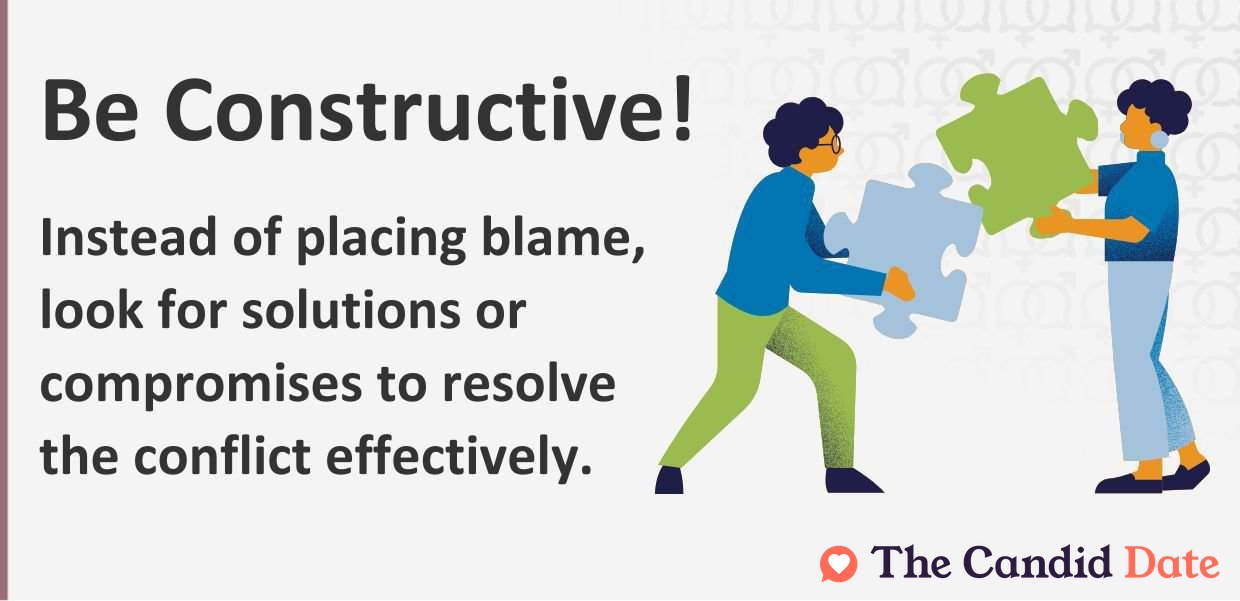
Say Person A often complains about the amount of time Person B spends on video games, and it regularly ends in an argument. With active listening, the couple would see that the arguments aren’t really about the games at all, but about how disconnected Person A may feel from Person B. Once they see that, they can brainstorm better ways to reconnect.
Enhancing Communication
Following on from that, people who practice active listening often notice it makes room for calmer, more rational conversations — particularly ones aimed at solving the problem instead of pinning blame on someone.
Supporting Each Other’s Needs
In the Person A and Person B example, the pair might rely on active listening to bring unspoken needs to light — emotional, physical, or psychological — and tackle them as a team.
Greater Relationship Satisfaction
When friends or partners both feel validated and understood, that sets the stage for a real connection grounded in intimacy, trust, and respect. Those three things are essential if such relationships are going to last.

Emotional intimacy is about trusting your partner with your secrets and your honest thoughts.
Unsurprisingly, couples with strong communication skills — active listening among them — tend to be more satisfied with their relationship as a whole.
Common Obstacles and Challenges
If active listening came easily, we’d all likely be doing it already. Keep reading for four of the biggest obstacles that stop us from listening actively as if it were our gosh dang job.
Distractions
Come on. You knew there was no way I’d finish this article without bringing up how technology has affected relationships. In some ways, phones, laptops, and computers have made many of us feel linked to the rest of humanity, but they can also pull us away from the people sitting right in front of us, even during important conversations.
Emotional Reactivity
Even the most emotionally mature people struggle not to get defensive, hurt, or irritated when a relationship hits conflict. We’re only human, after all.
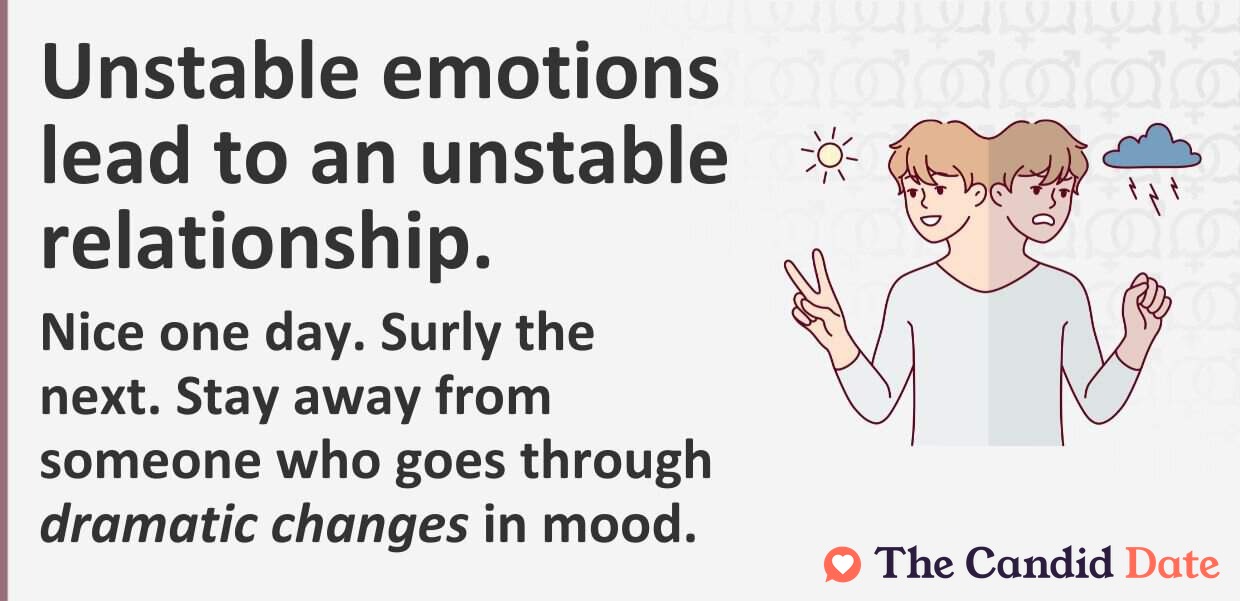
But acting on that emotion impulsively could have you blurting out something you don’t mean and drive the person you’re talking with even further away.
Judgment or Assumptions
As the saying goes, “Assuming makes an a** out of you and me.” It really couldn’t be truer! Going into a conversation with a judgment or assumption about what your loved one might say will only get in the way of truly understanding what they really mean.
Lack of Patience
Uncomfortable conversations are, well, uncomfortable. But rushing through them just to reach the finish line only keeps you from fully absorbing what your loved one is telling you.

Interrupting impatiently or pushing your partner to respond fast won’t get you anywhere.
Give your partner patience, and don’t cut them off or complete their sentences for them. Even if they stumble or hesitate a lot, wait it out and let them find the words for their feelings.
How to Practice Active Listening in Your Relationship
Active listening know-how: unlocked. Next, here’s a practical plan, step by step, for putting it to use so your relationships stay strong, healthy, and built to last.
Step 1: Eliminate Distractions
I’ve already covered how distracting things like your phone can be. We all know what our devices do to us, so put them away.
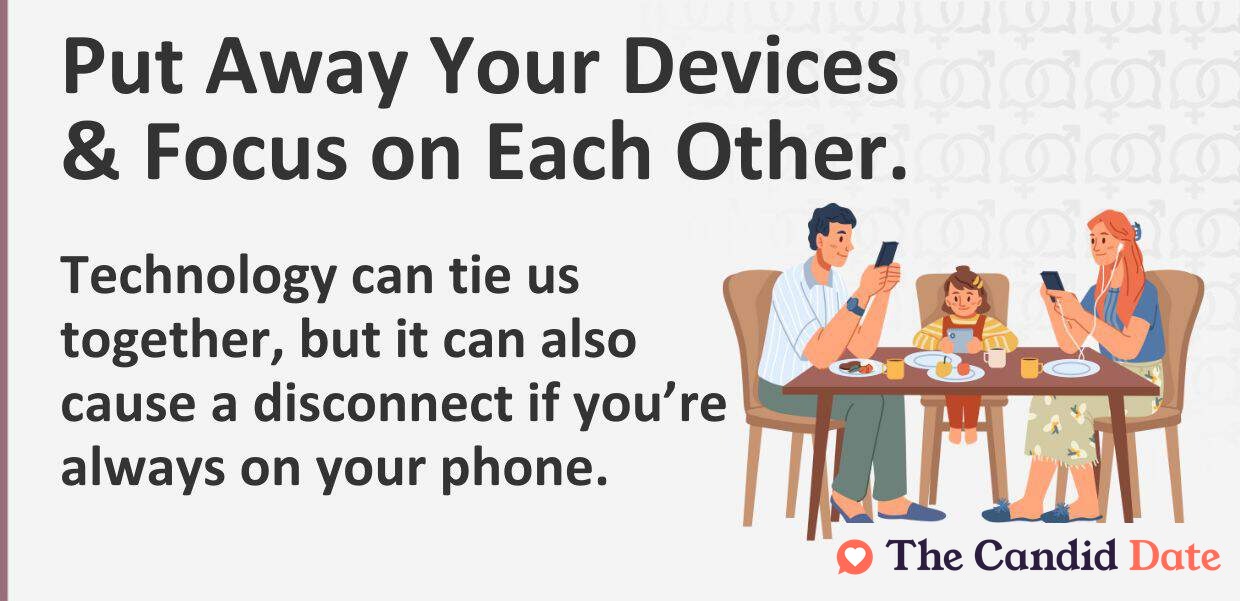
It might be tempting to jump straight into a talk about money while an episode of “I Think You Should Leave” plays in the background, but we wouldn’t recommend it. Clear away every device or distraction that could keep you from staying present in the conversation.
Step 2: Practice Mindful Listening
Fight the impulse to plan what you’ll say before they’ve even finished speaking. Pay close attention to their words, and take note of their tone and body language too.
Step 3: Use Paraphrasing and Clarification
Take a moment to pause, reflect, and sum up in your own words what your partner told you. (Think WWMETD: “What Would My English Teacher Do?”). If your version doesn’t match your loved one’s, ask clarifying questions.
Step 4: Validate Feelings
Do your best to put your ego aside and recognize what your partner is feeling. Saying things like “I understand where you’re coming from” and “That must have been really hard for you” can make a big difference.
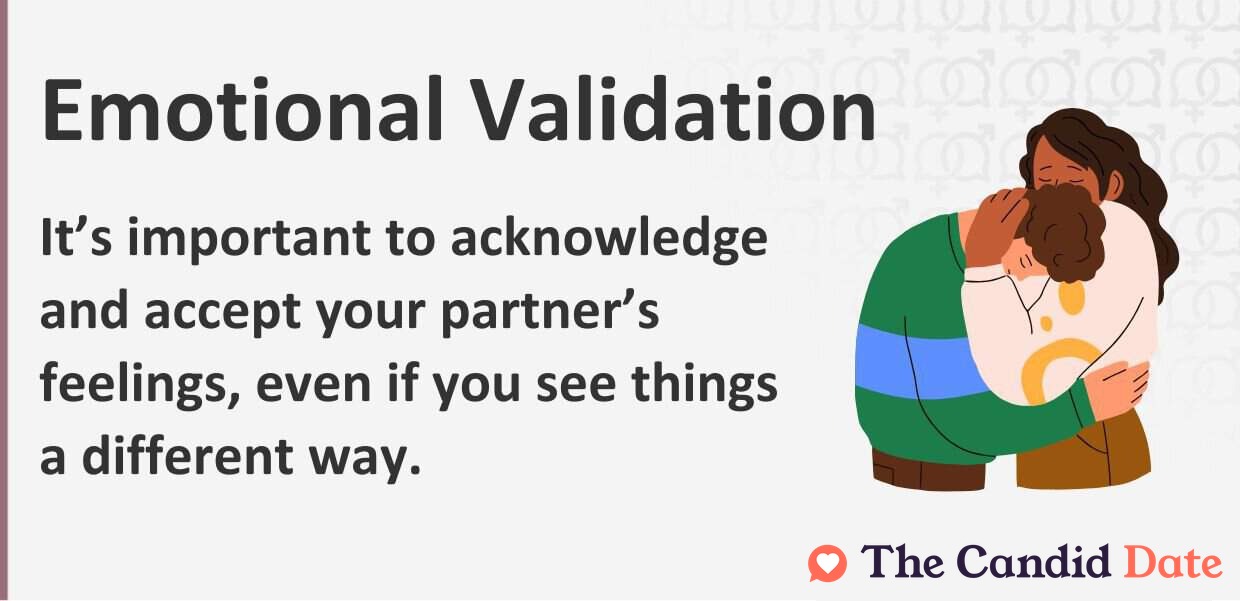
Dr. Susan Heitler advises against responses that start with “Yes, but,” because they can easily sound like you’re dismissing or ignoring your loved one’s feelings. Build your sentences around “Yes, and…,” instead, so that each person’s truth gets voiced and heard.
Step 5: Offer Thoughtful Responses
However heated things get emotionally, keep in mind that your loved one’s feelings count just as much as yours. Staying cool, calm, and collected as you share your thoughts shows your partner that you value their point of view and want to reach a solution together.
3 Real-Life Examples of Active Listening
That’s enough theory! Keep reading for three examples that put these steps to the test (in situations nearly everyone can relate to).
Scenario 1: Handling an Argument About Household Chores
Work has been keeping Joanna extremely busy lately, and she’s so worn out by evening that she completely forgets to do the dishes (one of her assigned chores). Her partner, April, is growing frustrated at having to remind Joanna over and over to wash them, or at ending up doing them herself.
Here’s a dialogue showing how the two of them handle it with active listening:
April: “Babe, do you have a second to talk about something that’s been on my mind?”
Joanna: “Sure, what’s up?”
April: “I’ve noticed that the dishes haven’t been cleaned all week. Is everything okay?”
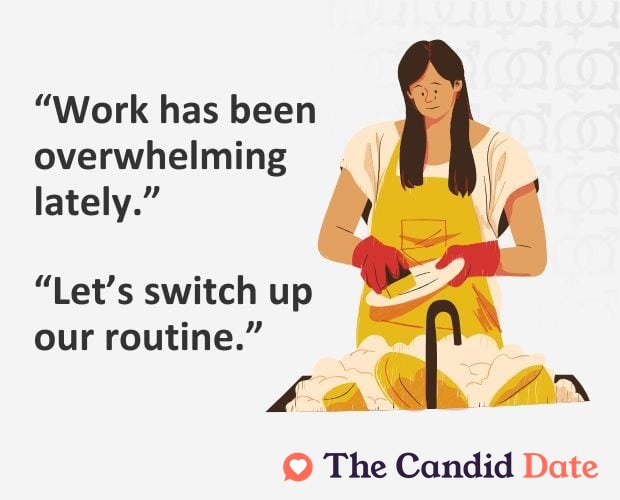
Joanna: “Ugh, yeah, I know. Work has been so overwhelming lately, and it has my head all over the place.”
April: “I can totally understand that. It sounds like work has been taking a lot out of you. Do you feel like maybe we need to switch up our routine so that it’s more manageable for you? Just temporarily?”
Joanna: “I think that would be really helpful, actually. Let’s try something different for this week, then we can check back next week and re-evaluate.”
April: “That sounds good. I’m glad we could come together and find a shared approach.”
Scenario 2: Supporting a Partner’s Emotional Struggles
Liam and Holly have gone out to dinner for their anniversary. They’ve planned a whole romantic evening, but Liam seems distracted. Holly is talking, and Liam keeps glancing at his phone. She’s beginning to notice.
Holly: “Hey sweetie, I see that you’ve been checking your phone a lot since we sat down. Is everything okay?”
Liam: “Oh, yeah, I’m sorry. I just got in an argument with my dad earlier today, and I’m checking to see if he responded to my last text. The whole thing has really put me in a sour mood.”
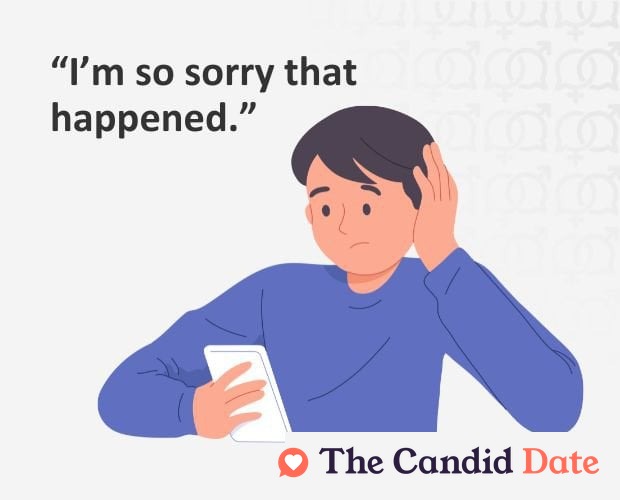
Holly: “Ah, I see. I’m so sorry that happened. Arguments with parents can be tough, and I can completely see how that can put a damper on your day. Do you wanna talk about it?”
Liam: “Hmm, I don’t think so, honestly.”
Holly: “I totally hear you. And I’m here for you whenever you wanna talk about it. I don’t want to take away from what you’re feeling right now, and I’d really love to be present with you and enjoy this night together. Do you think we could both put our phones away, just for the rest of dinner?”
Liam: “I wanna be here in the moment with you too, babe. I can do that for sure.”
Scenario 3: Navigating Financial Disagreements
Marco and Andrew are going over the budget for the month. Marco is eager to plan a vacation with Andrew, because they haven’t had much quality time together since Marco’s promotion at work. Andrew is concerned about saving money to pay down his law school debt. They’ve been out of sync on this for several months, and the tension is building.
Marco: “We’ve been talking about this vacation for the past year and a half. It’s starting to feel like it’s not gonna happen for us anytime soon if we don’t start saving money for it now.”
Andrew: “I hear you, and I know this vacation is something you’re really looking forward to. I’m really looking forward to it, too — it’s been a while since we’ve been able to actually relax together!”
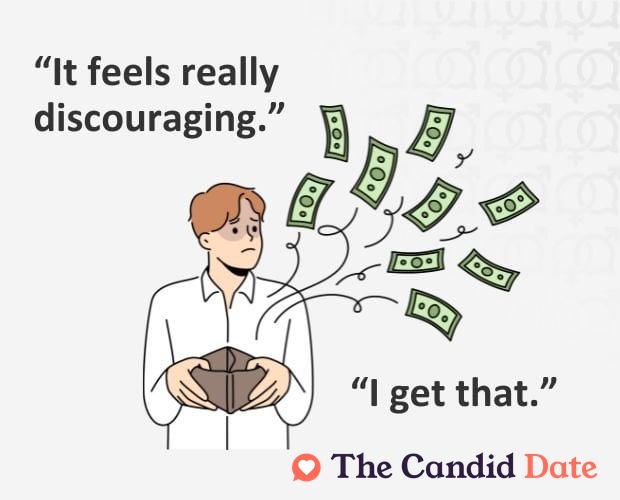
Marco: “Yeah, and it feels really discouraging when so much of our money is going toward paying bills and paying off debt. I just want both of us to have something to look forward to.”
Andrew: “I get that, and I know it’s important to have fun things to plan for. To be honest, the stress of the debt is really weighing on me. The fact that it still hasn’t been paid off makes me super anxious.”
Marco: “I didn’t realize it was affecting you this much. I’m so sorry you’re feeling this way. I don’t want either one of us to be stressed at the end of the day.”
Andrew: “I appreciate you saying that. Is there a way we can find balance? Maybe if we save a bit for both, it’ll feel more manageable. What do you think?”
Marco: “That sounds fair. We can divide it up in a way that makes sense, so we’re chipping away at both goals as we go. Let’s take another look at the numbers!”
Healthy Relationships Need Active Listening
Anyone who’s heard the phrase “Communication is key,” won’t be shocked by this, but a study from the American Academy of Matrimonial Lawyers reported that “67.5% of marriages in the U.S. end primarily because of communication problems.” Psychologists like Dr. Susan Heitler, along with other experts, say active listening is one way to fight these communication problems and can even leave relationships stronger.
Active listening, meaning listening with the goal of understanding, lets couples work through disagreements and hard stretches with compassion, understanding, and respect for each other, so that both partners come away feeling seen and heard.
Technology, knee-jerk reactions, and impatience can all stand between you and the resolutions you badly need. Still, you and your loved one (be it a romantic partner, a friend, or a relative) have steps you can take to tear down those walls. Then you’ll reach the other side happier, closer, and (with any luck) with your belly full of tacos.
About the Author
By: Camila Wright
Feature Writer
Camila Wright brings a unique storytelling voice and marketing background to feature stories on thecandiddate.com.
Share the Knowledge!
Our dating experts work hard to show you the best dating sites. Want to show your appreciation? Share this page!