Open Relationships Mean Different Things to Different People



Open relationships appear to be having a moment. Plenty of us have friends who date non-monogamously, and those who don’t are likely bingeing reality shows about couples searching for a third.
Since I work as both a sex therapist and a relationship coach, I constantly hear questions about the way non-monogamy functions and whether my clients might be suited to it, whether they’re app-swiping singles or couples who’ve been together for ages.
So what does a person really mean when they tell you they’d like an open relationship? The confusion makes sense to me, since the many forms of ethical non-monogamy come with a lot to learn and track. Here’s the rundown:
What Ethical Non-Monogamy Means
Ethical non-monogamy, also known as consensual non-monogamy or simply “ENM,” for short, is a catch-all label for having romantic and/or sexual relationships with more than one person while everyone involved is fully informed and gives their consent.
Fundamentally, non-monogamy is a relationship model that lets the people inside it seek out several romantic and sexual connections, provided every person involved agrees.
Naturally, that leaves plenty open to interpretation: which romantic and sexual connections, exactly? And what relationship, if there is one, exists between the different people you date?
How you answer those questions comes down to which ethical non-monogamy structure you choose.
Open Relationship Basics: 3 Things You Should Know
An open relationship typically centers on one main partnership, possibly one that began “closed” or monogamous, where both people can seek sexual (though not necessarily romantic) relationships with others.
Many people treat it as their first step into non-monogamy, and it often means “opening” up a relationship that’s been going for years.
That said, some folks say “open relationship” when they mean non-monogamy of any kind. It can help to sit down and ask your partner exactly what they mean when they use the phrase.
1. It’s Usually About Sex
As for the mechanics, most open couples have one primary long-term partner, and both of them have agreed that each may pursue sexual or romantic activity beyond that main relationship.
2. It’s Usually Short-Term
The usual expectation is that those outside connections stay casual or short-lived and revolve more around sex than emotional intimacy. That sets them apart from polyamory, where people may form genuinely serious emotional bonds with several partners.
3. It’s Particular to the Couple
Couples with an open arrangement may set particular rules or boundaries around the kinds of outside connections they’ll seek.
They discuss situations that could come up and how they’d deal with them while honoring the primary partner’s feelings.
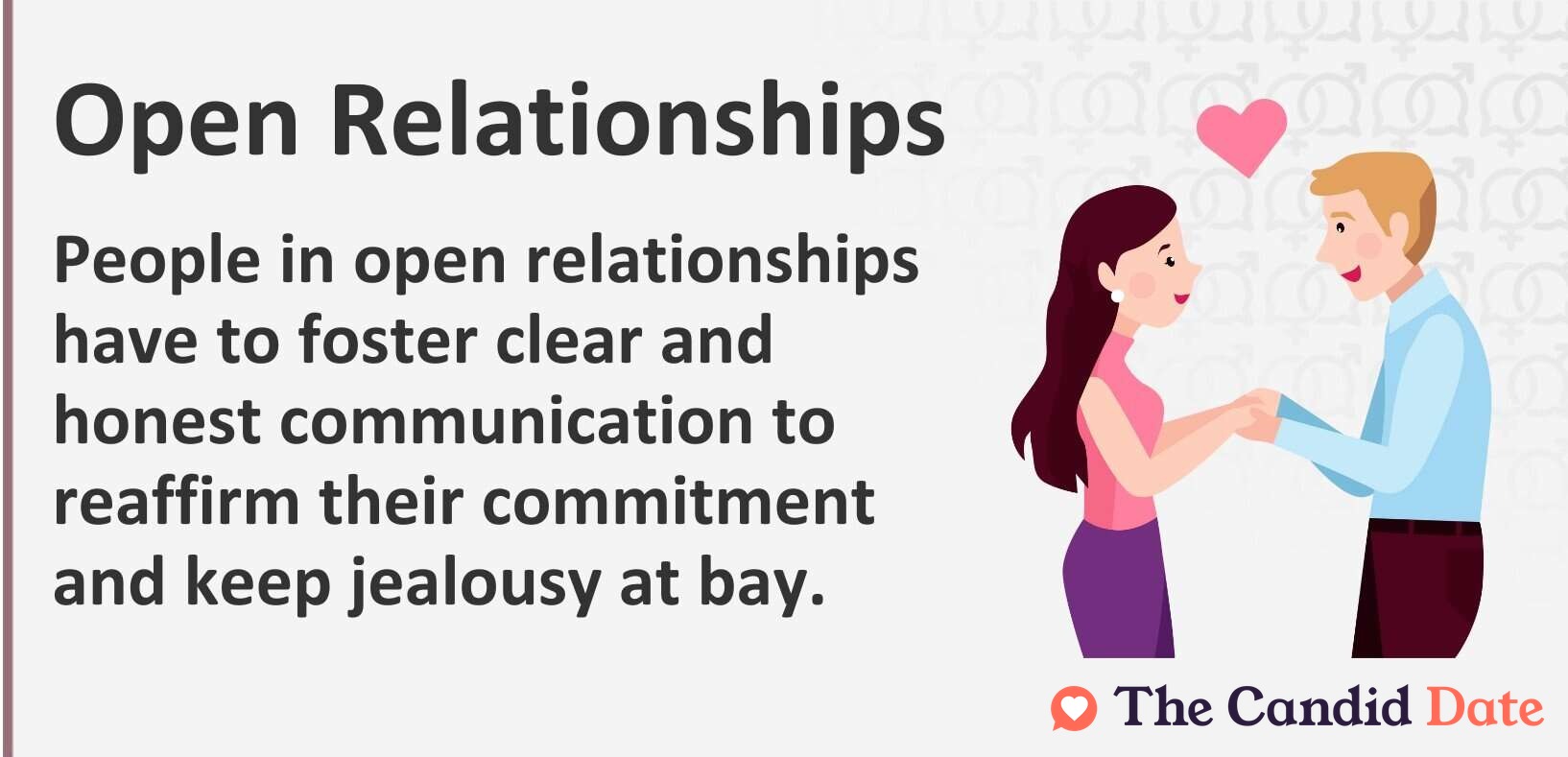
That might mean hooking up only with a certain type of person, or only engaging in a certain type of sexual contact. One couple I know built their open relationship around gender: the male partner told his girlfriend she was free to sleep with whichever women she wanted, but men were off-limits.
Some open couples agree to share every detail about the people they see on the side. Others opt for a “don’t ask, don’t tell” approach and keep the specifics private.
Related Terms & Arrangements
Because open relationships can overlap with other polyamorous setups, it helps to understand the other relationship styles in this world.
Monogamish Relationships
True to their name, monogamish relationships function much like monogamous ones in most of the ways that count, with the occasional situational exception.
Often, they’re monogamous partnerships with a handful of defined carve-outs that let one or both people get romantic or sexual with someone other than their partner.

Monogamish partners could, for example, commit to romantic and sexual monogamy while allowing one-night stands during business travel (so long as they’re discussed). Or they could permit flirting strictly online with strangers in other cities.
Some couples maintain a list of people either one could sleep with if the chance came along, a “hall pass.”
Monogam-ish can also mean exploring sex together as a couple, maybe by going to a play party side by side or having the occasional threesome.
Generally, being monogamish means staying emotionally close to your partner while now and then seeking some kind of sexual experience beyond the primary relationship.
Polyamory
In polyamory, a non-monogamous relationship structure, people maintain consensual, intimate bonds with several partners at the same time.
It can include a broad range of interactions, commitments, and styles. Keep in mind that, unlike certain types of non-monogamy (swinging, for instance), polyamory is definitely not only about sex.
Many polyamorous people place a high value on building several meaningful emotional bonds. It’s common for them to juggle more than one serious relationship lasting many years.
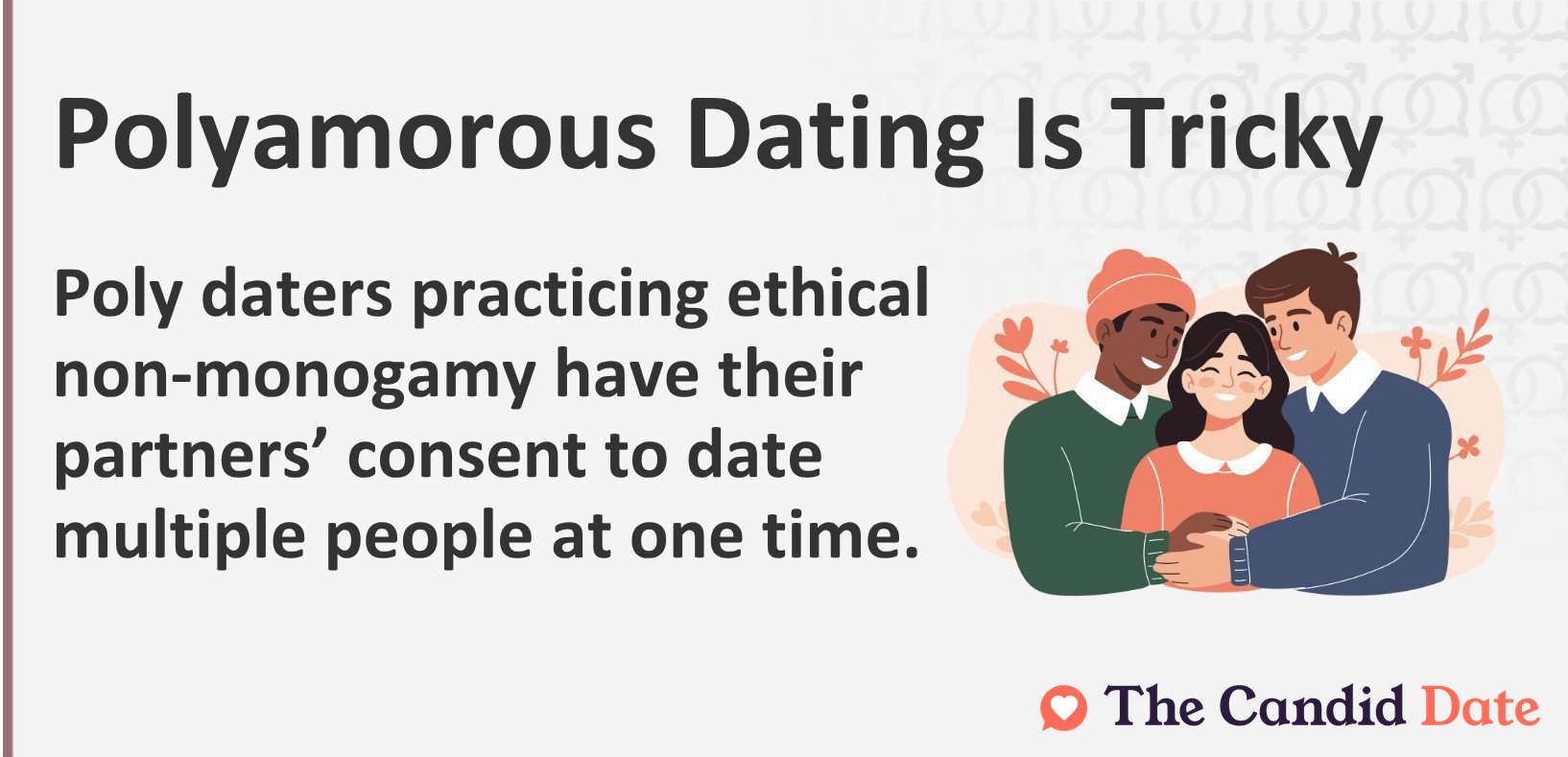
Those relationships can take different shapes (a partner you share a home with, a partner you’re raising kids with, a partner you put effort into a long-distance relationship with), yet each one matters in its own way.
Hierarchical Polyamory
Under the broad polyamory umbrella, you’ll find many different philosophies and structures. Those who follow hierarchical polyamory usually have a primary partner they’re married to and/or live with, and they treat their other connections as secondary to that main one.
Others follow non-hierarchical polyamory, which might mean no single relationship carries more weight than the rest.
Non-Hierarchical Polyamory
Non-hierarchical polyamory sometimes overlaps with relationship anarchy, an approach built on autonomy and respecting each connection on its own terms, without loading it with expectations set in advance.
Solo Polyamory
People who practice solo polyamory don’t believe in primary partners and see themselves as their most important relationship. Other relationships may matter to them… but not enough to shape major life choices.
Polyfidelity
At the opposite end sits polyfidelity, in which several people share a committed, exclusive relationship. Picture a triad or throuple where all three partners date and sleep only with one another.
Swinging
Swinging is a type of non-monogamy where long-term partners or spouses choose to seek out sexual encounters with other people as a unit. Those encounters tend to be brief and strictly for fun, with no serious emotional bond or lasting relationship.
A common version is “swapping,” in which two couples trade partners for a night, having agreed ahead of time on exactly which sexual activities are allowed.
Swingers may also go looking for a “unicorn,” meaning a bisexual woman who enjoys playing with couples. True to the nickname, she’s rare.
Swinging differs from open relationships and polyamory in a few respects; the biggest is that swinging couples arrange every connection together, as a pair.
- Requires closer collaboration
- Less autonomy
- More couple-on-couple action
Partners in an open marriage or open relationship may follow certain guidelines or rules, but each partner finds dates and lovers on their own.
Swinging couples typically decide jointly who they’ll have sex with. Any swinging or swapping requires agreement from both of them.
That might happen at swingers’ parties and events, or with like-minded couples they’ve met through an app or online. Swingers may play with others as a pair, individually, or in groups.
Learn the Lingo
Soft Swap: Couples fool around but draw a line on how far things go.
Full Swap: Couples trade partners completely and explore sexually. Nothing is off the table.
Hotwifing: A wife has sexual adventures with her husband’s approval. Sometimes he enjoys watching.
Couples-Only Swinging: The pair swings only as a unit. They stay side by side whenever they play with singles or other couples.
Like every type of non-monogamy, swinging depends on complete communication and openness with everyone involved.
Swinging is often a group affair. Some swinger communities revolve around anything-goes parties at which partners swap without restriction.
With so many people in the mix, you need to be crystal clear about the boundaries in your relationship. Is a full swap okay with you? What about a half swap? And how will you practice safe sex?
Communication Is at the Heart of Open Relationships
With the vocabulary under your belt, you can figure out what works for you and your relationship. There’s definitely no one-size-fits-all answer here. I’ve watched couples design every imaginable combination of rules and arrangements to suit how they live.
Every open relationship looks a little different, but each one depends on clear consent from everyone in it.
So long as you’re upfront about your boundaries and expectations, you can explore the world of polyamory and build connections that satisfy your romantic desires.
About the Author
By: Charlotte Harris
Lesbian Dating Expert
Charlotte Harris is a relationship coach and dating expert specializing in lesbian and LGBTQ+ dating advice on thecandiddate.com.
Share the Knowledge!
Our dating experts work hard to show you the best dating sites. Want to show your appreciation? Share this page!