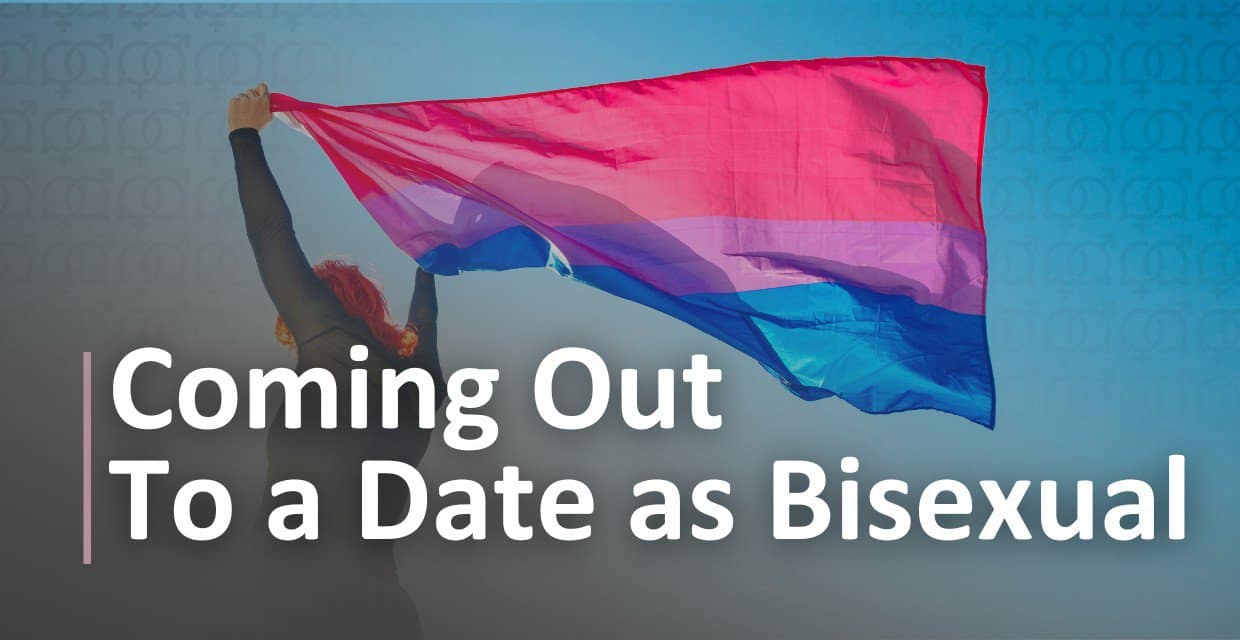
Coming Out as Bisexual to a Date: When and How


Raising big topics while dating takes a certain finesse. Everyone knows not to trash an ex on a first date, but at what point do you mention the current logistics of your divorce? The rule is to keep it positive at first, so how are you meant to stay cheerful all the time while dealing with an illness or mental health struggles?
Striking the right balance between sharing appropriately and opening up isn't easy. You want to let a partner in after they've earned your trust, and not a moment sooner.
Firm rules about what to share get complicated when a topic might turn out to be trivial…or a dealbreaker. When you're disclosing your bisexuality, guessing a partner's reaction to your sexual preferences is tough. You're the one who decides when you're comfortable telling them and making that leap.
We spoke with Gender Specialist Rebecca Minor, MSW, LICSW, to get her take on how to tell when the time is right to come out as bisexual while dating. “There is no universal ‘right time’ to come out as bisexual to a date — it depends on what feels right for you,” she told us. “Trust your instincts, and remember that your identity is yours to share when you feel safe and comfortable.”
Even so, when you're deciding whether to bring up your sexuality, there are key factors to weigh for your emotional, romantic, and physical well-being. “Coming out is a personal choice, and there is no pressure to disclose before you feel ready,” according to Rebecca.
When and How to Bring It Up in Online Dating
Some dating platforms let you officially tag your sexuality on your profile, or at least mention it. If you date online across more than one gender, your profile might be tailored to every prospective match. That leaves many bisexual singles wondering whether to list their sexuality right on their dating profile.
“Including your bisexuality in your dating profile can help filter out potential matches who may not be accepting and create space for more authentic connections from the start,” Rebecca said.
Put your sexuality on your profile, and there's no later conversation to worry about; your dating, and any relationship that follows, begins from a shared understanding. For people active in the queer community, listing it may feel perfectly natural. It's a major part of your life, just like your faith, your politics, or your hobbies.
Then again, some bisexual people would rather keep their sexuality private, either to date without it coloring their relationships at first or to steer clear of discrimination or harassment where they live. Not wanting their identity on their profile is completely understandable.
“There is no wrong choice — do what feels best for you.”
Still, disclosing your sexuality on a dating profile doesn't have to be an all-or-nothing choice. “Whether you hint at it through your language or state it outright depends on your comfort level,” Rebecca explained. “Some people use inclusive language (e.g., open to all genders) while others explicitly say bisexual or queer. There is no wrong choice — do what feels best for you.”
Look for a Partner You Can Trust
You can't be 100% sure your partner will react well when you come out, but there are some signs worth watching for early in dating.
Notice how they talk about queer media, and bisexual media in particular, and how they react to LGBTQ+ political movements. Watch for queer friends and, of course, queer people in their dating past. If they speak well of bi people and the causes they care about, chances are they'll take your coming out well, or at least respectfully.

Every partnership is built on trust.
Your partner may also show some red flags signaling that it's time to move on. Red flags can include “dismissive comments or jokes about bisexuality or expressing discomfort or fetishizing bisexuality,” Rebecca noted. Take those “little jokes” seriously, since they can reveal how people truly feel.
How your partner feels about your coming out depends on lots of factors. I've dated bisexual men, and those conversations were brief and unremarkable. Their sexuality didn't stir up much feeling in me, and among our progressive academic friends, nobody thought twice about it. Those in more conservative circles may find it harder.
Having “The Talk”
If the person you're dating doesn't know your sexuality when things begin, a moment will probably come when you want to share that side of yourself. When that moment arrives depends on your personal preference and how the relationship naturally unfolds.
“Some people prefer to share this information early on to ensure compatibility and avoid investing time in someone who may not be accepting,” Rebecca said. “Others may choose to wait until there is a deeper connection or when the conversation naturally arises.”

Frame the conversation positively.
According to Rebecca, framing can help the conversation go well. “Consider framing coming out not as disclosing something negative or complicated but as inviting someone to know you more deeply,” she told us. “This mindset shifts the focus from fearing judgment to embracing vulnerability, allowing you to share an important part of who you are with someone you are choosing to trust.”
Even so, the conversation might not unfold the way you hope. They could just need some time to take it all in.
“Consider framing coming out not as disclosing something negative or complicated but as inviting someone to know you more deeply.”
Your date may hold negative stereotypes about bisexuality, like the notion that bi people are promiscuous or prefer one gender over the other, and it's your call whether to address them.
“Being prepared to address these misconceptions with clarity and confidence can help dispel myths, but remember, you are not obligated to educate every person you date,” Rebecca pointed out. Processing the news may simply take them a while.
If things go badly, have an aftercare plan ready so you feel supported whether or not your partner helps. Contact friends and your community ahead of time so you're ready to lean on your people, even without your partner.
“If faced with a negative response, remember that rejection based on your identity says more about the other person than you,” Rebecca advised. “Protect your peace, set boundaries, and don’t be afraid to walk away from someone who doesn’t respect or accept you.”
Dating in the Bi+ Community
Whether or not you tell the person you're seeing, Rebecca noted, you can find real support and affirmation among people who share your experience. Even if you already spend time in queer spaces, think about seeking out a bi+ community specifically.
“The bi+ experience can be markedly different from the broader LGBTQ+ experience,” Rebecca said. “Being surrounded by people who understand your unique journey can provide comfort, validation, and valuable advice when navigating dating as a bisexual person.”
Dating as a bisexual person can be hard.
Biphobia definitely exists in the straight mainstream, but it's present in queer circles, too. Bi women are routinely written off as “experimenting straight girls” in some communities, which can feel deeply invalidating. Belonging to the wider queer community is wonderful, but it matters to spend time with people who know exactly what you're dealing with.
It might also be nice to date other bi+ people who get what you've been through. You won't have to explain yourselves, since you're already starting on common ground.
Just remember, there are many ways of being bi and of sharing that. That guy you're seeing, the one you're nervous to come out to? He could be bi as well.
Whatever your sexuality or your partner's, someone who's right for you will love and accept you because of who you are, not in spite of it. Choose partners who leave you excited to show them another side of yourself and who back you up, whatever happens.
About the Author
By: Nora Adams
Staff Writer
Nora Adams is an experienced staff writer interviewing dating professionals and relationship experts for thecandiddate.com.
Share the Knowledge!
Our dating experts work hard to show you the best dating sites. Want to show your appreciation? Share this page!