How Dating Site Algorithms Decide Who You Match With



Whenever my phone vibrates, a little jolt of anticipation runs through me.
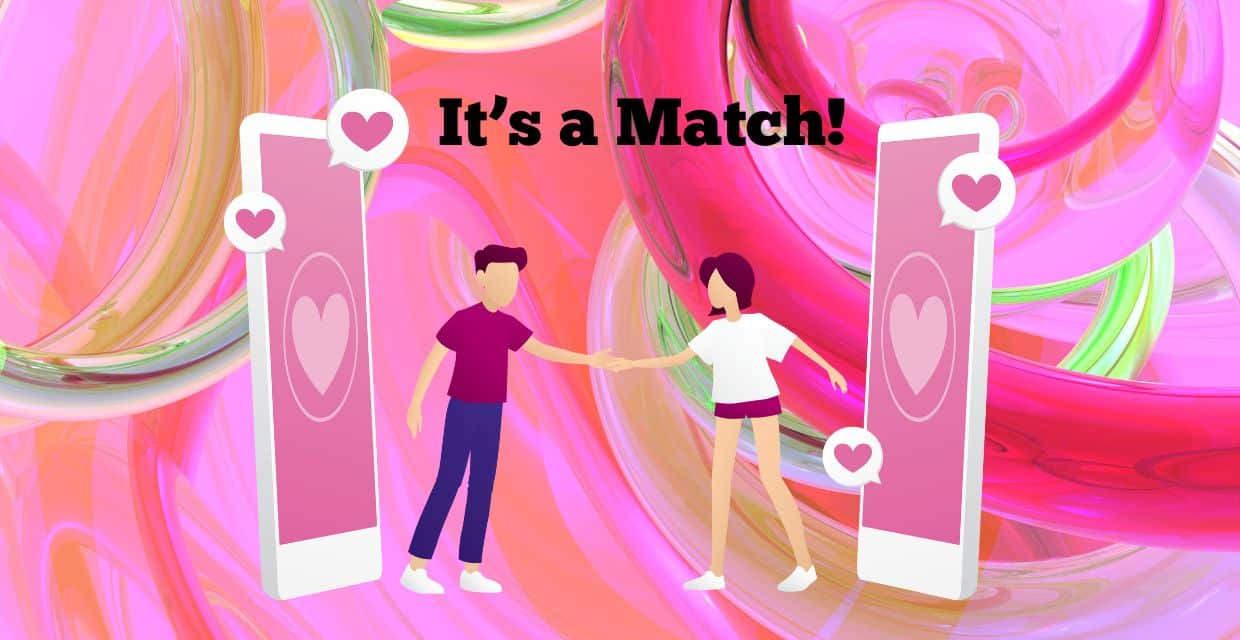
That's right, I've tumbled down the Hinge rabbit hole yet again. Anyone who's been sucked into the dating app vortex knows the exact feeling a new match brings. In online dating, a match means the platform has digitally paired you with another user.
Any notification might be telling you that your soulmate just matched with you. Excitement, nerves, and curiosity all hit you together. Will this finally be the one that works out? Usually, it won't be.
I know firsthand how a single session on a dating app can swing from hopeful to deflating. When an online match fizzles, frustration comes easily. Worse still is not getting any matches in the first place.
Still, there's reason for hope. Once you figure out how to get the algorithms on your side, you can upgrade your dating profile and boost your odds of a solid match.
4 Kinds of Matches
Back in college, online dating matches were all my friends and I talked about. One friend piled up matches on Tinder, while another griped about a drought on Hinge, with no promising prospects anywhere in sight.
Every online dater I know shares one thing: none of us really understands how dating algorithms operate.
No dating app can live without its matchmaking algorithm.
A dating platform's algorithm pairs people up according to their preferences for things like age, gender, and hobbies. After users enter these preferences on their profiles, the algorithm weeds out anyone who doesn't fit. The result: deeper, more meaningful pairings with people who tick every box (or nearly every one).
Once you understand how app matches differ, you can choose the right app for your dating goals. Each app offers its own kinds of matches, from ones grounded in psychology to ones with zero science behind them that are still awfully fun.
1. Mutual Matches
Tinder introduced the most basic kind of dating app match in 2012. Mutual matches are just what they sound like: two users each have to like the other's profile before they can chat.
If you ask me, mutual matches are the most thrilling kind. They're the digital version of catching a cute stranger's eye across a crowded room and thinking, “I have to get to know this person.” Even better, the person you matched with had that same thought about you.
A mutual match signals that both people want to connect. Apps built on mutual matching are usually called swipe-based. Tinder and Bumble, for example, use mutual matching, and a match only happens when both people swipe right.
2. Compatibility Matches
Compatibility matches rely on an algorithm to steer users toward promising dates. The site or app puts forward smart matches after weighing what users want and how well their profiles fit together.
That's why spelling out your interests in detail on your profile matters so much. If competitive cycling is your passion, the algorithm can pair you with someone just as sporty. It picks up on what you value.
eharmony is a perfect example. The values-focused dating site builds compatibility matches from a personality questionnaire. Psychologists designed that questionnaire, which pinpoints a person's relationship goals, interests, and core values.
Match relies on a sophisticated matching algorithm backed by decades of experience. When it suggests matches, its compatibility system considers both what users say they want and how they behave.
Compatibility matching isn't only for longtime dating apps, either. Iris, a newer app, uses AI-driven compatibility matching to create deeper connections.
3. Suggested Matches
Like compatibility matches, a list of suggested matches is generated by the platform's algorithm. These picks, though, aren't always rooted in compatibility. At times the app serves up popular profiles or people who are similar enough that you might hit it off.
Several factors can shape these suggestions, including how users behave on the app and what they prefer.
Whenever I browse an app's recommendations, I keep my expectations modest. Sure, you could always stumble across your soulmate. But think of it as a box of chocolates, a little nutty and totally random.
Hinge offers potential matches through its Standouts feed, where matching costs one of your limited roses. That's a pricey move, but the idea is to get daters invested in each other.
4. Search Criteria Matches
If you have particular dating preferences, such as wanting someone of a certain political party, sexuality, gender, education level, or even height, you can narrow down potential matches with search criteria.
Most well-known dating sites offer search criteria that let users sort through the dating pool according to their dealbreakers and wishes.
Personally, I feel more at ease knowing I'll only connect with people whose values and preferences match mine. Nothing beats the letdown of looking forward to a date and then learning you clash on something fundamental. Well, except finding that out before the appetizer even arrives!
Tinder and Bumble let users set preferences like distance, gender, and age. Hinge takes things further with premium search filters for drinking habits, political views, and education level. On Match, users can filter matches by values and lifestyle choices.
OkCupid goes further still, with search tools for keywords, tags based on interests, and particular answers to personality quiz questions.
How Dating Algorithms Actually Work
The addictive swiping loop of Tinder, Hinge, and Bumble makes those apps hard to put down. Each one uses its algorithm to connect you with people who share your interests or find your profile intriguing. And sometimes a cute profile picture is all it takes to land a match.
Finding well-matched people on a dating app isn't purely a matter of luck. Dating algorithms gather, process, and study huge amounts of data to recommend the best matches they can.
Step 1: Data Collection
Major dating services collect user data to make matching better. What they collect differs from one app to the next, but a few basic principles hold steady. Signing up begins with basic profile details such as location, gender identity, and age.
Certain apps also ask for personal information about your interests, schooling, and romantic goals. All of it gets factored in when the app makes matches.
Data collection doesn't stop at your profile. Apps also track behavior, such as how you swipe and which profiles you view. Tinder, for instance, can assess a user's profile photos and put the most popular ones up front. Activity levels also play a part in how matches get made.
An app may shift its approach based on login frequency and the length of each session. Users who are more active tend to appear more frequently in other people's swipe and match lists.
Step 2: Smart Algorithms Make Suggestions
After gathering user data, app algorithms crunch it and recommend matches. Some apps rely on collaborative filtering, which tries to forecast what a user will like by looking at what similar users liked. The system then suggests profiles based on interests shared by people of a similar type.
Other apps scan the content of dating profiles and recommend matches using keywords that point to shared interests. Say your bio mentions how much you love shooting hoops; the app might show you other profiles that bring up basketball.
Most apps blend both kinds of algorithms to put as many quality matches as they can in front of daters.
Step 3: Learning From User Behavior
Algorithms are anything but static. Apps keep learning as they go and fine-tune their algorithms according to how people use them. Lots of dating platforms run A/B tests, trying out new features or algorithm versions with a small slice of their users.
The system is built to learn from what users do, like sending messages and giving likes, and to tweak its recommendations on the spot. If someone keeps turning down a particular kind of profile, the algorithm will show them profiles like it less often.
Some platforms also take user feedback into account. Hinge, for instance, checks in with users who traded contact info to ask whether a date happened and whether they plan to see each other again.
3 Things That Shape Your Online Dating Matches
With how advanced dating apps are now, finding a compatible date should be a breeze, right?
You swipe through your favorite dating app at breakneck speed, and wonderful matches come pouring in.
Here's a scientific researcher who spends weekends hiking! Here's a rare-book collector who teaches elementary school! And check out this professional breakdancer who speaks three languages! So many varied, one-of-a-kind, fascinating people, right in your tri-state area!
Then reality sets in. The scientific researcher isn't after a committed relationship. As for the teacher, he's duller than the old textbooks he collects. And the breakdancer who speaks three languages bore no resemblance to their profile photo. Time to start over on the virtual drawing board. Except now, there aren't any matches left. What happened to all the interesting people?!
Sophisticated algorithms juggle loads of factors to keep your matches from running dry.
1. Profile Information
Profile details let users size up their compatibility with new people at a glance, and that same data teaches the app how to recommend matches that work.
Information that users supply is crucial for matching because it sets different kinds of daters apart. For example, a dater might only be interested in a certain gender or age range. Filters let them zero in on the kinds of dates they like best.
Without information from users, apps would have almost no way to build compatible matches.
Daters lean on profile details when deciding if a profile deserves a like or a right swipe. Not interested in dating a person who went to your college's biggest rival? When profiles list universities, that's easy to avoid.
Even more important, people after a serious relationship can use profiles to state their intentions and spot other serious daters. If a profile says someone wants casual sex, a serious dater knows right away to pass. It works the same way for casual daters who want to hook up and steer clear of commitment.
2. Behavioral Data
The behavioral data apps collect can shape your online dating matches. Apps pick up on your swipes, likes, and super likes and use them to recommend better matches.
Whether someone likes or passes on a profile tells the platform about their preferences and trains the algorithm to favor certain kinds of profiles. If you keep passing on people over six feet tall, the algorithm will start showing you fewer tall people.
Messaging data can also reveal how users behave. If a “you’re so gorgeous” opener tends to win your response, you may start seeing more people who message others in the style you prefer.
A funny pickup line works better on me than an empty compliment. Lucky for me, the app can steer lots of jokers in my direction.
Doing a little homework can show you how to change the way you use apps so the algorithm works for you. OkCupid's research found that shorter messages get the most replies, and that leading with a comment on someone's looks rarely pays off.
Good conversations on the app mean it's likelier to put you in front of more people you'll click with!
3. Machine Learning
Machine learning sounds like one of the technical AI buzzwords tech bros love to throw around. Thankfully, the idea isn't all that complicated.
Machine learning algorithms sift through massive amounts of data, learning from a user's profile details and behavior patterns to make matches better over time.
Machine learning models spot patterns and tailor their suggestions to how people use dating apps. The longer you stay on an app, the better it gets to know you and what you like. That means more personalized matches heading your way.
In some apps, machine learning models even use image recognition. The system analyzes profile photos to figure out visual preferences and the features matches have in common. If you're into tall, dark-haired men, the app will pick up on it sooner or later.
Algorithms like these make online dating feel more personal and engaging, which can lead to better connections and stronger compatibility, and with luck, less swipe fatigue and online dating burnout.
Challenges and Limits
You probably won't be shocked to hear that dating app algorithms have flaws. AI content from ChatGPT, for instance, has been caught leaving out information and even inventing people and events that don't exist!
A healthy dose of skepticism is a smart way to approach dating algorithms.
Online dating isn't all sunshine and rainbows. Dating sites and apps have lots of downsides that can get in the way of your success and hurt your mental health.
Accuracy
Every so often an app will recommend someone who is definitely not your type, which can catch you off guard after you've been on the app a long time.
On top of mistakes made by algorithms and AI, some people have misleading profiles with old photos or interests that aren't accurate. The algorithm may recommend a profile like that, figuring you two are a great fit, only for you to find out once you start chatting that the profile was false advertising.
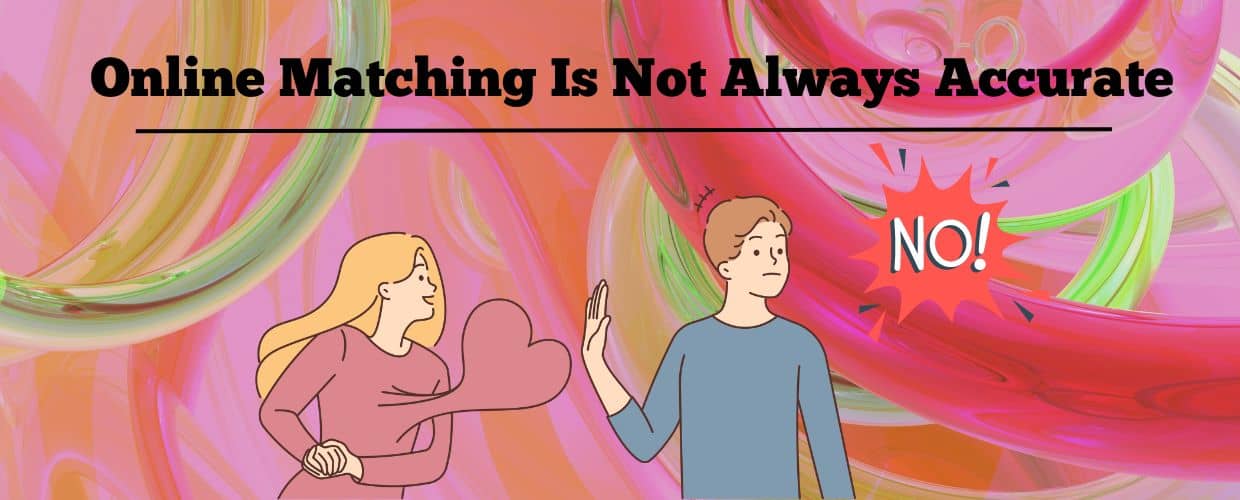
That's why it matters so much to have at least a short chat before you agree to a date. If a profile seems like an eerily perfect match, stay skeptical, since what looks flawless sometimes isn't real!
eharmony relies on a thorough questionnaire to collect the profile information it needs for good matches, but that works less well when users give inaccurate answers.
Algorithms can be flawed, but apps that skip compatibility algorithms can produce mismatches too. Tinder works well for simple matching, for instance, but because it leans so heavily on profile photos, it may not do much for building deeply compatible matches.
User Expectations
Expectations can cause trouble when people set high goals and the app can't match their vision board. Some expect instant matches with people who have the same interests and goals. They may be hunting for perfection and end up let down by reality.
Some people may have hoped for better-looking matches than the ones they're getting. Sorry, but Blake Lively's already happily married; on the apps, we're all just regular humans.
Hanging on to unrealistic hopes for dating apps, like matching with a movie star or a supermodel, can spoil your dating experience and color how you see your matches.
That's why giving accurate profile details, sharing feedback with the app, and staying patient all matter so much. As the app learns what a user likes and wants in dating, its recommendations can slowly get better.
Keep in mind: Bad matches don't reflect how attractive you are; they're just a matter of basic machine-learning science!
Bias Against Minorities
Algorithms can reinforce biases and stereotypes about race and gender. Naturally, racial and gender bias isn't the same thing as racial and gender preference. The trouble is that algorithms can't always tell the two apart.
Algorithms only show suggested matches that fit what users have liked. University of Michigan sociologist Apryl Williams studied sexual racism on dating platforms and concluded that most dating apps depend on white, heteronormative ideas of attraction and desirability.
A 2014 study by OkCupid supported these findings: it showed users rated Black women and Asian men as less attractive than white users. Normalizing sexual racism and sexism this way can contribute to these minority groups being fetishized. If you're not familiar with the term, fetishizing someone means wanting them only because of their sexual identity or foreign background.
Remember this human bias as you find your way through online dating. Researchers at Cornell published a study urging that dating apps be redesigned to reduce racial bias. There's clear evidence that bias is built into the culture of dating apps. What matters is how you respond to it.
At the very least, stay aware of it as you search and swipe. The algorithm tracks every move you make, so your choices can shape the dating landscape. Stay open-minded. If you notice some racial groups shown more often (or more respectfully) than others, get in touch with the app's security or support team.
3 Tips for Getting the Most Out of Dating Apps
Plenty of work goes into producing great matches, and understanding what the AI is looking for can help you improve your chances. Here's some expert advice for improving your time dating online even more.
1. Optimize Your Dating Profile
One perk of algorithm-driven dating apps: you can fine-tune your dating profile for better results.
Show yourself clearly by picking flattering photos. Good lighting matters a lot, and so does a face that isn't hidden. Otherwise, people will start to wonder what's lurking under those sunglasses or that hat!
Give people the key details, but stop short of oversharing. With strangers online, less really is more.
The best dating app bios are genuine and engaging. Be clear about the kind of partner you want. Upbeat language appeals to online daters, so don't bash your ex or put yourself down too much. Show off your best self in your profile, and great matches are sure to follow.
2. Actively Engage With Matches
Obviously you should start chatting with a match to keep their interest, but many people say their matches never answer their messages.
To avoid getting ghosted, kick off an engaging conversation with some good questions.
Ask about something in their photos or something from their bio. People enjoy talking about themselves.
Once they've replied warmly a few times, it's time to ask for a date. Don't drag your feet. The longer you hold off on messaging or suggesting a date, the likelier it is that your match's interest fades. Keep in mind that millions of other profiles are competing out there, so make sure you stand out!
3. Keep an Open-Minded Attitude
Keeping an open mind is essential to dating well. Maybe you never imagined dating someone who lives in a different city. Still, when the conversation flows and you two seem well matched, going long-distance might be exactly what you need.
Flexibility pays off when you date online. When a date is swamped or slow to reply, give them some grace and be understanding about the rest of their life. Don't toss away a great connection over something minor.
If you're unsure, go on the date anyway. When someone online gives you good vibes, why not give it a try? You never know. You might discover new things about your interests, your sexuality, and what you want from dating.
You Never Know! “The One” Could Be Your Next Match
Today's dating apps can spark incredible connections and create chances for people who would never have crossed paths otherwise. You might meet someone from a different city. You might find a person who shares your niche hobby. You could even run into an old crush and at last get the chance to make your move.
Wonderful connections often show up when you least expect them. I've lost count of the friends who installed Hinge, Bumble, or Tinder on a whim and ended up finding love.
To find “The One,” you have to stay open to every kind of connection. Have faith in the algorithm and in the process! When your matches feel random, remember they're shaped by scientific data and methods that keep improving. Over time, the algorithm will get to know you better and recommend matches that fit you more closely.
About the Author
By: Evelyn Garcia
Men's Dating Expert
Evelyn Garcia is a dating and relationship expert helping men build confidence and lasting connections on thecandiddate.com.
Share the Knowledge!
Our dating experts work hard to show you the best dating sites. Want to show your appreciation? Share this page!