

Date Night Ideas: Prepare, Compare, and Follow Through


Key Takeaways
Treat date night as a repeatable plan, not a test of chemistry.
Name constraints before choosing activities, venues, or spending.
Use a short checklist, then review one variable after the first attempt.
Date night ideas work best as a repeatable plan, not a vague hope. For adults, the useful goal is follow through: choose a shared window, prepare the basics, accept tradeoffs, and review the attempt without turning it into a verdict. This guide stays practical.
It does not rank creative concepts or promise sparks. It shows how to move from maybe we should to a concrete plan, how to adjust when energy, money, weather, or logistics push back, and what to do after the first try so the next one feels easier. Whether you are newly dating, settled partners, or reconnecting friends deciding whether romance fits, the same sequence applies: frame, prepare, compare, execute, debrief, and iterate.
Keep consent, comfort, and adult pacing at the center.
Start with constraints, not inspiration
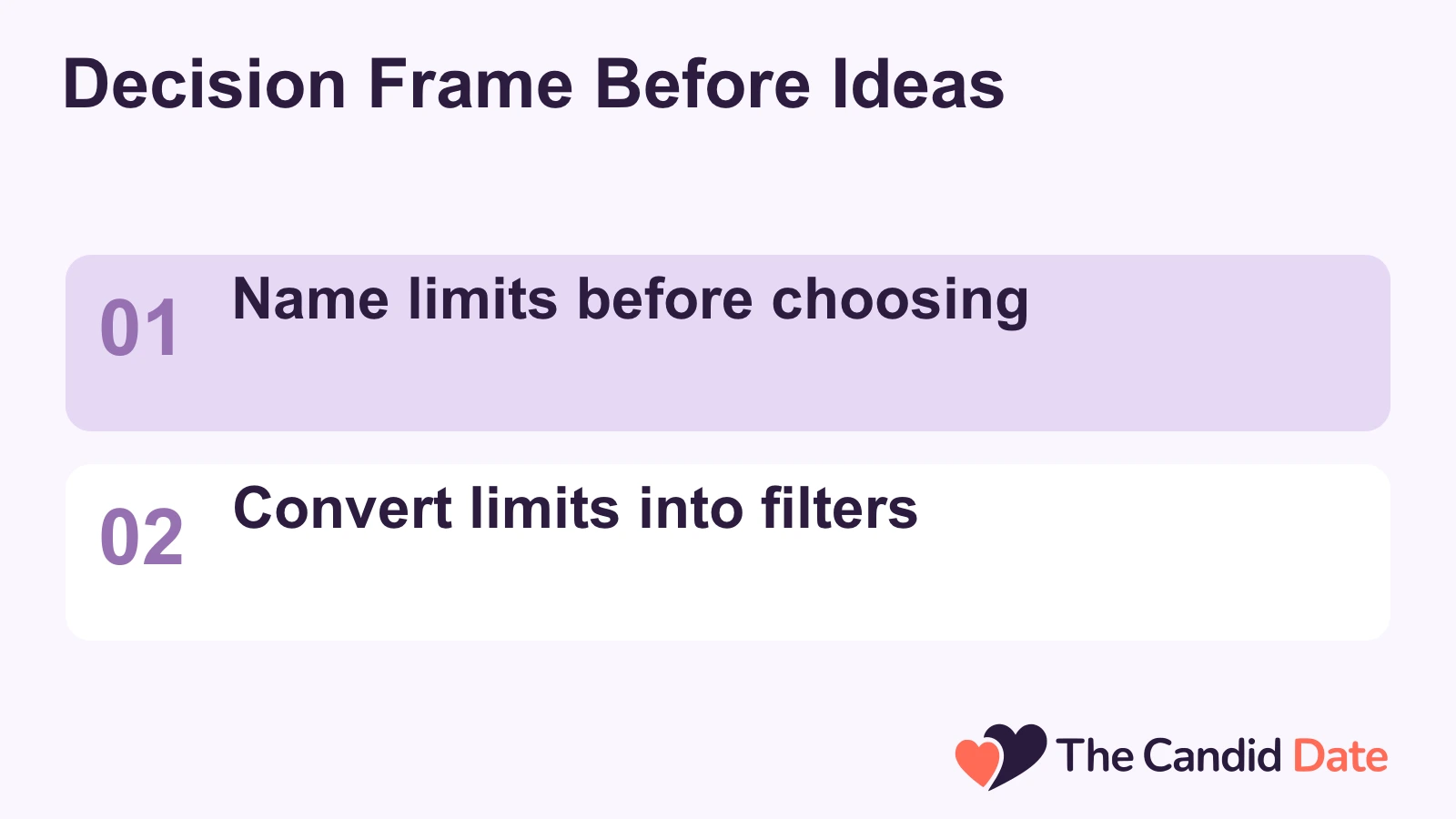
Begin by naming the real limits before anyone falls in love with an idea. For adults, that means calendar bandwidth, energy after work, transportation, budget range, mobility needs, food preferences, alcohol comfort, and privacy expectations. A Thursday idea that requires reservations, a long drive, and a dressy outfit may be perfect in theory and exhausting in practice.
Write each constraint as a sentence, not a complaint: we have two hours, we want to talk easily, we can spend modestly, and either of us should be able to end the night without drama. Then translate those sentences into filters. If conversation matters, avoid silent theaters for the first attempt.
If money is tight, choose free public space plus one optional purchase. If one person is shy, pick a side by side activity instead of intense face to face interviewing. Constraints are not the enemy of romance; they are guardrails that keep a good plan from collapsing.
When both people contribute one limit and one preference, preparation becomes shared labor rather than a test of who cares more. That simple shift reduces pressure and makes the first attempt feel mutual, specific, and calm.
Prepare the invisible details
Preparation has three layers: information, logistics, and emotional readiness. Information answers where, when, cost range, noise level, and backup options. Logistics covers arrival, departure, tickets, reservations, weather clothing, phone charge, and a clear meeting point.
Emotional readiness is the part people skip: agree that the night is an experiment, not an audition. Decide who confirms the reservation and who sends the final message. For a hypothetical first meet, choose a public place with easy exits and tell a friend the plan.
For established partners, remove friction at home before leaving so the date does not start with chores. Build one graceful exit sentence in advance, such as needing to head home early, and one continuation sentence if the conversation flows. This is not manipulation; it is kindness.
Clear signals let adults relax because nobody has to decode hints while hungry, tired, or distracted by notifications. The best preparation feels invisible: details are handled, choices are few, and both people can arrive curious instead of managerial. Keep the plan written in one place so either person can recover it if a message is missed.
How to Plan a Date Night That Goes Well
Compare tradeoffs before committing
Every date night idea carries tradeoffs between novelty and comfort, cost and effort, privacy and safety, and structure versus spontaneity. More novelty can create stories, but it can also add failure points. A cooking challenge is warm and collaborative until one person feels corrected; a busy festival is lively until conversation becomes shouting.
Compare options with a simple score: setup time, money range, talking room, weather exposure, exit ease, and recovery if something goes wrong. Give extra weight to exit ease for early dating and to recovery for special occasions. If one partner loves crowds and the other needs quiet, do not average the difference into a mediocre compromise.
Alternate or split the evening: one lively stop, then one calm stop. The tradeoff mindset prevents resentment because you are choosing costs on purpose instead of discovering them later. A plan can be simple and still feel intentional.
Write down the chosen tradeoff in one line, for example: we accept a later night because the show matters, and we keep tomorrow free. When both people can name the cost, the benefit feels chosen rather than imposed.
Run a calm post-date review
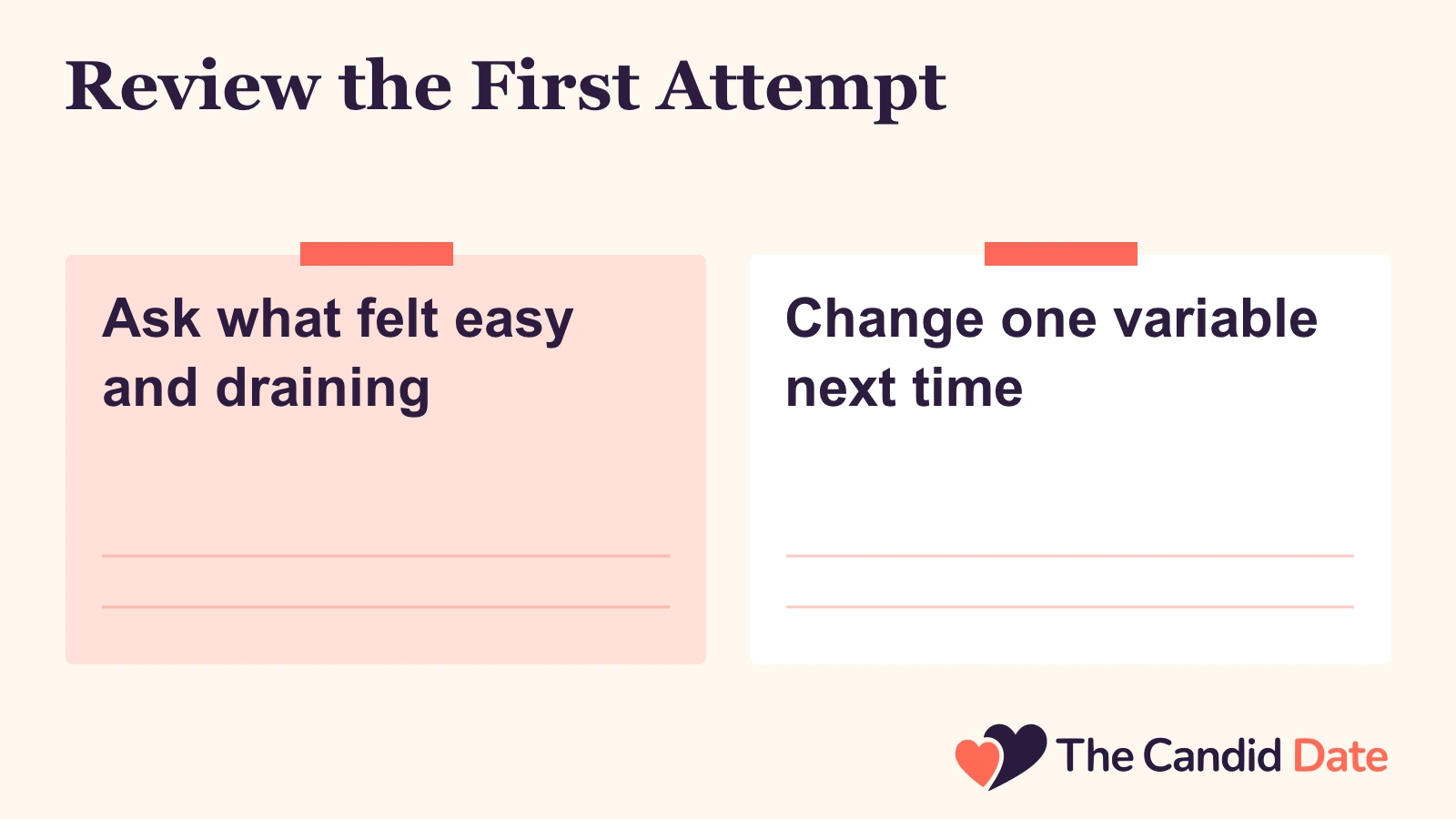
The first attempt is data, not destiny. Within a day or two, ask three questions while details are fresh: what felt easy, what drained us, and what would we repeat, change, or delete. Keep the tone curious rather than judicial.
If the food was bad but the walk was great, keep the route and swap the restaurant. If one person carried all planning, name that pattern before resentment calcifies. If attraction felt ambiguous, do not force a verdict from logistics.
For adults, a follow up message should be specific and low pressure: thank the person, mention one moment you enjoyed, and state whether you want to meet again. Silence is also information, though not an invitation to chase. Write one line in a notes app labeled lessons, not failures.
The aim is to convert a pleasant or awkward evening into a better default for next time. That record becomes your private planning manual, shaped by reality rather than fantasy. Review together when both people are calm, because tired analysis turns small mismatches into character flaws, except safety concerns.
Outdoor Date Ideas: 12 Easy Plans for a First or Second Date
Use a checklist that travels
A checklist works when it is short enough to use under stress. Put it in a shared note or the back of a planner, not in a separate app you forget to open. The point is not control; it is fewer decisions at the moment when hunger, traffic, and nerves collide.
Customize it once, then reuse the skeleton before every new attempt, changing only the names, times, and weather.
- Confirm the exact meeting place, start time, and who sends the final text today.
- Check weather, closures, parking, tickets, reservations, and a nearby backup space.
- Bring payment method, identification, keys, any needed medication, and a charged phone.
- Eat something small if dinner is late so hunger does not get mistaken for mood.
- Dress for walking, standing, heat, cold, or drizzle instead of an imagined photo.
- Set one topic as off limits and one shared intention for relaxed adult connection.
- Plan the ride home before the first drink or before tiredness changes judgment.
- Choose the exit sentence, continuation option, and next day check in time before leaving.
- Tell a trusted friend the plan if this is an early meeting.
Keep safety and consent practical
Adult planning should include ordinary safety without turning romance into surveillance. Meet new connections in public, arrange your own transportation, and keep the first attempt bounded in time and place. Share location with a trusted friend if you want, but do not let tracking replace clear communication.
Never send money, gift cards, or emergency funds to someone you have not met in person; the Federal Trade Commission warns that romance contacts may request money, and that boundary protects adults from common scams. Consent includes pace, touch, alcohol, photography, and whether the night continues. A yes to dinner is not a yes to anything else.
If someone pushes against a stated limit, the plan should end early. Good boundaries are not a mood killer. They make relaxation possible because both people know where the edges are and can stay playful inside them.
Practical caution also means carrying enough to leave independently, noticing exits without making the evening feel like a security drill, and keeping private details private until trust is earned through behavior, not promises. If alcohol is involved, decide the limit before the first pour and keep the ride plan separate from flirting.
14 Low-Key, Low-Cost Date Ideas
Talk budget before the plan hardens
Money and effort deserve an honest budget conversation before the plan hardens. Decide whether the night is lean, moderate, or celebratory, and match the idea to that lane. Lean can mean a public walk with coffee to go; moderate can add tickets or dessert; celebratory can wait for a milestone rather than a random Tuesday.
Splitting costs, alternating who treats, or keeping first meetings inexpensive all work when spoken aloud early. Do not use spending as proof of affection, and do not let thrift become neglect. The measure is attention: did you confirm details, arrive on time, and choose something considerate?
If plans change, say so before the other person spends or travels. A clear range prevents guessing and keeps generosity voluntary.
Sponsor note for adults: Victoria Milan markets dating to married or attached people. This advertisement is separate from the date-planning advice. It is not a solution for relationship conflict. Review the current payment and privacy conditions, respect any commitments, and do not assume an advertised privacy feature guarantees anonymity.
There is no verified price here.
Dry Dating Explained: How the Sober Trend Is Changing Date Night
Sponsored placement

A separate choice for married or attached adults
Victoria Milan markets dating for married or attached adults. Consider its relationship category and payment conditions carefully; advertised privacy tools do not guarantee anonymity or establish a partner’s consent.
- Built for married or attached adults
- Free registration advertised
- Review privacy and paid access before subscribing
| User Base | Today’s Deal |
|---|---|
| Adults considering an affair-oriented service | Free registration; check current paid optionsFree registration does not establish free messaging. Read current checkout, renewal and cancellation terms. Privacy features cannot guarantee anonymity. |
Make repetition lighter than perfection
The healthiest follow through system is repeatable. After each attempt, keep the skeleton and change one variable. If the restaurant was noisy, keep the cuisine and move it earlier.
If the hike was lovely but logistics rushed, shorten the route and add coffee. If conversation stalled, swap an interview posture for a shared task where eyes can rest on something else. Rotate who chooses so taste does not become control.
For busy adults, a standing cadence can help, but protect it from becoming another obligation by agreeing on a pause rule when illness, grief, work crunch, or family duties take priority. Romance is not built by one flawless evening. It is built by reliable attempts that leave both people feeling considered, heard, and free to try again.
Keep the bar human: prepared enough, flexible enough, and honest enough. Save one sentence after every date about what to protect next time, then let the calendar carry the habit instead of willpower. That is how ideas become rituals without strain, scorekeeping, or the pressure to turn every Tuesday into a movie scene for either person.
Frequently Asked Questions
How far ahead should we plan date night ideas?
For most adults, three to seven days is enough for a normal weeknight and two to four weeks for tickets, travel, babysitting, or peak times. The useful window is not about impressiveness; it is about reducing friction. Confirm the plan the day before, then send a short final message on the day.
If the first attempt is with someone new, sooner can be better because it limits fantasy and keeps expectations practical. If life is chaotic, schedule the next placeholder before the current date ends, but keep the activity flexible.
What if one person likes spontaneous date night ideas?
Treat spontaneity as a bounded choice rather than a total gamble. Set the time, budget lane, and transportation first, then leave one element open, such as neighborhood, dessert, or a second stop. Agree that either person can call the audible if energy drops.
This protects novelty without making the other person responsible for rescuing a vague plan. For established partners, spontaneous can mean a low setup drawer list agreed in advance: three nearby options that need no reservations. For early dating, clearer plans reduce anxiety and make consent easier.
How do we handle a bad first attempt without overreacting?
Separate safety from preference. If a boundary was ignored, trust the signal and do not schedule again. If it was merely imperfect, wait until you are rested, then review what felt easy, draining, and repeatable.
Use one concrete change next time instead of a global verdict like we are bad at dating. A calm message can thank the person, name one good moment, and close the loop honestly. Adults recover faster when they treat the attempt as information, while respecting discomfort and moving on when respect is absent.
What to Do Next
Strong date night ideas are less about novelty than follow through. Start with constraints, prepare the invisible details, compare tradeoffs on purpose, use a short checklist, and review the first attempt without drama. Keep consent, budget, safety, and recovery in the same conversation as fun.
When something works, save the skeleton; when it does not, change one variable and try again. That steady rhythm helps adults stay connected without turning romance into performance, proof, or pressure. The best plan is the one both people can repeat with warmth over time.
About the Author
By: Penelope Torres
Advice Editor
Penelope Torres edits the advice desk at thecandiddate.com and answers reader questions about first dates and texting.
Share the Knowledge!
Our dating experts work hard to show you the best dating sites. Want to show your appreciation? Share this page!