
13 Statistics on Living Together, by Age (2026)



How people feel about cohabitation has shifted enormously over time. It used to be an odd taboo that people called “living in sin”; today it’s a normal route for grown-up couples.
For some, it’s a stage on the way to marriage; for others, it’s the destination itself.
Still, as anybody with old-fashioned grandparents knows, the shift in opinion hasn’t been universal. Keep reading to see how cohabitation plays out across age groups and how it has evolved over time.
Cohabitation Among Young Adults
In my generation (Gen Zers), living together is ordinary. I lived with my partner before marriage, and nearly every friend of mine in a serious long-term relationship has done the same. My stories aren’t the only evidence, though; the data supports me.
1. Nearly 60% of Adults Under 44 Have Lived With a Partner
The majority of people live with a partner at some stage during their 20s and 30s. Per the Pew Research Center, 59% of people aged 18-44 have lived with a partner at least once1.
Moving in together can save money and also strengthen a relationship. The study didn’t track how those living arrangements turned out, but it’s reasonable to guess that plenty of them led to marriage.
I expect that as millennials and Gen Z get older, the share of adults who have lived with a partner will keep climbing, no matter where their relationship status ends up.
2. In 2018, 9% of Adults Aged 18-24 Were Unmarried and Lived With a Partner
Close to 1 in 10 young adults shares a home with a partner. Census figures show that in 2018, 9% of adults aged 18-24 were unmarried and living with a partner, while only 7% were married and sharing a home with a spouse2.
Next to other age brackets, a 9% cohabitation rate may sound modest. Yet many people this age still live with their parents, in dorms, or with a handful of roommates, so the figure is more impressive than it looks.
Most very young adults live alone or share space with friends and roommates, but a sizable chunk of those who realistically could live with a partner are doing exactly that.
3. Under Age 30, 63% of Adults Say Cohabitation Leads to a Better Marriage
Young adults view cohabitation favorably. In a Pew Research Center survey, 63% of people under 30 said living together first leads to happier marriages3, a larger share than in any other generation polled.
That reasoning makes sense to me. Sharing a home lets you picture married life together, so you can decide with real information whether to keep going. I can’t picture standing at the altar without knowing how he cleans or how he arranges his closet.
The evidence on how cohabitation affects marriage is mixed. A frequently quoted study found that couples who live together before getting engaged face a 48% higher chance of divorce than couples who wait4.
A caveat: that number doesn’t show cause and effect. Couples who decide against living together may be more religious, which could make them less open to divorce either way.
4. College-Educated Young Adults Are More Than 2X Likely to Cohabitate
Education plays a big role in whether people move in with a partner. One study found that among adults aged 18-29 holding a bachelor’s degree or more, 25% had lived with a partner at some point5.
Among adults who hadn’t finished high school, only 10% had done so.
People who go on to college tend to leave home, sometimes for an entirely different city or state, and that opens up more chances to move in with someone.
5. The Typical Woman Who Cohabitates Gets Married at 27
Living together may even push marriage back. In a Bowling Green State University study, the median woman in the sample who lived with a partner before marrying tied the knot at age 276.
For the median woman who didn’t live with a partner first, the wedding came at age 26.
At first glance, one year hardly seems like a dramatic difference. It can matter, though, if you’re holding off on shared life until the wedding. Couples who don’t live together first may feel more urgency to marry and move on to the next chapter.
Five years into our relationship, my fiancé and I have lived together for three. We’re thrilled about our wedding, but it won’t shake up our lives nearly as much as it would if we’d lived separately the entire time.
Cohabitation in Midlife
Once people reach their 40s, relationships often turn serious much more quickly. College students might be happy to date casually for years, but most midlife singles who want commitment want to find out fairly fast whether a partner is truly compatible. That’s one reason cohabitation keeps gaining ground with midlife couples.
6. About 1 in 4 Adults Aged 30-39 Reported Cohabitating
More than a quarter of 30-somethings live with a partner. The study put the cohabitation rate at 26% for men and women alike in this bracket, the highest share of any age group in the survey7.
Plenty of couples this age are moving quickly toward marriage, so living together works as an attractive in-between stage.
Others are sure marriage isn’t for them, yet they still want commitment and company, which makes cohabitation the perfect setup.
7. Between 1987 and 2002, Women’s Cohabitation Rates Jumped from 30% to 61%
Living together in your 30s has grown much more common since the 21st century began. According to the American College of Pediatricians, from 1987 to 2002 the share of late-30s women who had ever lived with a partner almost doubled, climbing from 30% to 61%8.
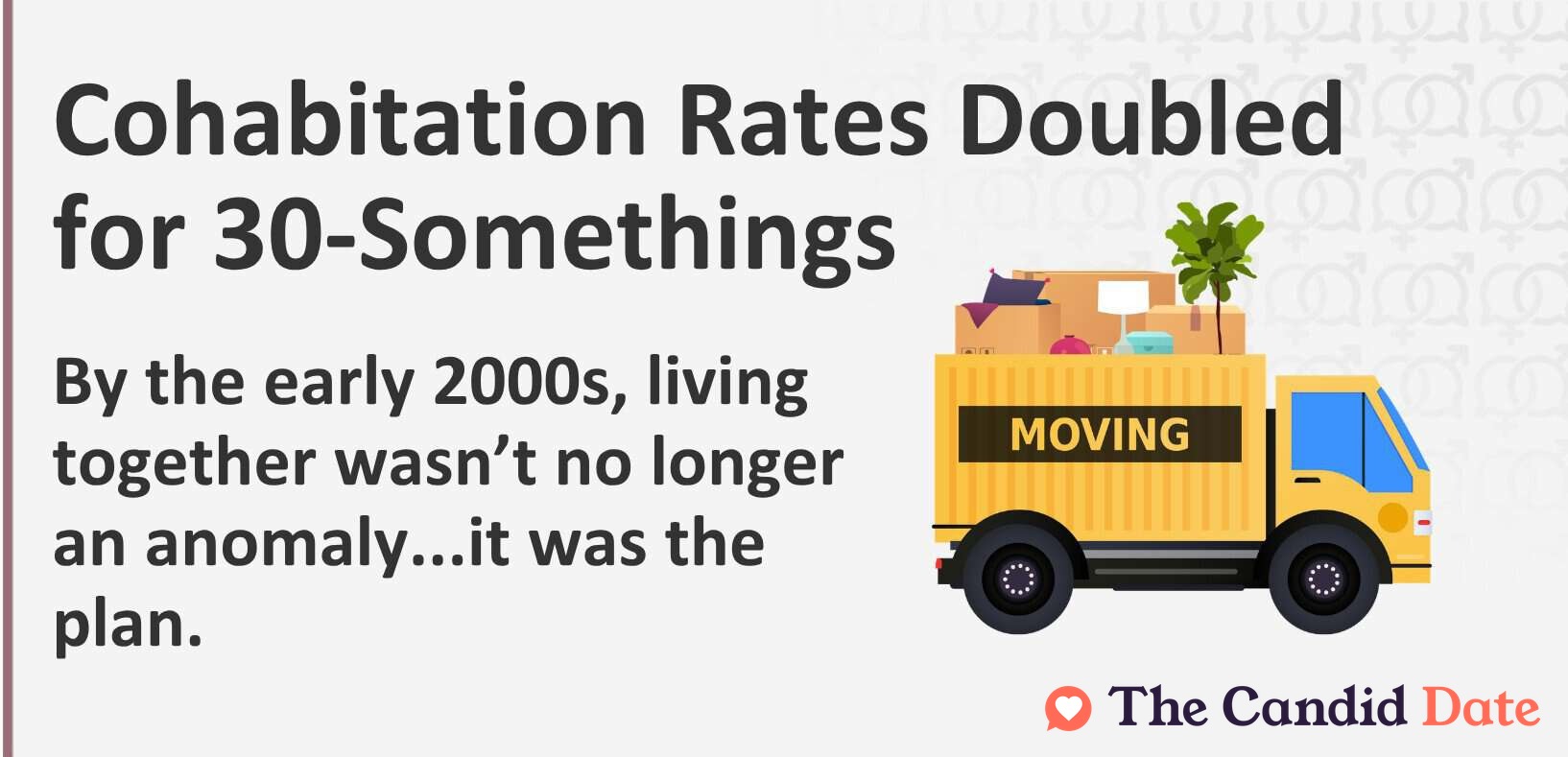
Views on cohabitation shifted sharply over those years (and they’re still shifting now). It lost its taboo status and turned into a far more accepted relationship choice. These arrangements just don’t raise eyebrows the way they once did.
8. Cohabitation Among 40-49-Year-Olds Increased from 6.4% to 7.3% in 10 Years
Even over the past 15 years, living together has become more normal for middle-aged people. From 2012 to 2022, the share of people in their 40s cohabitating at any one time rose to 7.3%9, up from 6.4%. Across the entire population, that’s a big shift.
Changing attitudes aren’t the only thing that could explain this. Another likely factor: people are marrying later.
Since more people in their 40s are single today, it’s logical that more of them live with a partner.
9. At 31%, White Adults in Their 30s Are Most Likely to Cohabitate
Cohabitation rates vary sharply across ethnic and racial groups. Comparing cohabitation by race and age, researchers at Bowling Green State University saw that white couples lived together at three times the rate of Asian couples.
Among white adults in their 30s, roughly 31% lived with a partner, by far the top rate across every racial and age group10. At the other extreme, just 7% of Asian adults older than 50 were cohabitating.
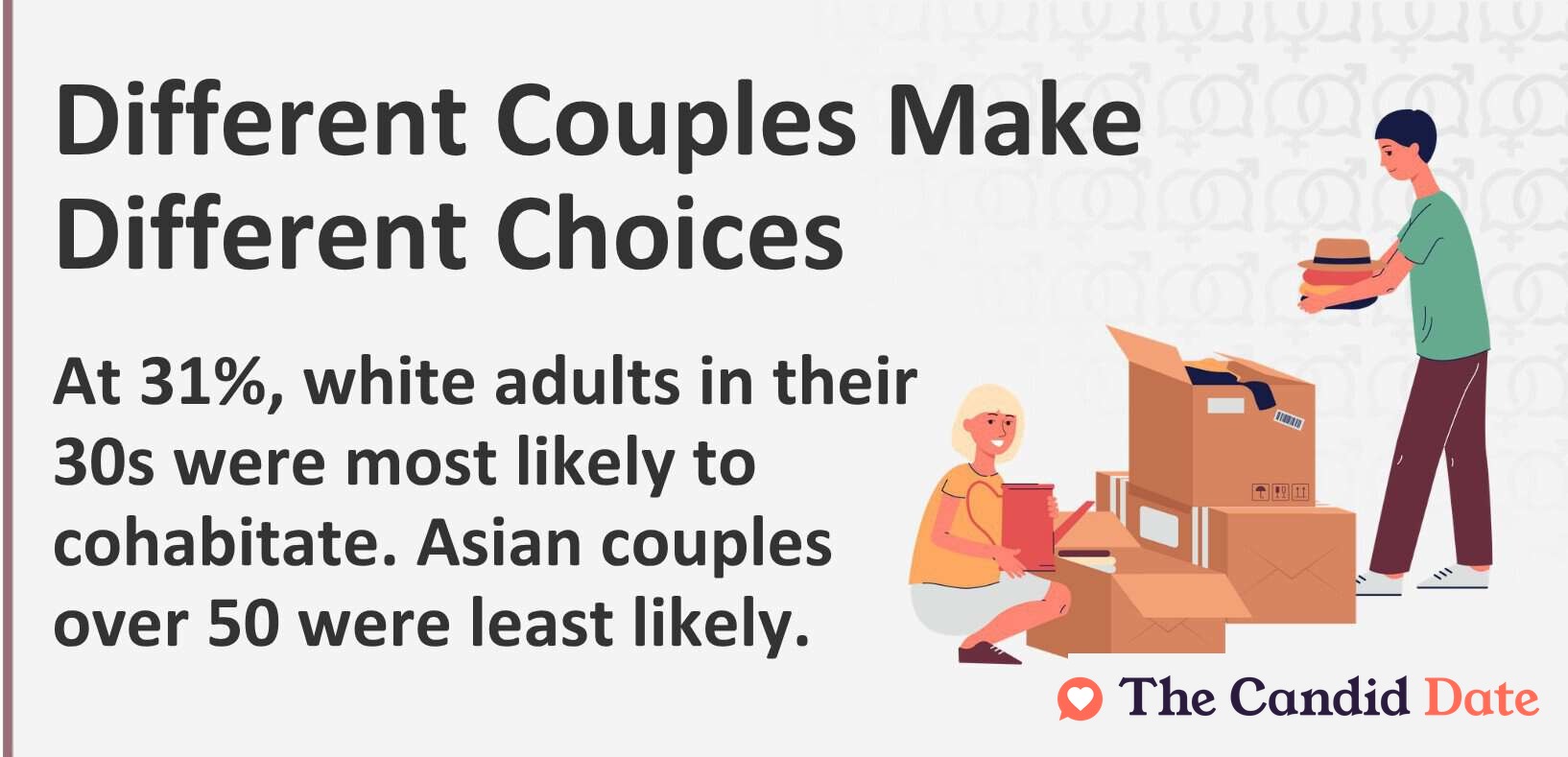
Culture and ethnic identity combine to shape, in a big way, how likely someone is to live with a partner.
Cohabitation Among Seniors
Seniors live with partners less often than other age groups do, but it’s far from unheard of. After divorce or the death of a spouse, or because of personal views on marriage, many seniors find cohabitation appealing.
10. In 1968, 0.1% of Baby Boomers Were Unmarried and Living With a Partner
Back when today’s seniors were young adults, cohabitation hardly existed. In 1968, just 0.1% of people aged 18-24 lived with a partner, versus 9% now11.
That works out to 1 in 1,000.
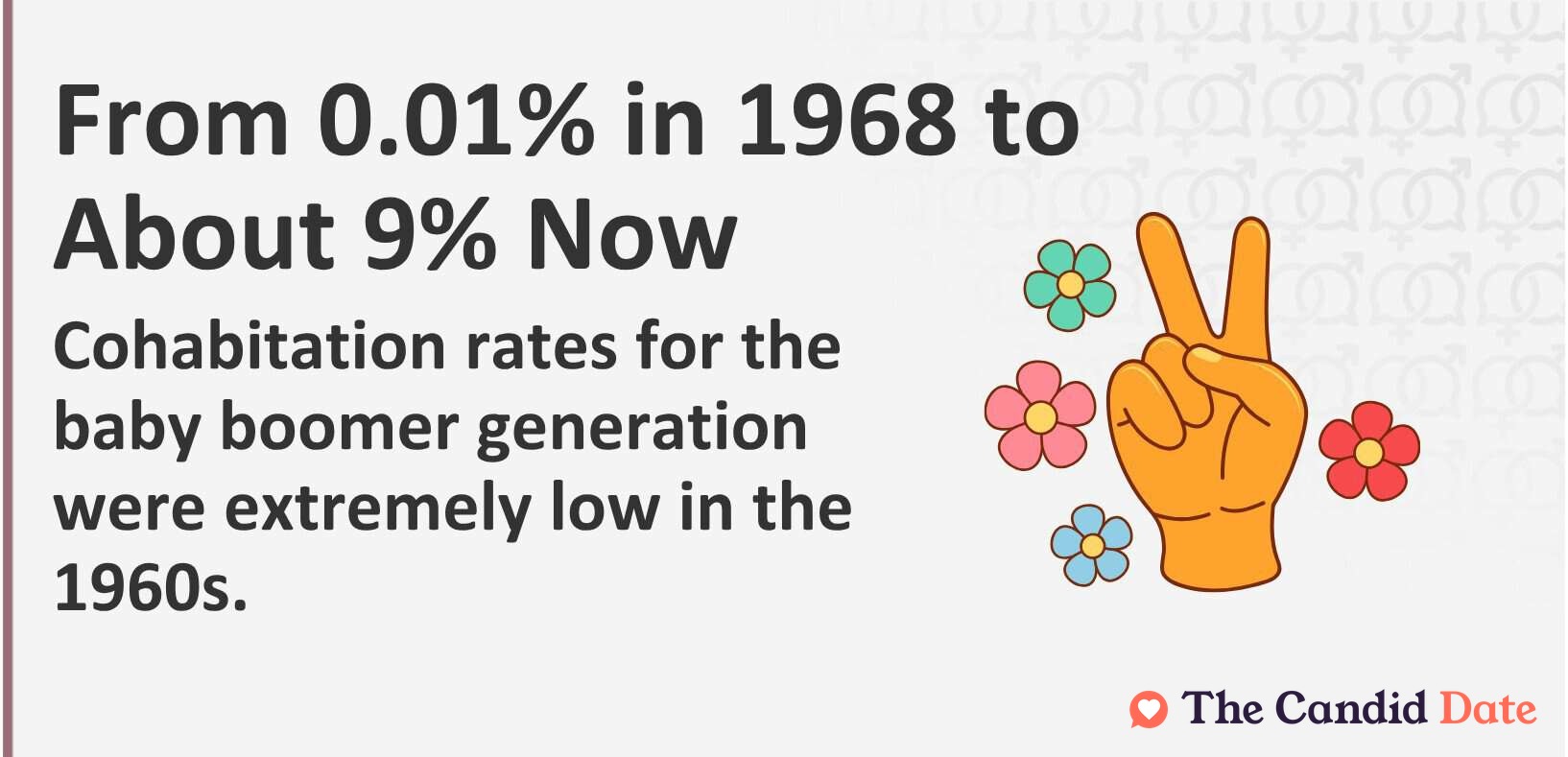
Young adults today mostly marry in the stretch from their late 20s to their early 30s, but in the 1960s people married in their early 20s. There was no need to live together unmarried; if you wanted to share a home, you simply got married.
Nobody expected to wait years before marrying the way people do now, and living together carried a much heavier stigma.
11. Only 37% of Adults Over 65 Think Cohabitation Leads to a Better Marriage
Young adults may mostly believe that living together first leads to better marriages, but their grandparents don’t agree. The Pew Research Center reports that 37% of adults over 65 believe cohabitation leads to stronger marriages12.
The data suggests that cohabitation can hurt marriage outcomes in certain ways. A big risk is rushing into a shared home because of money pressure or social expectations. Then the years go by with no engagement and no wedding, leaving the couple stuck in relationship purgatory.
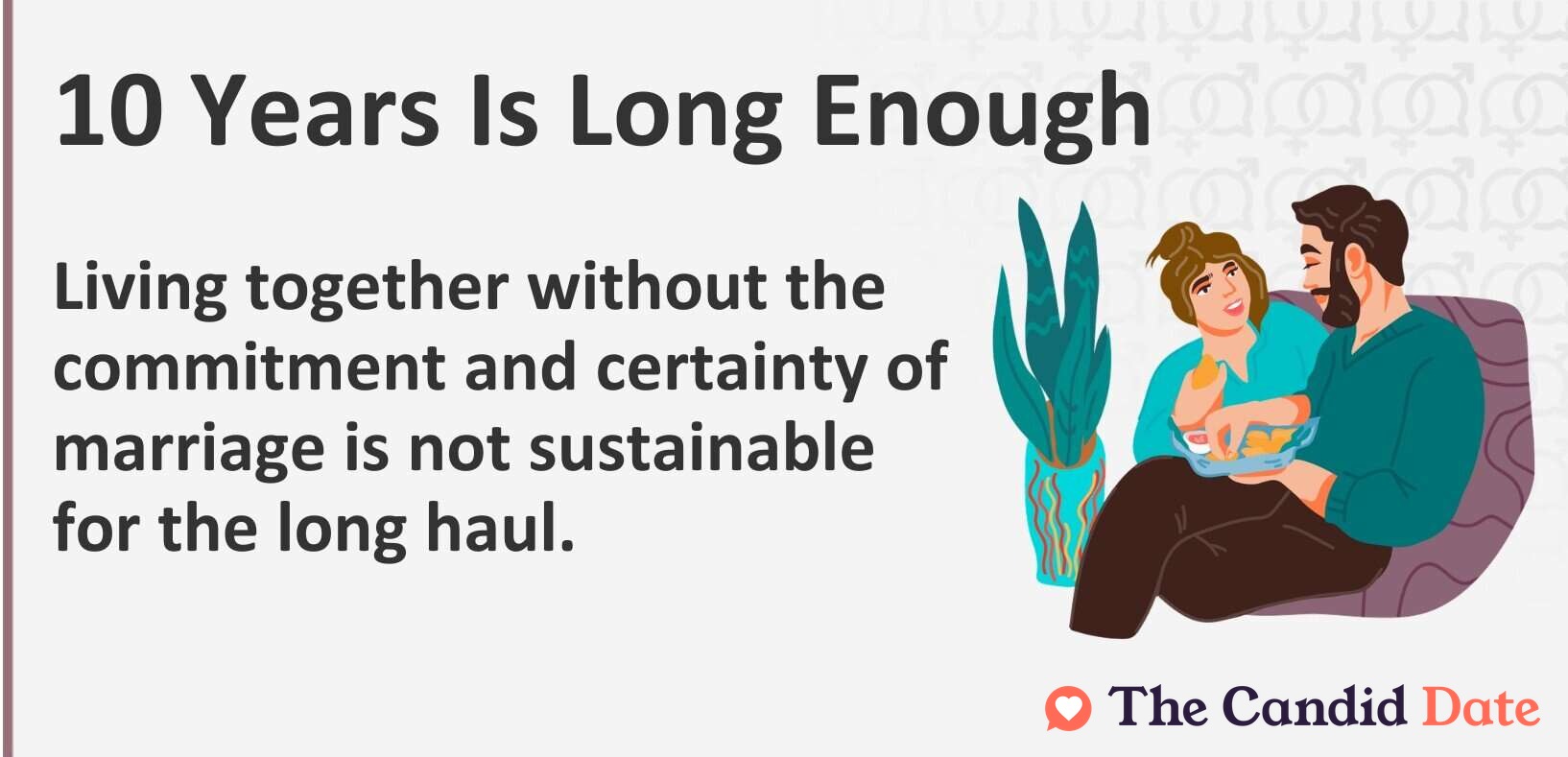
Some couples slide into the next stage just because it’s convenient, moving in so they don’t have to pay two rents. Later, when tension builds and surprise conflicts crop up, splitting up is harder because their homes and money are tangled together.
12. The Rate of Cohabitating Over 50 Went up to 60 per 1000 in 2019
Younger adults are living together in far greater numbers, yet older adults appear increasingly open to cohabitation as well.
From 2014 to 2019, cohabitation among unmarried adults over 50 rose to 6%13 from 5.2%. It’s a modest increase, but it hints at a gradual cultural change as baby boomers give way to Gen Xers (who began turning 50 in 2015).
13. Only 10% of Unmarried Couples Over 50 Cohabitated in 2022
According to a Bowling Green State survey, just 10% of unmarried couples older than 50 lived together as of 202214.
That low figure could stem from deep-rooted traditional views about marriage, sex, and doing things properly. It could also be about staying independent.
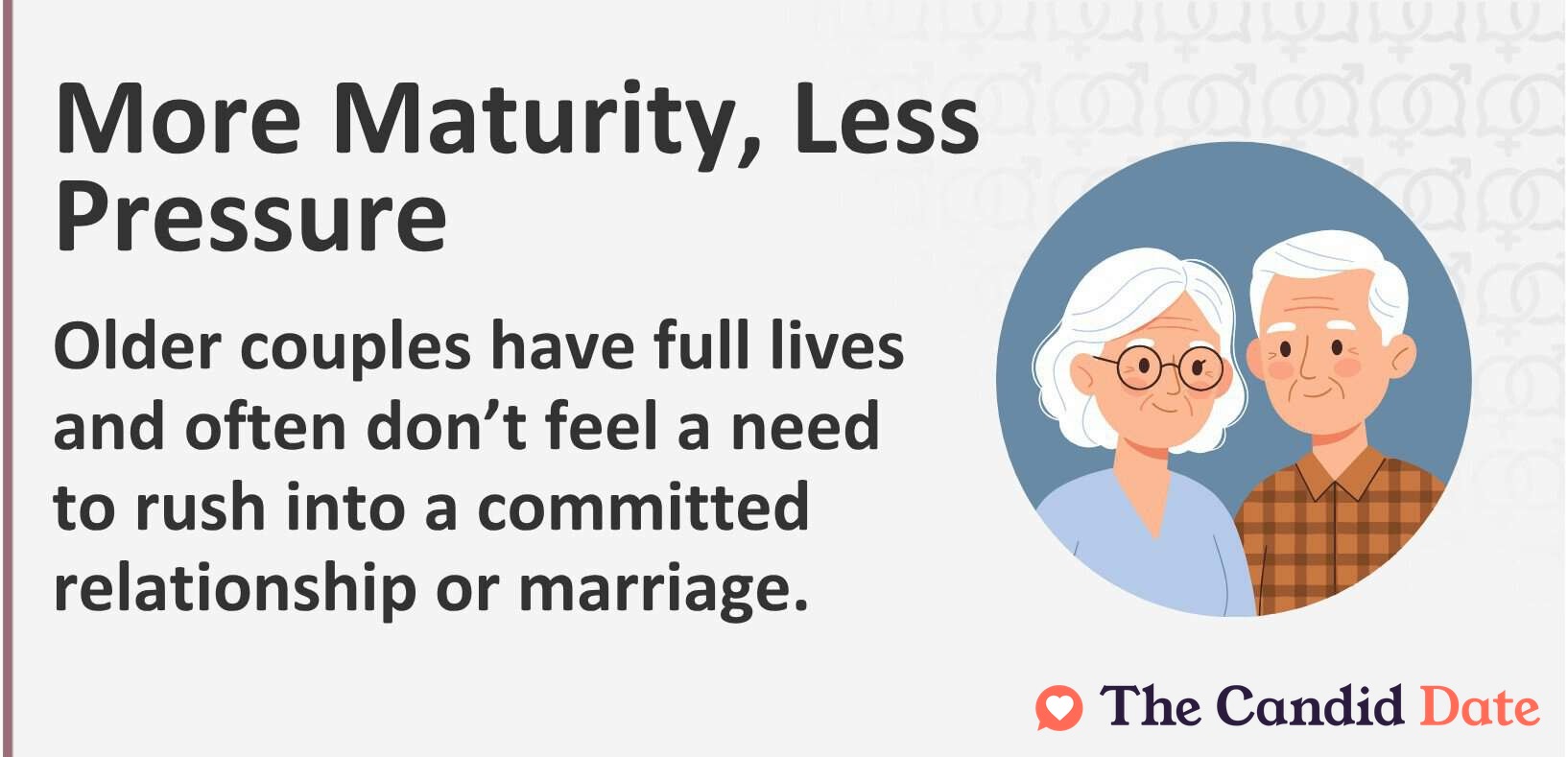
Unmarried couples 50 and up frequently have settled lives, and maybe kids still living with them. They may be attached to their home or their daily rhythm.
For seniors, dating can simply be enjoyable; it doesn’t have to carry the weight of marriage or a shared address.
Cohabitation Is Gaining Ground at Every Age
Living together is no longer a rebellious choice, and it isn’t just something young people do. It’s a mainstream relationship milestone that works at any age.
Couples can take this step at whatever age or relationship stage suits them. It can be an end in itself or a useful trial run before a wedding.
If moving in with your partner is on your mind, do it! Just be sure the reason is that you’re truly excited to build a life together, not that it’s what everyone else is doing.
Data Sources:
- https://www.pewresearch.org/short-reads/2019/11/06/key-findings-on-marriage-and-cohabitation-in-the-u-s/ ↩︎
- https://www.census.gov/library/stories/2018/11/cohabitation-is-up-marriage-is-down-for-young-adults.html ↩︎
- https://www.pewresearch.org/short-reads/2019/11/06/key-findings-on-marriage-and-cohabitation-in-the-u-s/ ↩︎
- https://ifstudies.org/reports/whats-the-plan-cohabitation/2023/executive-summary ↩︎
- https://www.bgsu.edu/ncfmr/resources/data/family-profiles/marino-age-variation-cohabitation-2020-fp-22-28.html ↩︎
- https://www.bgsu.edu/ncfmr/resources/data/family-profiles/FP-25-25.html ↩︎
- https://www.bgsu.edu/ncfmr/resources/data/family-profiles/marino-age-variation-cohabitation-2020-fp-22-28.html ↩︎
- https://acpeds.org/cohabitation-effects-of-cohabitation-on-the-men-and-women-involved-part-1-of-2/ ↩︎
- https://www.bgsu.edu/ncfmr/resources/data/family-profiles/decade-of-change-in-cohabitation-across-age-groups-2012-2022-fp-24-03.html ↩︎
- https://www.bgsu.edu/ncfmr/resources/data/family-profiles/marino-age-variation-cohabitation-2020-fp-22-28.html ↩︎
- https://www.census.gov/library/stories/2018/11/cohabitation-is-up-marriage-is-down-for-young-adults.html ↩︎
- https://www.pewresearch.org/short-reads/2019/11/06/key-findings-on-marriage-and-cohabitation-in-the-u-s/ ↩︎
- https://www.bgsu.edu/ncfmr/resources/data/family-profiles/julian-cohabitation-among-unmarried-older-adults-fp-22-10.html ↩︎
- https://www.bgsu.edu/ncfmr/resources/data/family-profiles/marino-age-variation-cohabitation-2020-fp-22-28.html ↩︎
About the Author
By: Nora Adams
Staff Writer
Nora Adams is an experienced staff writer interviewing dating professionals and relationship experts for thecandiddate.com.
Share the Knowledge!
Our dating experts work hard to show you the best dating sites. Want to show your appreciation? Share this page!