Solo Polyamory in Real Life: How It Actually Works



My clients often ask me about polyamory as well as ethical non-monogamy. They want to know how it all works, whether it suits them, how to go about it, or how to date people who are non-monogamous.
For many of my clients, solo polyamory is a brand-new idea, but I think it’s a helpful and rewarding one to explore.
Even if you never end up calling yourself solo poly, it’s an excellent case study in how polyamory can function. It gives you a chance to think about what you really want from dating and romance, and what your ideal relationship structure could be. Here’s the rundown on solo polyamory:
What Does Solo Polyamory Mean?
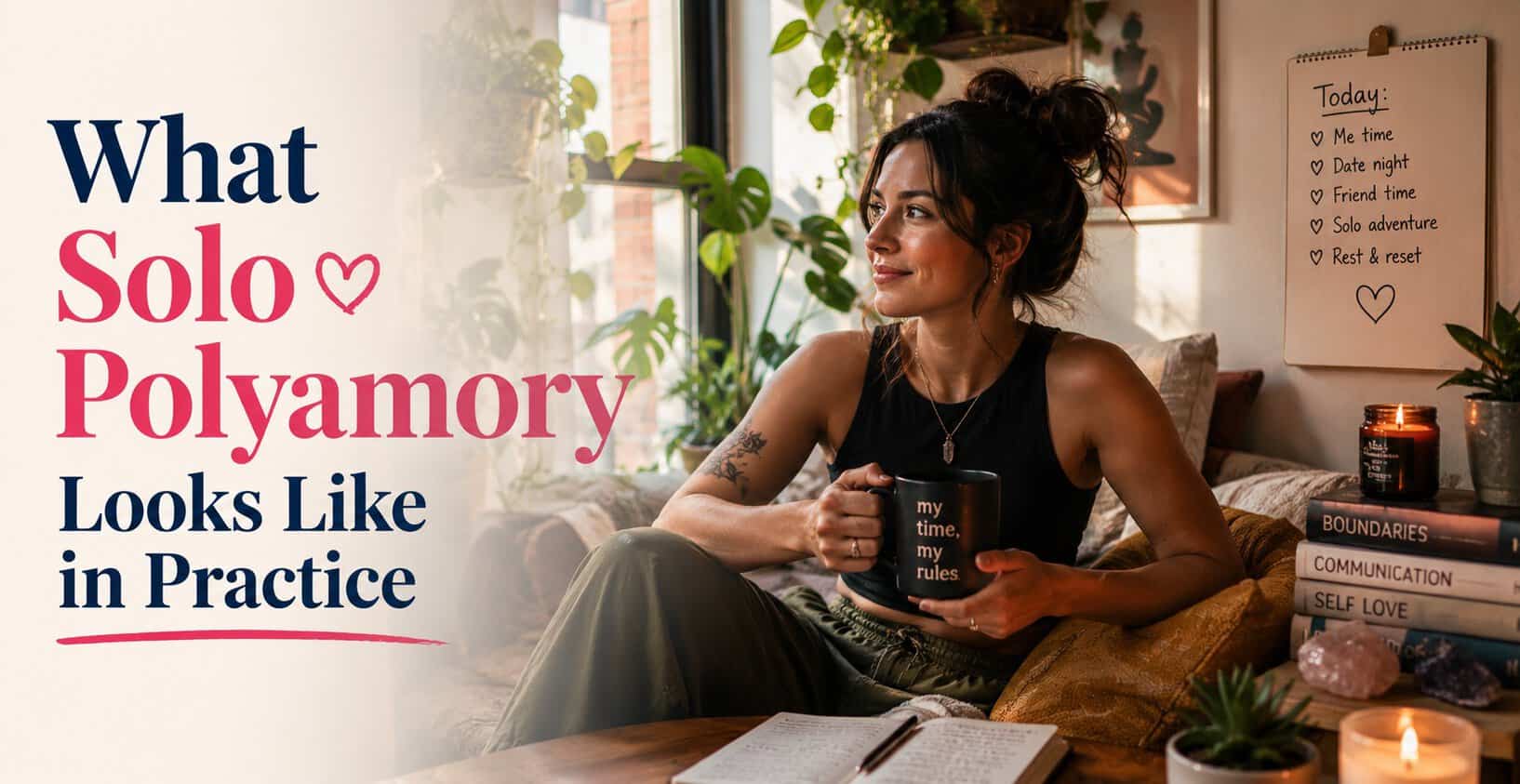
Solo polyamory describes a way of practicing polyamory in which no primary partnership exists at the center of someone’s love life. Instead, they place themselves at the heart of their own sex and love life (and might even consider themselves to be their own primary partner).
The idea is often credited to Amy Gahran, a blogger and journalist who also happens to have founded solopoly.net. As a framework, solo polyamory is a distinct way of approaching relationships that falls under non-monogamy, or polyamory, more broadly.
When most of us picture polyamory or ethical non-monogamy, we imagine a person with a serious, long-term partner (aka a primary partner) who also dates other people outside that relationship.
Solo polyamory tends to put autonomy and independence first. People who practice it may feel strongly about reaching many of the milestones usually tied to having a partner, such as buying a home, having kids, or traveling, on their own instead of with someone.
None of this means solo poly people live in isolation. Many of them actively look for romantic and sexual connections with others, just not through a traditional primary relationship.
A solo poly person could have three partners without much trouble, or five dates on the calendar with five different people. At the same time, they might keep a separate bank account, live by themselves or with platonic roommates, or be booking fertility treatments to start planning a family on their own.
How Does Solo Polyamory Play Out?
The idea behind solo polyamory is straightforward: you build your life around yourself rather than around a romantic partner. Your own needs come first, whatever your relationship status or sex life looks like.
Of course, plenty of people with all sorts of relationship styles can decide to put themselves first. So what sets solo polyamory apart in practice?
Someone practicing solo polyamory might:
- Live solo or share a place with roommates while having one or more serious partners
- Have one or more serious romantic connections but deliberately keep money separate
- See some partners weekly and other partner(s) monthly or even less often
- Have “comet” partners who live far away and whom they see only now and then
- Date or partner with people who share particular parts of their life, such as travel or certain sexual subcultures
- Have dates and partners whose dynamics and levels of intimacy vary widely
- Make big life choices on their own, without a partner weighing in (where to live, career, starting a family, etc)
- Raise kids as a single parent, with no coparents or with several
As you can see, these scenarios look nothing alike. That’s because solo polyamory isn’t about fitting into a traditional “this is how dating works” box. The point is to explore and choose what works for you.
Solo Polyamory: Benefits & Challenges
Every relationship structure, monogamy included, has its thrilling sides and its hard ones, and the solo poly experience is no different.
The Benefits
Solo polyamorists often cherish the independence and autonomy that come with it. It’s a lifestyle that lets you have lots of love and connection without having to check in with a partner or reach an agreement on choices like switching careers or starting a family.
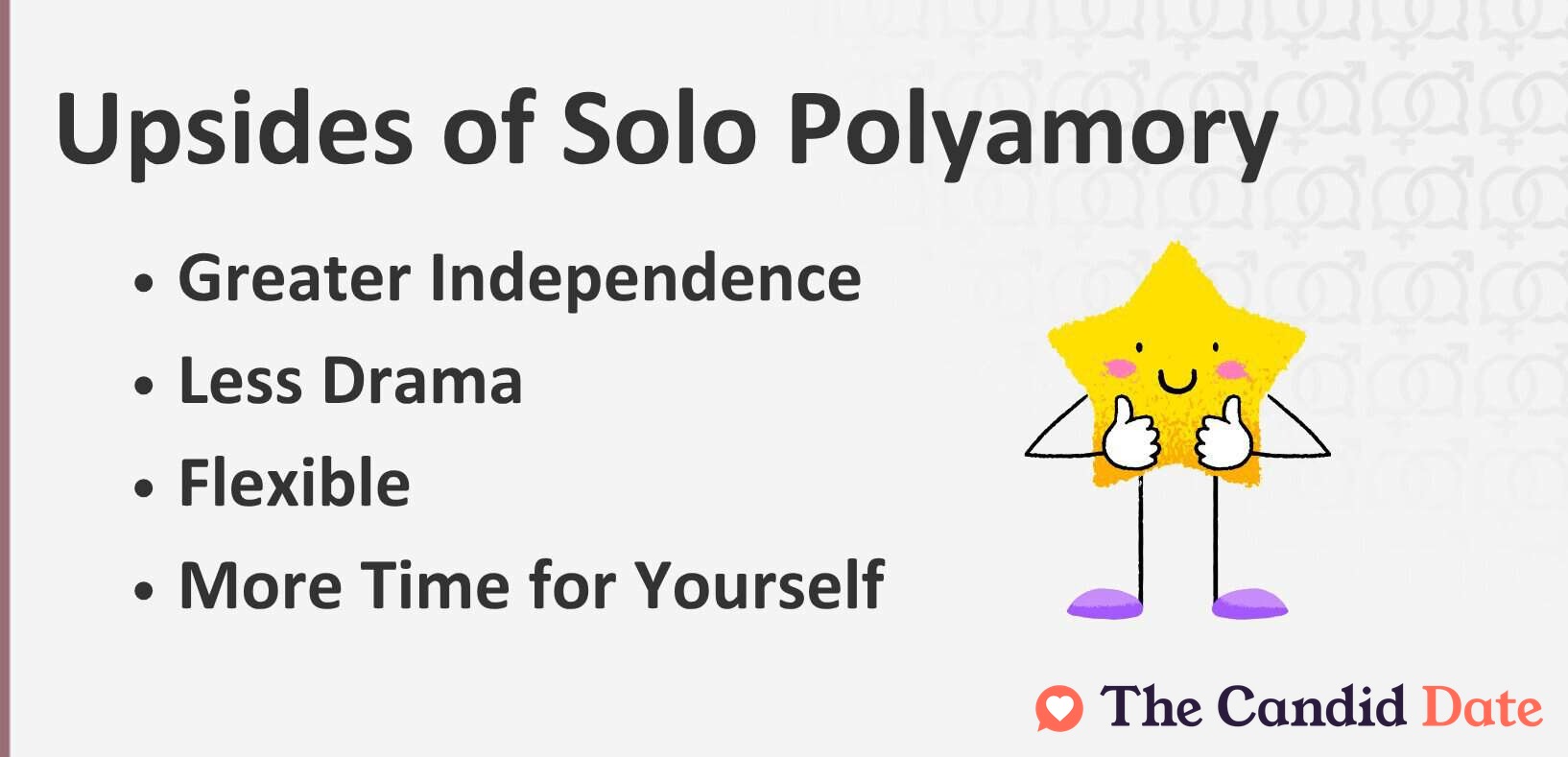
Many also value the space and freedom it gives them. Spending a day beside a serious partner who matters a lot to you can feel wonderful, and so can heading back to your own place, where everything is set up just the way you like it, and falling asleep alone in your own bed when night comes.
Like many polyamorous people, solo polyamorists feel free and relieved about “getting off the relationship escalator”: they aren’t bound to a fixed series of milestones every relationship supposedly has to hit to count as legitimate, from the first date through moving in together and on to marriage.
The Challenges
Solo polyamory also comes with plenty of the drawbacks that are common in poly dating. Handling sexual and romantic jealousy takes effort. Juggling different relationships and romantic connections can be hard at times.
Some people hit burnout or feel saturated by all the connections they’re keeping up. Not having a primary partner might ease that, but it doesn’t rule it out.
Going without a primary partner brings its own difficulties. Coming home alone most nights can feel freeing, yet living a nontraditional romantic life can sometimes get lonely. When you’re going through something major, like loss or grief, not having a primary partner beside you can be hard.
Each type of relationship structure involves tradeoffs and its own particular compromises. For people who practice solo polyamory, though, those tradeoffs are worth it.
Solo Polyamory Myths & Misconceptions
Solo polyamory is far from common, and it certainly hasn’t entered everyday language the way “ethical non-monogamy” has. So it’s no shock that a few misconceptions have sprung up around it. Let me clear them up.
Solo Polyamory Isn’t the Same Thing as Being Single
Whether solo poly people count as just single depends on how you define “single.” True, solo poly people don’t have one life partner, and they may not have a “primary partner,” “anchor partner,” or “nesting partner” the way some other poly people do.
Many think of themselves as their own primary partner.
That said, plenty of solo poly people have a full, dynamic web of relationships that vary in intensity, seriousness, and commitment. Rather than calling themselves single, many solo polyamorists would say they are their own primary partner.
A single person, polyamorous or not, may hope to find a primary partner someday. A solo poly person isn’t looking for one.
Solo Polyamory Isn’t Relationship Anarchy
People easily mix up solo polyamory, which means pursuing several romantic or sexual connections without planning to build your life around any single one, with relationship anarchy, which rejects traditional relationship hierarchies in favor of highly personalized relationship structures.
Both lifestyles put autonomy and independence first, and the dating life of a solo poly person can resemble that of someone who practices relationship anarchy (one person might even identify with both).
Still, they aren’t the same lifestyle or philosophy. Someone in solo polyamory specifically has no interest in a primary partner(s), whereas a relationship anarchist may well have setups that function much like primary partnerships, even if each one is shaped by the specific people and dynamics behind it.
Solo Polyamory Isn’t Just Casual Dating
To some people, solo polyamory sounds a lot like plain old casual dating. After all, you’re dating multiple people with no single partner, right?
That confusion makes sense, but there are some key differences. Many monogamous people who date casually (though not all) do it temporarily, often “until the right person comes along.” Finding a primary partner remains the goal.
Their connections are also, by definition, casual. Someone practicing solo polyamory has no plan to eventually “move on” to a more serious, singular partnership, and probably sees it as a way of life. And although their romantic connections aren’t primary partnerships, that doesn’t make them casual. They can be deeply committed and emotionally invested.
Solo Polyamory Isn’t Just a Fear of Commitment
So how is solo polyamory different from a plain fear of commitment or avoidant attachment? Solo polyamorists might go without a primary partner, but that doesn’t mean they lack relationships, including very serious or committed ones.
Solo polyamory puts autonomy first, but that doesn’t have to mean giving up emotional intimacy or serious connections.
Could Solo Polyamory Be Right for You?
If non-monogamy interests you (or you’ve tried it) but you find yourself longing for more independence, freedom, or autonomy, solo polyamory may suit you well. It can help to reflect on what the idea of a primary partnership means to you.
- Does having a primary partner sound more affirming…or more confining?
- When you picture your ideal relationships, do they involve sharing life milestones or becoming materially intertwined through property or finances?
- What makes a relationship feel meaningful, important, or worthwhile to you?
- How do you feel when you picture someone you’re dating with another person? Jealous? Or excited?
No single litmus test tells you whether solo poly suits you, but working through your answers to these questions can give you clarity and direction.
About the Author
By: Charlotte Harris
Lesbian Dating Expert
Charlotte Harris is a relationship coach and dating expert specializing in lesbian and LGBTQ+ dating advice on thecandiddate.com.
Share the Knowledge!
Our dating experts work hard to show you the best dating sites. Want to show your appreciation? Share this page!