“Poly-Friendly” on a Dating App: What It Really Signals



Jumping into dating apps for the first time can feel seriously daunting. Many of my clients come to me anxious about the apps.
Decoding all the acronyms, abbreviations, and constantly shifting vocabulary of modern dating can feel like picking up an entirely new language at times, whether it’s ENM (ethical non-monogamy) or NSA (no strings attached).
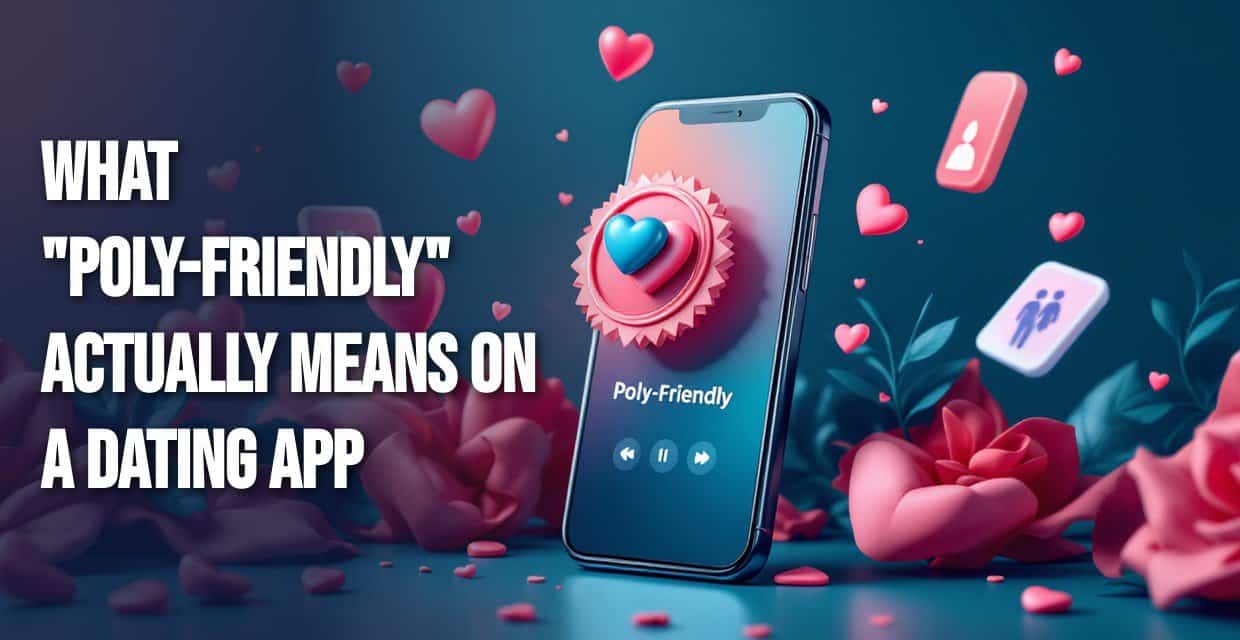
You may have come across the term “poly-friendly” — on a dating app, it signals that someone is open to polyamory. That can take a lot of different forms, so let me walk through each possibility to make things clearer.
What Is Polyamory? Key Terms Explained
Polyamory is one relationship style within the broader category of ethical non-monogamy.
Ethical non-monogamy refers to romantic relationships that aren’t exclusive, whether romantically or sexually. In practice, one or both partners date or sleep with others, and every partner fully consents to it.
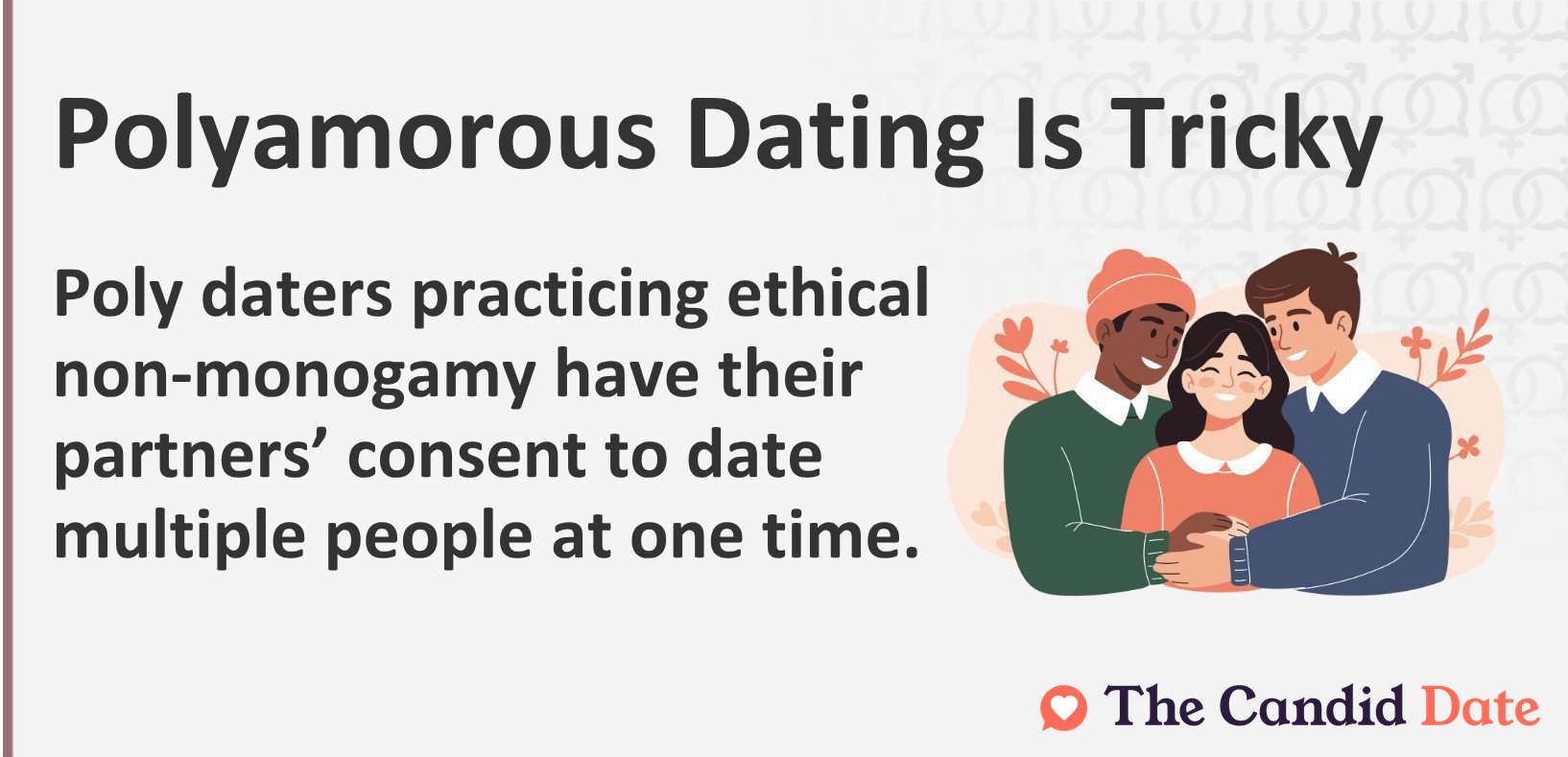
Polyamory is a particular kind of non-monogamy where the people involved have several romantic relationships at the same time (as opposed to friends with benefits, one-night stands, or casual dates).
Polyamorous people could be seeking all sorts of things when it comes to dating and relationships: co-parents, serious partners, live-in or nesting partners, long-distance relationships, or something more casual.
Since they aren’t bound to a “relationship escalator” that repeats the same milestones every time, polyamorous and non-monogamous people have a great deal of freedom and individuality in what they want romantically.
What Poly-Friendly Doesn’t Mean
Through my work with daters, I’ve run into plenty of myths and misconceptions about polyamory. Media and pop culture frequently spread flat, misleading portrayals of the poly lifestyle.
Whether on dating apps or elsewhere, before you interact with non-monogamous or poly communities, remember what polyamory isn’t, no matter what you might have heard.
Being polyamorous or non-monogamous is not the same thing as:
- Being a cheater
- Lying to your partner(s)
- Being promiscuous or sexually insatiable
- Being incapable of committing to or sustaining serious emotional bonds
- Having a fetish or kink
- A phase or an experiment
Anyone who identifies as non-monogamous, polyamorous, or poly-friendly is probably used to dealing with misunderstandings, misconceptions, and assumptions made in bad faith about their community and their relationships.
Get off to a good start by staying open-minded and asking respectful questions about anything you’re unsure of (instead of assuming).
“Poly-Friendly” Might Mean Accepting, Curious, or New to It
When someone calls themselves “poly-friendly,” they obviously know about the polyamorous and non-monogamous community, though they may not strongly identify as part of it.
For instance, a person who says they’re “poly-friendly” may want only one partner but may not need that partner to be monogamous.
Someone who values extra independence in a relationship might love having a partner who gives them time and energy yet has other romantic interests, too.
For a person who prefers a relationship with lots of independence, a single partner who invests time and energy in them while also seeing other partners and/or dates could be exactly right.
Or someone might consider themselves monogamous yet mostly want casual dating at the moment. They might be fine with casual arrangements with people who have multiple partners…at least in the short term.
Community labels and terminology can be very personal, but in reality, lots of dating behaviors work much the same way, even when we call them by different names.
A self-described monogamous person who’s dating casually could be compatible with someone who sees themselves as non-monogamous at heart, provided there are clear boundaries in the romance and it works for both of them.
On the other hand, some people who say they’re “poly-friendly” may be testing the waters of non-monogamy. Perhaps the relationship style has intrigued them, or they’ve been reading books about it. If so, they might want to date other non-monogamous people and try their first polyamorous relationship.
“Poly-Friendly” Might Mean Actively Non-Monogamous
Each dating app has its own social norms. Sometimes a person who calls themselves “poly-friendly” on an app may have plenty of experience with polyamory or another type of non-monogamy. They might be partnered and looking for romance on the side.
If a polyamorous person turns up on a dating app, a few other context clues can help you work out what they want.
A person with one or more serious partners may bring them up in the bio on their dating profile, describing who those partner(s) are and maybe saying something about what their relationship(s) look like.
Here’s what bios from seasoned poly daters tend to look like:
- “I’m open to whatever flows and feels natural. My partner and I are poly-friendly and enjoy mixing things up on the weekends.”
- “Monogamy isn’t for me. Poly-friendly has always been my dating style!”
- “I’m a poly-friendly person with a lot of love to share. I’m very open about my dating life, so please don’t hesitate to ask!”
On apps like Feeld, which was built for non-monogamous people, members can even connect their partner’s profile to their own. They might also note how their partner fits into their dating life, for example whether they date on their own or as a pair (both dating one person, forming a triad or throuple).
Sometimes the person will tackle myths or misconceptions about polyamory head-on in their profile, spelling out that their partner has agreed, that this isn’t cheating, and that they love their partner(s).
Couple profiles be like:
- “We are new to the lifestyle and looking to explore. We have no secret and few inhibitions.”
- “Just a poly-friendly pair interested in casual fun (NSA!), friendly banter, and wherever it leads ;)”
They may say what mindset or experience level they want in potential dates, for example asking people to match only if they’ve done non-monogamy before.
Lots of seasoned poly daters explain the approach to polyamory they prefer (for example, relationship anarchy or hierarchical polyamory) or why it’s meaningful to them. They might also spell out what they want from a new connection: a nesting partner, another serious partner, or someone they’d meet up with about once a month.
Learn the Lingo & Know What You’re Signing Up For
If you can’t tell what someone wants, or you don’t recognize the words they use for themselves, it’s completely fine to ask.
Most people are glad to answer questions asked in good faith. Talking it through helps you learn more about them, and that’s the entire reason you matched on a dating app.
Just watch out for any assumptions hiding behind your questions. Don’t stereotype or fetishize your date. And keep in mind that sex and dating are deeply personal, vulnerable subjects for people, even if their lives look carefree or unconventional.
About the Author
By: Charlotte Harris
Lesbian Dating Expert
Charlotte Harris is a relationship coach and dating expert specializing in lesbian and LGBTQ+ dating advice on thecandiddate.com.
Share the Knowledge!
Our dating experts work hard to show you the best dating sites. Want to show your appreciation? Share this page!