Revenge Porn: The Psychological and Legal Fallout




If you've ever sent someone intimate photos, chances are you did it out of trust. Our partners should be the confidantes we can rely on most, and there's nothing criminal about swapping pics when you're feeling yourself, provided you're both consenting adults.
If your partner later shares that content without your consent, though, that is a crime. Sexting is now a routine part of relationships, and a big share of couples' conversations happen via text or social media, so it's sadly unsurprising that revenge porn is widespread today.
Being common doesn't make it any less emotionally damaging. Below, I'll explain exactly what revenge porn is and what you can do if it happens to you.
What It Means
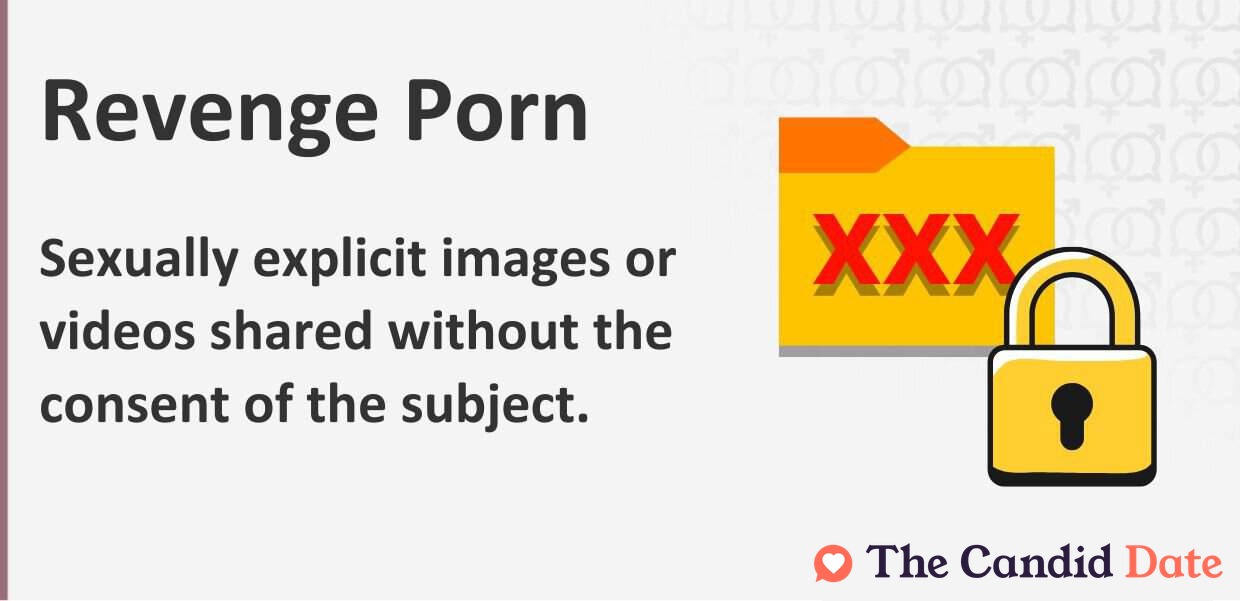
Revenge porn means sharing sexually explicit videos or images of someone without their consent, usually by a former partner. Whoever distributes the material does so to hurt or humiliate the person in it.
Examples of Revenge Porn
Anyone can become a target of revenge porn, whatever their ability, ethnic identity, sexuality, or gender. A woman, for instance, might have been filmed by her partner while performing oral sex, and the revenge porn would reveal her face and identity.
A man who took a photo of his penis while masturbating likewise risks seeing that sensitive image leaked as revenge porn. And a queer person photographed in contact with someone else could be outed by it.
Keep in mind that these are just examples. Anyone can be captured in any context or position, although the material typically comes either from the subject during sexting or from the person who later distributes it, recorded during sex.
The Emotional and Psychological Toll
No one in the U.K. had pursued both damages and a criminal case against an ex-partner for posting revenge porn online before Chrissy Chambers did. She has described “suffering constantly from nightmares and night terrors” once footage of her assault surfaced.
“I was blacked out and intoxicated by the time he pulled out his camera.” — Chrissy Chambers
Sadly, hers is one of many such stories, and revenge porn keeps devastating the people it targets.
Emotional Damage
When the public comments on the material, the victim may at first feel humiliated and ashamed at being seen so intimately exposed, along with depression from enduring the insults.
Worry over how far the material will keep spreading can bring on long-term anxiety. “I remember a friend alerting me that there were links with my full name posted all over the Internet, calling me a slut and a bad role model,” Chambers recalled.
Long-Term Effects
After a romantic partner's betrayal, a victim may struggle to form new relationships, hesitating to be intimate and possibly expose themselves to risk once more.
Beyond their relationships, victims may also face long-term disorders such as substance abuse and PTSD.
“I became an alcoholic by age 22, trying desperately to numb the pain… After waking up in the ER in December of 2013, I gave up drinking entirely. I finally sought the help of a trauma specific therapist. It took her no time at all to diagnose me with PTSD,” said Chambers.
Social and Professional Consequences
The social fallout goes beyond the harassment and ostracization by peers that Chambers went through. Victims may worry about their career prospects, since a quick Google search of their name might surface sensitive photos and damage their reputation. Some have said they lost their jobs or were expelled from school.
The Legal and Ethical Questions
Lawmakers and major social media platforms have tried to rein in revenge porn, yet its distribution remains a pressing problem. A 2019 study found a 400% increase in revenge porn victims compared with 2016.
Laws Around Revenge Porn
How revenge porn is treated under the law, and what penalties it carries, differs from country to country. South Korea, for instance, punishes distribution with as much as three years in prison or a fine of as much as 5 million South Korean won (roughly $3,400).
Canada criminalized sharing intimate images without consent when it passed the Protecting Canadians from Online Crime Act in 2014. The UK, meanwhile, classified revenge porn as a sexual offense in 2015 under the Criminal Justice and Courts Act, punishable by as much as two years in prison.

Law enforcement is starting to adapt and get tougher on revenge porn.
In the United States, the Violence Against Women Reauthorization Act of 2022, passed in March 2022, was the first federal law on the issue, letting people bring a federal lawsuit against anyone who disclosed intimate images of them without consent.
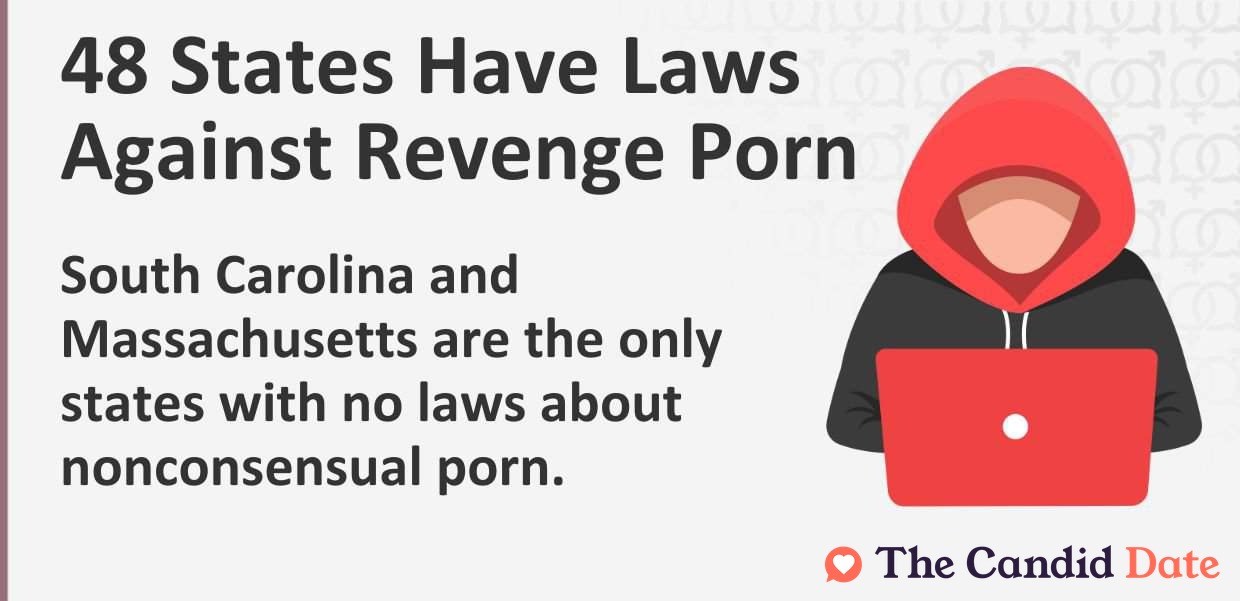
By October 2023, 48 states plus Washington, D.C. had passed laws banning the production or distribution of nonconsensual pornography. Massachusetts and South Carolina are the only two without such a law.
Legal Challenges
Several state laws in the U.S. include provisions that make it even harder to get justice. Take Arkansas: its nonconsensual pornography statute covers only a victim's current or former romantic partners, household members, or family.
Georgia doesn't give victims a private right of action. On top of that, victims may struggle to prove what the perpetrator intended, or even to find them, since most social platforms let people post anonymously using a screen name.
Still, victims have rights whether or not criminal charges are possible, and civil claims are always an option. Winning a lawsuit hinges on showing how much damage the sharing did to the victim.
Ethical Considerations
Posting intimate content without permission is a grave ethical breach. Because of what the material shows, the perpetrator is in effect choosing to expose the person pictured to objectification and harassment.
The moral choice reaches past the relationship itself: the perpetrator takes a vulnerable moment once shared by two people and puts it on display for everyone.
The Role of Tech and Social Media
Plenty of popular social media platforms and websites serve as hotbeds for revenge porn. Because they often lack policies strong enough to guarantee strict monitoring, these companies wind up enabling its spread. Solutions are coming, though.
Platforms as Enablers
Revenge porn can turn up anywhere, from Facebook and Twitter to Instagram and other social platforms.
Reddit specifically is notorious for having hosted revenge porn. Until its leadership cracked down, the site had a number of subreddits where users posted explicit photos of their exes and commented on them.
“We know we have more work to do to prevent, detect, and action this content even more quickly and accurately.” — Reddit spokesperson
Reddit revised its privacy policy in 2015 to ban nude content posted without the subject's consent, and in 2021 it purged more than 88,000 nonconsensual sexual images from the forum.
Other tech companies have acknowledged that they have a part to play in policing such material. Meta now relies on AI to “detect near-nude images or videos that are shared without permission on Facebook and Instagram” and on photo-matching technology to keep people from re-sharing revenge porn.
Challenges for Social Media Companies
Meta deserves credit, but it's still hard for every social media platform to police explicit content that thoroughly. And without people involved to judge real intent, AI can make mistakes and let content slip through the cracks.

Tech companies must walk a fine line between user privacy and moderation.
Someone could, for instance, pose as another person and post that person's sensitive images, fooling the platform into thinking the images were shared by the subject with consent.
At the same time, monitoring policies for harmful content that are too strict could leave users feeling they can't freely share what they want to.
Rising Solutions
Snapchat is famous for messages that delete themselves and for alerting users when someone takes a screenshot. Other messaging apps are now doing the same.
In 2020, Instagram rolled out a comparable Vanish Mode for its Direct Messages, and daters can expect more platforms to add features like these down the line.
Vanish mode lets people send each other disappearing messages, photos, videos and other content in Instagram chats. — Instagram
Social media companies keep updating their reporting tools and privacy settings as well. The reasons Instagram lists for reporting content have multiplied since the feature launched, and the fact that nude images are now among them acknowledges how common revenge porn is.
3 Steps for Victims to Take
If you're ever in this situation, remember that you are never alone. Below are resources to help you act against your abuser. Be sure to lean on the family, friends, and therapists around you for support as well.
1. Gather Evidence
To begin, breathe deeply and gather all the evidence you can, such as screenshots of texts or emails exchanged with the person you suspect.
When the conversations happened on a platform such as Snapchat, which alerts the other person to screenshots, try capturing evidence by photographing your screen with a friend's phone. Any audio recordings, videos, or photos you have as evidence against the perpetrator could help too.
2. Take Action & Get Help
Start by reporting the content to the platform where it was posted. If your photo ended up on Instagram, for instance, report it, choose “nudity or sexual activity” and then “threatening to share or sharing nude images.”
Next, look for help from a lawyer. Searching “revenge porn lawyer” for your area may turn up a professional who handles these cases along with wider cybercrime like blackmail.
Can't find a specialist? Try contacting a university near you, since many law schools run free clinics that give legal advice to the community.

As a victim, you have legal rights, and a lawyer can walk you through them.
Another option is calling a hotline in your country. The UK's Revenge Porn Helpline supports victims in crisis, and in the U.S., the Cyber Civil Rights Initiative Crisis Helpline offers referrals and non-legal advice.
3. Seek Emotional Support
Some friends or relatives may judge you harshly, so spending time with the closest, most trusted people in your circle can be a real comfort right now. They can distract you from the situation by chatting about other things or getting you involved in your favorite hobbies.
A therapist can help you process anxiety and depression, too, and give you tools for dealing with longer-term effects like PTSD. To find a licensed counselor or therapist nearby, try Psychology Today’s Find a Therapist tool.
Prevention and Raising Awareness
Revenge porn is still common, but happily, the tide is gradually turning: social norms now put more of the blame on perpetrators for disregarding consent rather than shaming victims. Public awareness efforts keep reaching and educating new audiences.
Educational Campaigns
Organizations across the globe keep working to teach people about revenge porn. The Danish Women’s Society, an NGO based in Denmark, launched the #AskFirst campaign to spread awareness. It featured an iPhone video made to look like real sexting, posted on platforms under the title “Ex Girlfriend doesn’t know I shared this!” to catch viewers in the act of consuming revenge porn.
In 2021, the U.S. nonprofit Promoting Awareness Victim Empowerment (PAVE) kicked off a national campaign called #RewritingRevengePorn. Under the campaign, revenge porn is redefined as a form of sexual abuse involving self-generated material, and it pushes for changes ranging from criminalizing threats to stripping malicious intent clauses out of current legal language.
Changing Social Norms
Technology isn't going anywhere, and the mainstream is newly accepting that sexting and nudes are frequently a normal part of dating.
As a result, social norms have moved toward encouraging digital literacy and the consensual use of technology in ways that sustain healthy relationships instead of wrecking them.
Sexting Comes With Risks Daters Should Know
As the world grows more digital, sexting and filming sex with a partner carry risk. When someone betrays a victim's trust, the victim is never to blame, but keep being extremely careful about who receives your sexually explicit images, and be cautious about letting anyone record you during sex.
Consent is everything. Only people who grasp how essential your privacy is deserve your time and respect. Revenge porn is undeniably painful to go through, but remember that someone else's decision to disrespect you says nothing about your true worth.
About the Author
By: Evelyn Garcia
Men's Dating Expert
Evelyn Garcia is a dating and relationship expert helping men build confidence and lasting connections on thecandiddate.com.
Share the Knowledge!
Our dating experts work hard to show you the best dating sites. Want to show your appreciation? Share this page!