
Talking About Safer Sex When You Date Polyamorously




Talking about safe sex is tricky for everyone, and being poly and sexually active adds extra layers to consider. My clients sometimes get tangled up in the practical details of ethical non-monogamy, but staying safe really comes down to asking the right questions.
Should you use a condom or other barrier every time? Would you like to see STI results from each of your date’s other partners? Is it OK to share sex toys, or does every relationship need a separate set?
The answers differ from one person, and one relationship, to the next. What matters is that you can talk it through and map out the way forward as a team.
It needn’t be scary or daunting. Here’s my advice for talking about safer sex when you’re poly and seeing several people.
Start by Figuring Out Your Boundaries
Safer sex talks can feel exposed and emotionally loaded. Asking someone new to accommodate your safer sex needs may leave you worried that you’ll seem demanding, pushy, paranoid, or judgmental.
Nobody likes feeling that their choices about health (or sex) are being judged, so come to this conversation with sensitivity, maturity, and curiosity. Knowing yourself is essential, too.
Safe sex conversations have to happen, obviously, yet handled badly they can hit a nerve. Speaking up for your wants right then and there can be hard, and sometimes you may not even know what they are.
When you’re very into someone, it can be tough to separate what you really think from what you suspect they’d like to hear.
Do yourself (and your partners) a favor and spend some time alone working out your safer sex priorities.
Ask yourself these questions to pin down your sexual limits and boundaries:
- Which activities do you want to do only with barrier methods?
- Which things are off the table entirely?
- What would you be comfortable with if you knew the other person had a recent test?
- How recently?
Settle your answers in advance so you aren’t improvising once things heat up. Your life (and your relationships) will run more smoothly for it.
Useful Questions for You & Your Partners
As you get to know someone new and things start gaining momentum, talking about sexual compatibility comes naturally.
Pose questions about what they like in bed, then let those flow into safe sex practices too.
- What are you into?
- Are you more vanilla or kinky?
- A top or bottom?
- Are you able to host, or do you share a home with other partners or relatives?
- Which dynamics do you enjoy? What would you like to bring into your sex life?
- What are your fantasies?
- What’s your safe word?
It’s a great opening for a safer sex conversation, even when the bedroom is still a long way off.
We tend to wall off the safer sex talk as a separate, obligatory chore to get through before the more “fun stuff.” I’m here to say it doesn’t need to work like that.
While you discuss desire and explore where your sexual interests might overlap, go ahead and weave in the safer sex practices you prefer. For instance: “I love wearing a strap and topping with condoms,” or “I’m super into being eaten out by partners I’m fluid-bonded with.”
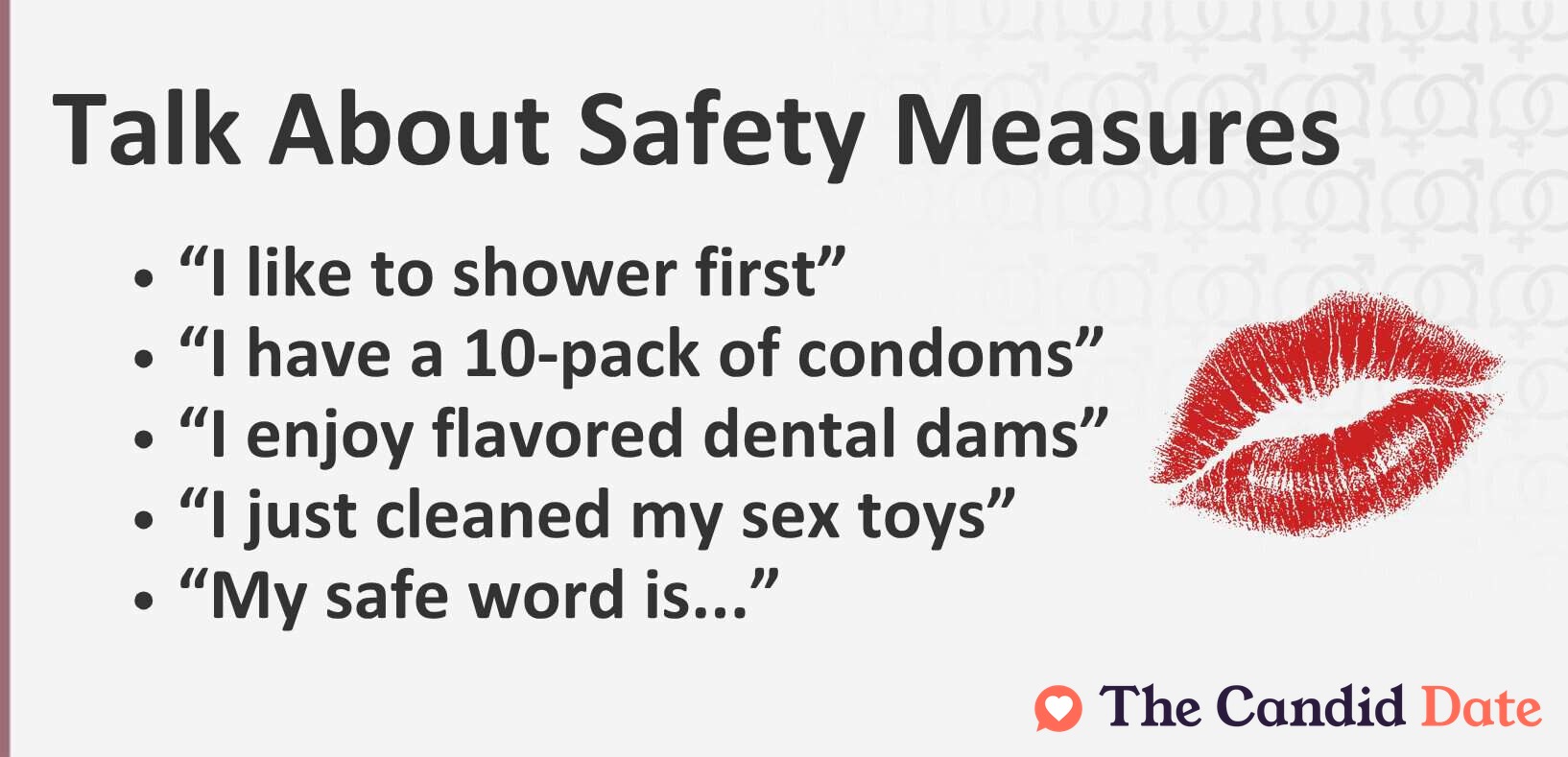
Your safer sex plans don’t have to be settled down to every detail the moment the subject comes up over coffee, but it’s smart to fold safer sex practices into your sex talks right from the start. That sets a grown-up tone, and it feels far more natural than blurting out “Did you bring condoms?”
Cover the logistics alongside the fantasies, and you’ll build more intimacy and excitement, since each of you will know what’s coming.
Talking About STI Testing
Going on offense is often the best defense, and that applies to safer sex talks as well. Taking the initiative lets you steer the conversation.
Part of why raising safer sex feels hard is that you’re asking a lot of someone you barely know: to use barriers, to get tested or share their STI status, and to reveal their safer sex habits with other partners.
Sharing your own information first makes it easier. Show that you’ll do (or already have done) everything you’re requesting of your new date.
Being poly means the responsible move is getting tested regularly on your own. You can then open the conversation by sharing your STI status and most recent results.
"I have HSV-2, though I'm not having an outbreak right now. I feel most comfortable with regular testing — I last got tested in October, and didn't have any new results, though I'm happy to get tested again. What about you?"
Open With the Safer Sex Practices You Prefer
I get that talking about safer sex practices can feel daunting when you’re starting with a blank slate. Asking someone new, “How do you feel about safer sex?” can be nerve-racking, yet it can also deepen trust and intimacy.
Poly relationships call for extra care in keeping the safer sex dialogue going.
Once more, it often helps to share your own habits first: “I usually use barrier methods with people I'm sexually active with, unless we've agreed to be fluid-bonded. My nesting partner and I are fluid-bonded, but I use barrier methods with everyone else. I also get tested every three months. What do you and your partners prefer to do?”
A challenge unique to safer sex talks in poly dating is striking a balance between discretion and transparency. You want to protect your partners’ privacy, but you also have to share enough for other partners to feel safe making informed decisions about sex.
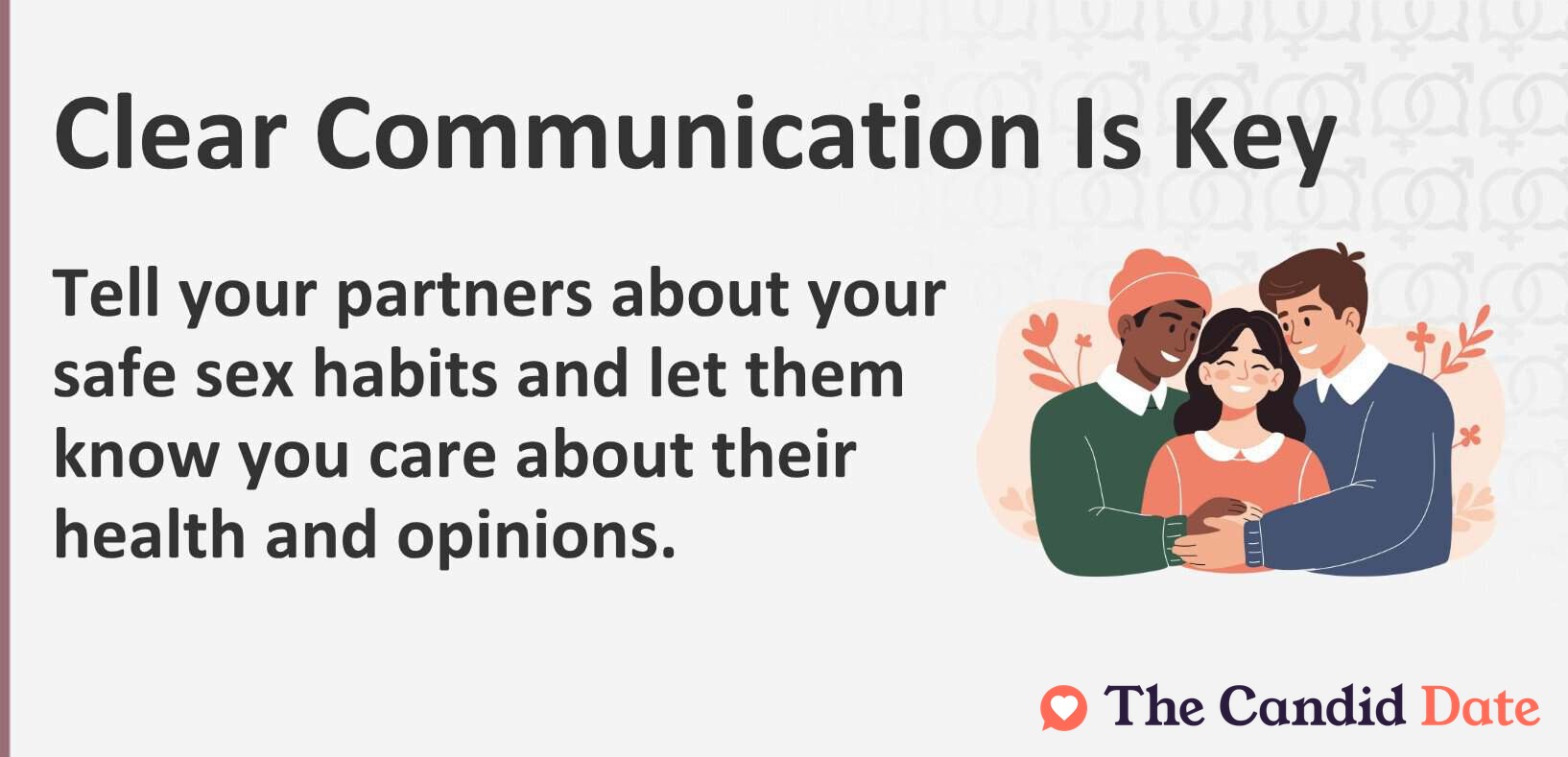
Modeling the amount of disclosure you’re comfortable with can ease things a bit. Describe the safer sex practices you follow as a baseline, plus whatever you think a new partner should know, such as your own STI status and that of your sexual partners.
As a rule, you’re usually safest assuming that anyone you sleep with also has unprotected sex with other people, and behaving accordingly. Use protection every time (particularly with more casual partners).
Still, for the sake of trust and communication, talk about how rigorous you want safer sex to be in your relationships, above all with the people you’re more serious about.
Keep Talking
Unless it’s a one-night stand (and hey, it might be!), remember that safer sex is never a one-and-done conversation.
Whatever the relationship, leave room to keep discussing your safer sex needs and desires, particularly as your intimacy and sexual habits evolve.
Poly relationships call for extra care in keeping the safer sex dialogue going, because over time, each of you may end up having different kinds of sex with different people. Checking in on how that affects your other relationships is essential.
Say you and one partner just decided to become fluid-bonded. Your other partners will benefit from knowing that, or at least what it means more broadly, so they can make informed decisions about their own sexual health.
When someone in your wider web of relationships gets an STI diagnosis, or you and your primary partner start discussing having a baby, those changes affect other people. Keep the conversation going, keep having fun, and keep it 100!
About the Author
By: Charlotte Harris
Lesbian Dating Expert
Charlotte Harris is a relationship coach and dating expert specializing in lesbian and LGBTQ+ dating advice on thecandiddate.com.
Share the Knowledge!
Our dating experts work hard to show you the best dating sites. Want to show your appreciation? Share this page!