

Casual Encounters: Clear Intentions, Privacy and Boundaries

Key Takeaways
Explain whether you want a one-off meeting, occasional dates or a recurring connection.
Keep decisions about privacy, meeting and continuing separate.
Married or attached dating is a different context; platform membership cannot establish consent.
Casual encounters can mean a one-off meeting, occasional dates or an ongoing connection without a committed relationship. The useful starting point is to explain which you want, ask what the other person wants, and discuss privacy and boundaries before either of you assumes an agreement.
This guide gives adults practical language for those conversations. All sample messages are original illustrations to adapt, not transcripts or a promise that a particular line will work. You do not need to make an encounter sound serious, but you do need to make your meaning understandable.
Say What “Casual” Means in This Conversation
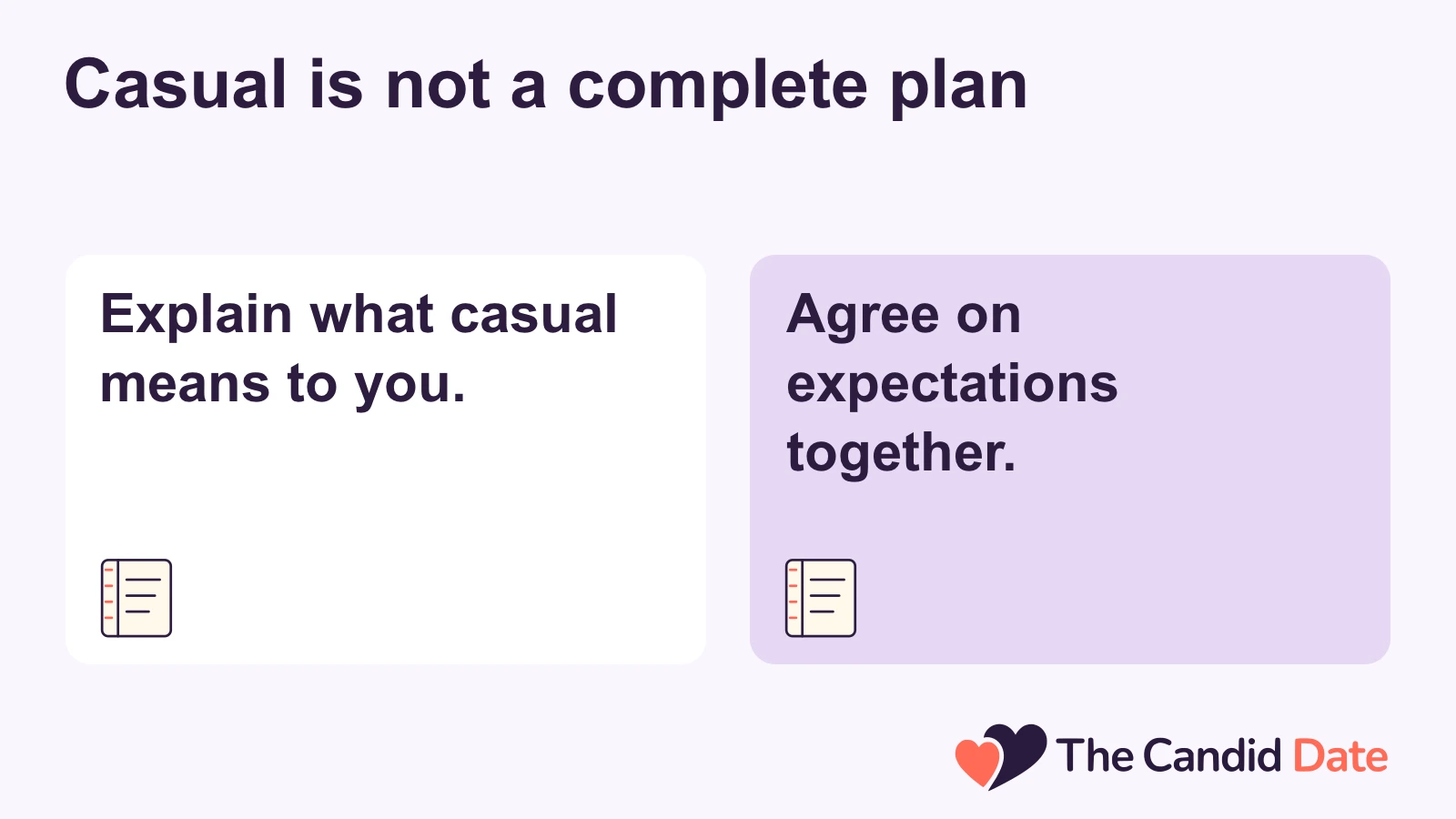
A label can conceal a substantial difference. You might want one date with no expectation of another, while the other person wants a familiar partner they see regularly. Finding that out before meeting is more useful than discovering it when one person starts making next-week plans.
For a one-off possibility, try: “I am open to a casual meeting, but I am not looking for an ongoing arrangement. I would still like us to meet in public and see how we get along.” This describes intention without promising intimacy or assuming that the other person will want it.
For something recurring, try: “I like the idea of seeing someone occasionally without becoming a couple. I would want us to discuss how we make plans and what we each expect between meetings.” Recurring contact can involve care and consideration without importing every expectation of a committed partnership.
If you are uncertain, say that instead of borrowing a confident label: “I am still figuring out what feels right. I am happy to get to know you, but I do not want to promise a casual arrangement I may not be comfortable with.” Someone seeking a definite arrangement may decline, which is useful information for both of you.
The question to ask back is simple: “What would that look like for you?” Listen for the person's actual answer, not just whether they repeat the word casual. If their description differs from yours, explain the difference before proceeding.
Different Forms of Casual Dating
Separate Attraction From Agreement
Flirting can establish interest without settling the details of a meeting. A suggestive conversation, a dating profile or a previous encounter does not supply permission for a new situation. Give the other person space to be interested in one thing and decline another.
An original transition might be: “I am attracted to you. Before we make plans, I would like to talk about what we are both comfortable with.” That brings the conversation back to a decision you can make together instead of turning chemistry into an assumed next step.
RAINN explains that consent must be freely given and can be withdrawn. Applying that principle means checking in when circumstances change, accepting a refusal without pressure, and stopping rather than trying to persuade someone whose response is uncertain.
You can be specific without making the exchange explicit: “I am comfortable meeting for a drink, but I am not agreeing to go home together.” The other person can accept that plan or decide it is not what they want. Neither response entitles them to bargain against your limit.
Consider whether you can express your own preferences comfortably around this person. If you already feel you must soften every refusal to avoid anger, a more polished message is unlikely to resolve the basic concern. You can choose not to meet, even if earlier messages sounded enthusiastic.
Discuss the Parts That Affect Real Life
Before a recurring connection, discuss expectations that might change your decisions: seeing other people, communication between meetings, overnight stays and how either person will raise a change of mind. You do not need an exhaustive relationship contract. Focus on the differences that would matter to you.
- Exclusivity: “I am not assuming we are exclusive. Is that also your understanding?”
- Contact: “I enjoy talking, but I cannot keep up with messages throughout the workday.”
- Plans: “I prefer arranging dates ahead of time instead of receiving last-minute invitations.”
- Social overlap: “Before introducing each other to friends, I would like us to discuss how we describe this.”
These are examples, not universal rules for casual dating. If daily conversation or spontaneous plans appeal to both of you, say so. The point is to choose an arrangement together rather than use a definition from an article to overrule what either person actually wants.
Do not treat “no commitment” as a waiver of ordinary consideration. You can tell someone you are running late, decline a plan clearly or acknowledge that you no longer want to continue. Courtesy does not require you to remain in the arrangement, and leaving does not require blaming the other person.
Our FWB explainer examines the recurring version in more detail. It is a useful next step if your conversation has moved beyond an occasional date toward a continuing connection.
Discussing an Ongoing FWB Arrangement
Build Privacy Into the Plan
Privacy starts with deciding what you want to share. A match does not need your workplace, home address, social accounts or usual commute to understand your dating intention. Keep logistical details broad until they are needed for a plan you have actually agreed to.
Think beyond the profile itself. A photo can include a work badge, a recognizable entrance or another person's face. A message notification can expose a private exchange on a shared screen.
Review the settings and images you control without assuming that a site's privacy language guarantees confidentiality.
Ask before taking or sharing pictures of another person. “I keep dating separate from my social posts. Are you comfortable keeping photos private too?” The conversation expresses a preference; it cannot technically prevent copying or later sharing. Be cautious about creating material whose circulation would put you at risk.
RAINN's online-dating guidance recommends limiting identifying details and notes that information or intimate images shared online can be difficult to control. Keep that limitation in mind even when a conversation feels familiar.
Privacy also includes respecting someone else's refusal to share. If you need information they do not want to provide, you can decide not to continue. Demanding access to their phone, accounts or private messages is not a substitute for a connection you feel comfortable choosing.
If Someone Is Married or Attached, Ask a Different Question
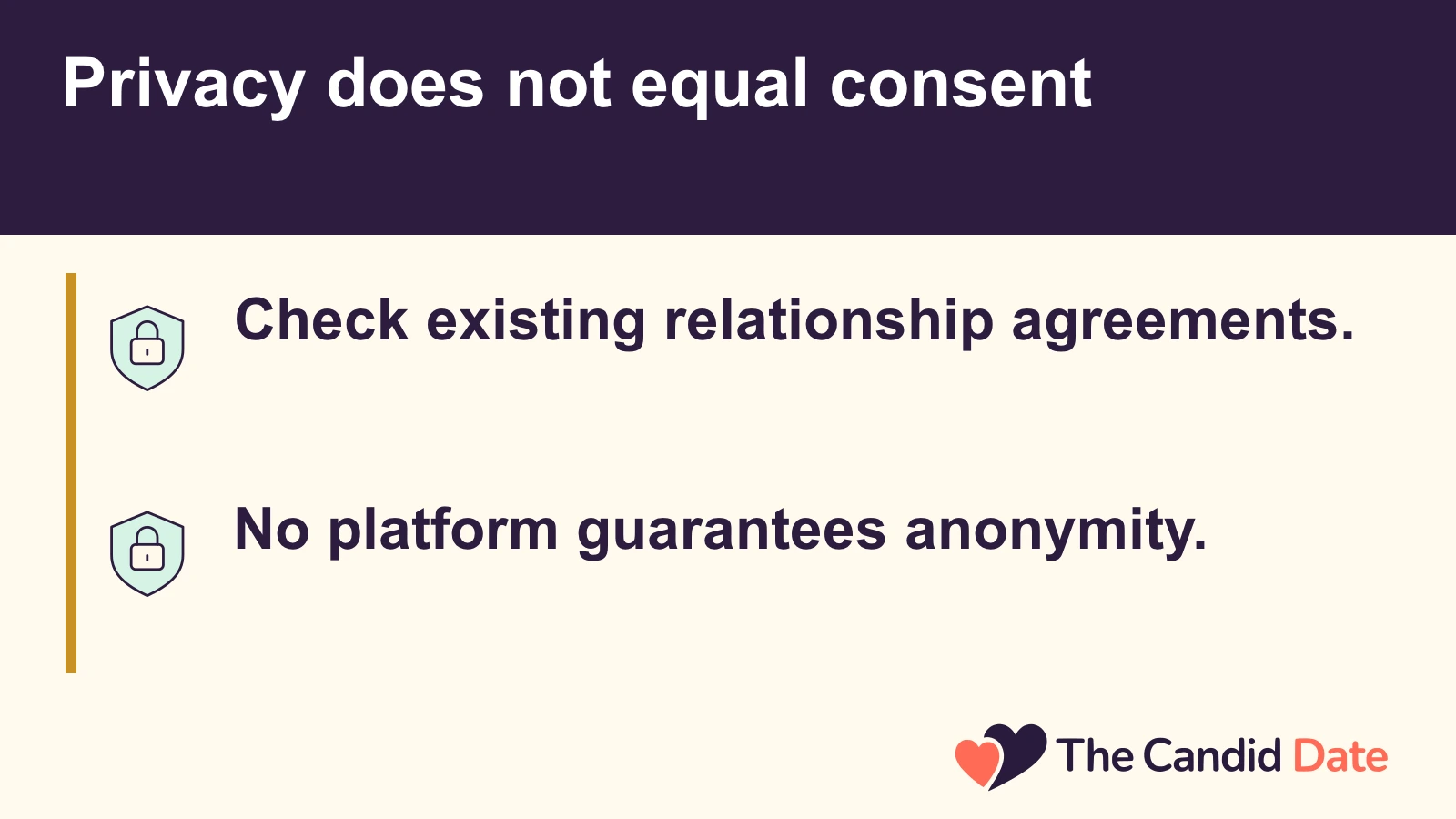
Ordinary casual dating, consensual non-monogamy and an affair are different contexts. A married or attached person's willingness to meet you does not establish that their partner knows or agrees. You need enough clarity about the context to decide whether it fits your own boundaries.
You might ask: “What agreements apply to dating other people in your relationship?” If the answer is vague, do not fill in a reassuring explanation for them. A platform category, a profile label or a request for discretion cannot establish a partner's consent.
Victoria Milan explicitly markets itself to married and attached adults seeking affairs. That is why it appears only in this optional section, rather than as a general recommendation for single people or an endorsement of consensual non-monogamy. Its advertised anonymity tools do not prove that an encounter is confidential.
If you consider an affair-oriented service, examine its current payment and privacy conditions before joining or upgrading. Individual reviews may raise questions, but they do not establish the circumstances of a particular member. We have not measured its active audience, successful meetings or the reliability of members' relationship claims.
You can state a clear limit without trying to investigate someone else's relationship: “I am only comfortable dating people whose existing agreements allow it.” If the person cannot offer the clarity you need, declining is enough. You do not have to prove that they are dishonest to decide the situation is unsuitable.
Sponsored placement

Considering married or attached dating?
Victoria Milan markets dating for married or attached adults. Consider its relationship category and payment conditions carefully; advertised privacy tools do not guarantee anonymity or establish a partner’s consent.
- Built for married or attached adults
- Free registration advertised
- Review privacy and paid access before subscribing
| User Base | Today’s Deal |
|---|---|
| Adults considering an affair-oriented service | Free registration; check current paid optionsFree registration does not establish free messaging. Read current checkout, renewal and cancellation terms. Privacy features cannot guarantee anonymity. |
Make a Meeting a Separate Decision
Move from an online conversation to a public meeting only when you both want that actual plan. Name the place and time, arrange a way to leave independently, and tell a trusted person where you expect to be. These are practical precautions, not a guarantee of safety.
A clear proposal can be ordinary: “Would you like to meet at a cafe on Saturday afternoon? I would like to talk in person before deciding anything else.” If the reply replaces that with a private address, you are considering a different invitation. You can keep the original plan or decline both.
If intimacy becomes a possibility, discuss protection and sexual-health concerns before you are in a rushed situation. For personal questions about testing, contraception or risk, seek qualified medical advice rather than relying on a profile statement or a timetable from a dating article. This guide does not assess anyone's health status.
Our match-screening guide offers more suggested questions for the stage before meeting. Use it to clarify information and preferences, while remembering that no checklist can certify a stranger as safe.
Questions to Ask Before Meeting
Respond When a Boundary Changes
You may discover that a plan no longer feels right after agreeing to it. Say what has changed and what you are choosing now. “I was open to meeting tonight, but I have changed my mind. I am not coming over.” You do not need to provide a replacement plan unless you want one.
For a smaller change, offer the option you actually accept: “I would still like to meet, but only at the public place we discussed.” Avoid presenting your preference as a negotiation you expect to lose. A person who dislikes the revised plan can decline; they cannot require you to keep the old one.
If someone changes their mind with you, respond to the current answer. “Thanks for telling me. We can stop here.” Paying for dinner or making travel arrangements may be disappointing, but those expenses do not turn an earlier agreement into a permanent obligation.
NO MORE's healthy-dating guide emphasizes respecting boundaries, including when to say goodbye. If an interaction becomes threatening or abusive, prioritize ending contact and getting appropriate help rather than continuing a discussion about manners.
End an Arrangement Without Leaving a False Promise
For an ordinary mismatch, a brief message can give enough clarity: “I have enjoyed getting to know you, but this arrangement no longer suits me. I do not want to keep meeting. I wish you well.” This is an original example, not a required explanation for situations where you feel unsafe.
If feelings have changed, say so without claiming that the other person must change too: “I am looking for a committed relationship now, and continuing casually would not be right for me.” That names your decision instead of presenting romance as a reward they could win by behaving differently.
Avoid offering friendship merely to soften the end if you do not actually want it. You can leave a connection respectfully without promising future contact. If you share social spaces, decide how you will act there: a civil greeting may be feasible even when private messages and dates are ending.
If the other person keeps pressing after a clear ending, you can stop responding and use blocking or reporting controls as appropriate. You do not have to repeat a careful explanation until they agree with it. Ending an arrangement is a decision, not a request for the other person's approval.
Frequently Asked Questions
Can I keep a casual encounter entirely separate from my friends?
You can choose not to introduce someone or discuss intimate details, but secrecy cannot be guaranteed. Consider whether shared social spaces would expose more than you are comfortable with. Tell the person your preference without promising that nobody could find out, and avoid sharing their identity or private information with others without permission.
What if my match says discussing expectations ruins the mood?
You can make the discussion brief, but the need for clarity remains. Explain the one point that affects your choice, such as whether the meeting is casual or whether you are willing to go somewhere private. If they will not discuss it, you can decline.
A mood is not a reason to accept terms you do not understand.
Do we need the same feelings for a casual arrangement to work?
You cannot require identical feelings, and nobody can promise that feelings will stay unchanged. You do need compatible expectations about what you are choosing now. If one person is tolerating casual contact while waiting for commitment, acknowledge that difference and decide whether continuing is fair to either of you.
What to Do Next
Explain your intention, ask about the other person's, and keep decisions about privacy, meeting and continuing separate. The language can stay simple. What matters is that each person can choose the actual arrangement, change their mind and leave without pressure or a misleading promise.
About the Author
By: Harper Martin
Sex Therapist
Harper Martin promotes evidence-based, pro-diversity perspectives on sexuality for thecandiddate.com.
Share the Knowledge!
Our dating experts work hard to show you the best dating sites. Want to show your appreciation? Share this page!